
Lieferung heute & morgen

Qualitätsgarantie

Willkommens-Angebote freischalten: KOSTENLOSE Lieferung | Bis zu 80 % RABATT | Kostenlose 30-Tage-JoyPlus-Testphase
App herunterladen
The right lighting can completely transform a room. With RGB LED lighting, you can change the atmosphere from focused work to relaxed comfort or a dynamic party at the touch of a button. However, the market is overwhelming and filled with products that often fail to deliver on their promises. As your Joybuy Product Recommendation Officer, I'm here to help you identify the common pitfalls and make an informed decision.
Many buyers invest in smart lighting only to find that the advertised features fail in everyday use. Before you make a choice, you should be aware of the three most common problems that lead to disappointment and unnecessary expense:
To avoid these issues, don't be swayed by marketing buzzwords; instead, focus on verifiable technical specifications. Three parameters are crucial for the quality and functionality of your RGB lighting.
The type of connection determines how you control your lighting.
The type of LEDs used has a major impact on the visual effects.
Safety should always be the top priority. Always look for the CE mark on the power adapter, which confirms compliance with EU safety standards. Additionally, the IP rating indicates the environment for which the product is suitable:
Instead of presenting an overwhelming list, we have selected products that meet specific needs and avoid the pitfalls mentioned above.
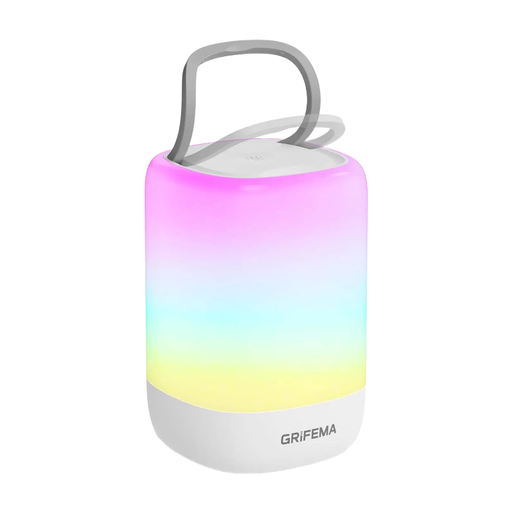
Why This Fits Their Persona: Ideal for anyone looking for a flexible mood light without a complex installation. Thanks to its rechargeable battery and touch controls, the lamp is portable and can be used as a children's night light, on the balcony, or as an accent light on a shelf.
This product avoids the unstable connectivity trap by operating completely offline via touch controls. There's no app, no pairing issues, and no reliance on Wi-Fi.
Pros: Battery-powered for high portability, intuitive touch controls with dimming and a timer function, and charges via a modern USB-C port.
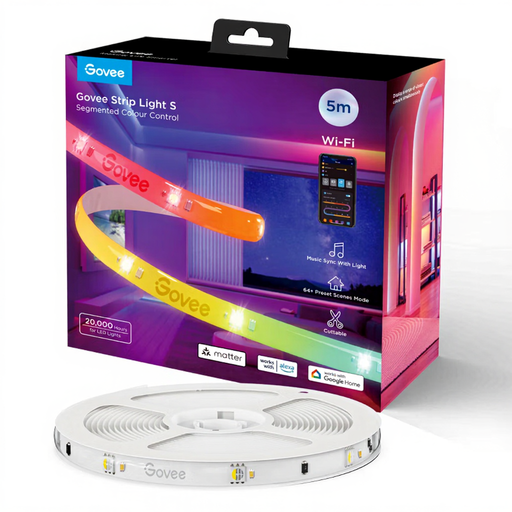
Why This Fits Their Persona: Perfect for creating a dynamic gaming room setup or home cinema. The RGBIC technology and lights with music sync create an immersive experience that reacts to sound and visuals.
Govee is known for its well-developed app and stable connectivity. Its RGBIC technology ensures smooth, segmented colour gradients, avoiding the problem of uneven lighting.
Pros: Segmented RGBIC colour control, Matter support for universal smart home compatibility, a built-in microphone for music sync, and a protective coating for durability.
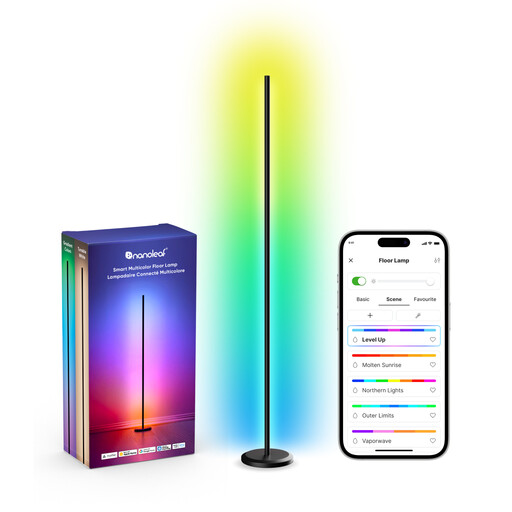
Why This Fits Their Persona: For users seeking a high-end, design-focused, and future-proof solution for their indirect lighting. This floor lamp integrates seamlessly into existing smart home ecosystems and serves as a functional design object.
Thanks to its Matter certification, compatibility issues are avoided from the outset. Nanoleaf is synonymous with high product quality, which is reflected in its even light distribution (RGB IC) and stable software.
Pros: Native Matter support, dynamic RGB-IC scenes for colour gradients, high brightness (1700 lm), app and voice control, and a premium, minimalist design.
We have compiled a complete, up-to-date list of products that fully meet these strict selection criteria and safety standards.
1. What is the difference between RGB and RGBIC on LED strips? A standard RGB strip can only display a single colour across its entire length at any one time. An RGBIC strip, on the other hand, has integrated chips (IC) that allow different segments of the strip to be controlled independently. This means multiple colours can be displayed simultaneously, enabling fluid colour gradients and dynamic effects.
2. How much power does RGB LED lighting consume? Power consumption depends on the length, LED density, and the set brightness level. A typical 5-metre LED strip consumes between 20 and 60 watts at full brightness. However, compared to traditional incandescent bulbs, LED technology is highly energy-efficient. You can find precise power consumption details in the technical specifications of the respective product.
3. Can you cut an LED strip? Yes, most LED strips can be cut at the designated markings (often indicated by a scissor icon). It is important to cut only at these points to avoid damaging the strip's functionality. The cut-off section cannot typically be reused without special accessories.