
Lieferung heute & morgen

Qualitätsgarantie

Willkommens-Angebote freischalten: KOSTENLOSE Lieferung | Bis zu 80 % RABATT | Kostenlose 30-Tage-JoyPlus-Testphase
App herunterladen
RGB LED lighting can transform a room with very little effort: an LED night light helps you find your way by the bed, an RGB LED strip adds a splash of colour behind the TV, and smart LED lighting can be controlled via an app or voice command. Before you buy, though, it’s worth taking a closer look at the technical specifications. Many products look similar in adverts, but can differ considerably when it comes to power supply, installation, controls and suitability for everyday use.
Claims such as ‘millions of colours’ describe the range of possible shades, but tell you little about whether the LED lighting can be dimmed, controlled in separate sections or set with useful timers. With a basic RGB LED strip, all the LEDs often change colour at the same time. Depending on their technical design, RGBIC models can display several colour zones at once.
An LED light strip with a mains plug is suitable for permanent installation, but you’ll need a nearby socket. A portable LED table lamp with a rechargeable battery is more flexible to position, but needs regular charging. For example, the Grifema lamp is stated to offer up to 15 hours of battery life. The actual running time depends on factors such as brightness, colour mode and usage.
Self-adhesive LED strips stick best to clean, dry and smooth surfaces. Rough walls, dust, wallpaper or high humidity can affect how well they adhere. Flexible strips should also not be bent sharply at the LED components. A common mistake is to leave the strip switched on for a long time while it’s still wound up. This can cause heat to build up.
Brightness is usually measured in lumens (lm). Decorative LED ambient lighting doesn’t need to produce as much light as a desk lamp. For a night light in a child’s bedroom or a corner of the bedroom, lower brightness settings are often more useful than maximum output. Also check whether you can dim just the white light or the RGB colours as well.
A dimmable LED lamp with a warm white mode may be more practical in the evening than a product that only produces coloured light. The rechargeable LED night light with 12 SMD LEDs is specified as offering warm white light at 2600–2800 K, seven RGB colours, 40 lm and a CRI value above 85.
An LED lamp with a remote control is quick to set up and usually doesn’t need a network connection. Touch controls are particularly useful for bedside lamps. A Wi-Fi LED lighting solution or smart LED lighting offers extra features such as schedules, scenes and voice control through compatible systems.
Check which standards the product supports: according to its product description, the Govee model supports 2.4 GHz Wi-Fi, Bluetooth and Matter. This may allow it to connect to compatible smart home systems. Before buying, check whether it works with your existing hub or voice assistant.
Many decorative lights for indoor use are rated IP20. This rating isn’t suitable for water or areas that are persistently damp. For example, the 5 m Atmosphera LED light strip is described as an indoor product with an IP20 rating. For bathrooms, balconies or outdoor areas, the product description must explicitly state a suitable IP rating.
For products used in children’s rooms, you should also consider small parts, cables and the charger. Children should not use electrical products unsupervised. Always follow the installation and safety instructions provided by the manufacturer.
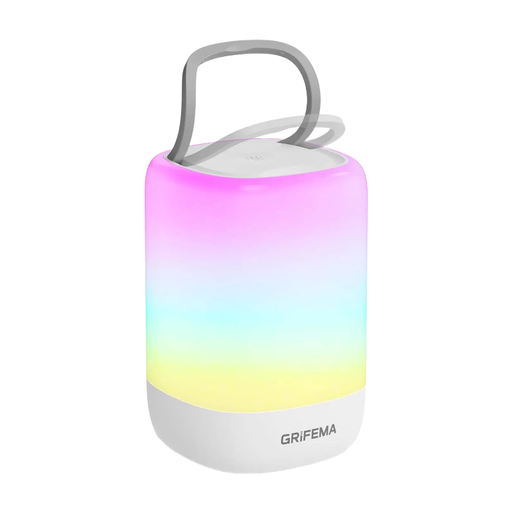
Why it’s a good fit: This compact, cordless table lamp is designed for bedrooms, children’s rooms and occasional camping trips. Touch controls and USB-C charging keep setup simple.
It runs on an integrated 3,7-V battery. A 30-minute timer and brightness adjustment from 100 % to 5 %, according to the product specifications, help avoid leaving it on unnecessarily.
Seven RGB colours, warm white light, touch controls and a USB-C port; dimensions: 8,45 × 8,45 × 12,45 cm.
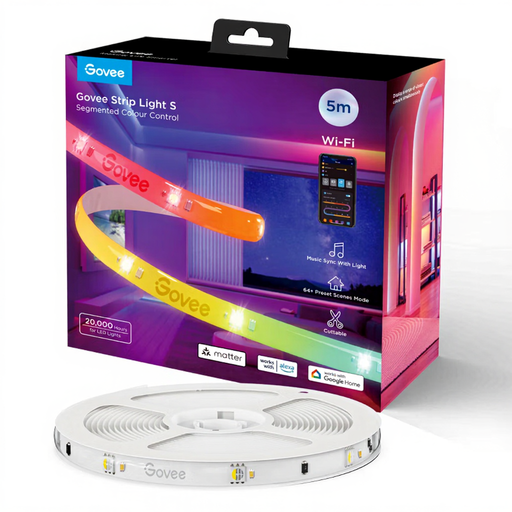
Why it’s a good fit: This 5 m RGBIC LED strip is designed for those who want to combine app control, segment effects and smart home compatibility.
The product specifications state an input power of 24 W, a protective coating and that it’s intended for indoor use. This makes its limitations clearer than a blanket claim that it’s suitable for outdoor use.
Matter support, Wi-Fi and Bluetooth, 64 scene modes according to the product description, plus music synchronisation via an integrated microphone.
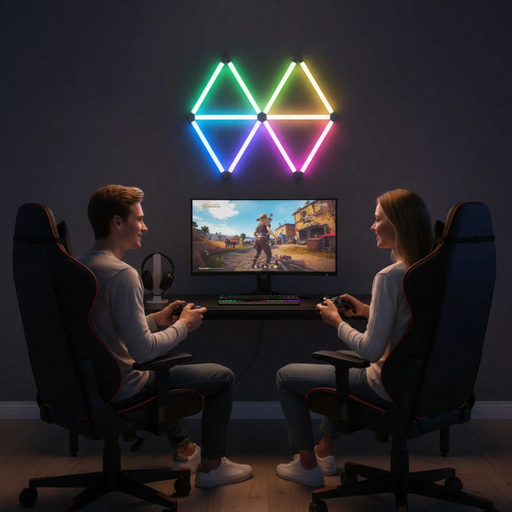
Why it’s a good fit: The six flexible light bars can be used as wall décor, monitor lighting or backlighting for your TV. App, remote and voice controls give you several ways to operate them.
The installation instructions specify a smooth, dust-free surface and warn against moisture. This makes clear that installation depends on the surface and is intended for indoor use.
More than 40 dynamic scenes according to the product specifications, 16 million RGB colours, and support for Smart Life, Alexa and Google Assistant.
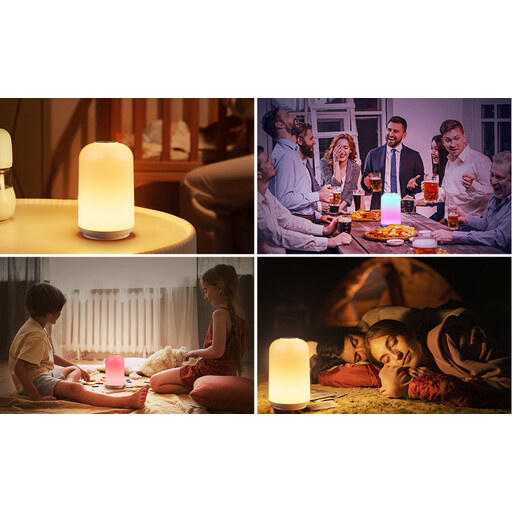
Why it’s a good fit: This compact light is designed for bedside tables, shelves and children’s bedroom furniture, and can be used wirelessly without permanent installation.
The specifications state a power consumption of 1 W, USB charging at 5 V/1 A and an ambient light sensor. This makes its energy use and operating mode clear.
Warm white and RGB modes, stepless dimming in warm white mode, and 12 SMD LEDs in an ABS and metal housing.
We’ve put together a complete, regularly updated list of products that meet these strict selection criteria and fully comply with the safety regulations in force in the EU.
Clean the surface, let it dry completely and check the position before peeling off the backing. Avoid tight bends at the LED components. For long strips, check the power supply, connectors and maximum permitted length in the product description.
Lifespan depends on LED quality, heat dissipation, operating time and power supply. You should only rely on a specific lifespan if the manufacturer has documented it. Continuous use in confined, rolled-up areas can increase heat build-up and put strain on the electronics.
Power consumption mainly depends on the wattage and how many hours a day you use the lamp. A 1 W light running for ten hours uses 10 Wh, based on a simple calculation. Wi-Fi LED lighting may also have a small standby power consumption. For a useful comparison, consider the wattage, operating time and standby mode together.