
Lieferung heute & morgen

Qualitätsgarantie

Willkommens-Angebote freischalten: KOSTENLOSE Lieferung | Bis zu 80 % RABATT | Kostenlose 30-Tage-JoyPlus-Testphase
App herunterladen
The right lighting can completely transform the atmosphere of a room. Whether for an immersive gaming experience, as dynamic TV backlighting, or to create an inviting ambiance in the living room, an RGB LED strip offers flexible and creative possibilities. However, the market is saturated with options featuring different technologies and functions.
This guide serves as a point of reference. We will clarify key technical terms like RGBIC and Matter and present a selection of products designed for various applications. The goal is to provide you with an objective basis for your purchasing decision.
To find the right lighting solution, a few technical aspects are crucial. The following points will help you evaluate the functionality of different models.
The type of LED technology significantly determines the visual effects you can achieve.
A smart LED strip is defined by its control options. Most models offer an LED strip with an app that works via Bluetooth or Wi-Fi.
Consider where and how the LED strip will be used. A 5m LED strip is a common length and works well for tracing the contours of a room or accentuating large pieces of furniture. For TV backlighting, shorter, specially designed kits are often more advantageous. For creative DIY projects or designing lettering, flexible neon strips that emit a diffused, continuous light are ideal.
Here you will find a curated selection of products that stand out with specific features for different user groups.
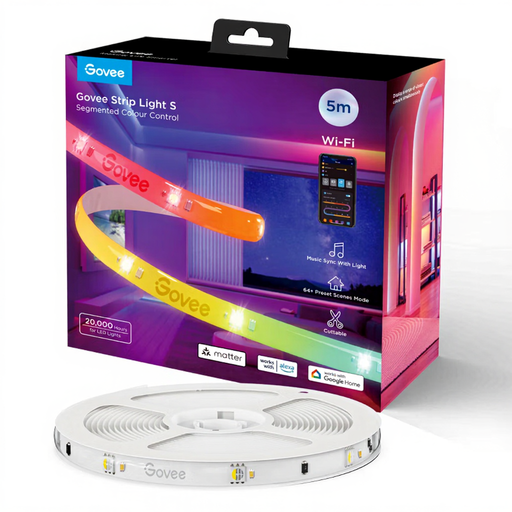
Why it stands out: This model combines dynamic RGBIC technology with future-proof Matter connectivity. The additional protective coating over the LEDs not only ensures greater durability but also provides more even light distribution.
Advantages:
Who is it for? For smart home enthusiasts seeking universally compatible and high-performance lighting, as well as for gamers and creatives who value dynamic and customisable light effects.
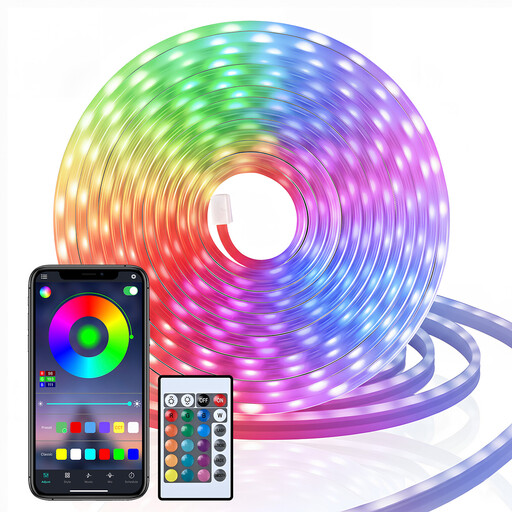
Why it stands out: Unlike traditional LED strips where individual light points are visible, this strip creates a continuous, diffused neon light thanks to its silicone casing. Its high flexibility makes it ideal for creative DIY projects.
Advantages:
Who is it for? For creative users and DIY enthusiasts looking for a decorative LED light strip for their room and who want to design custom shapes or neon signs.
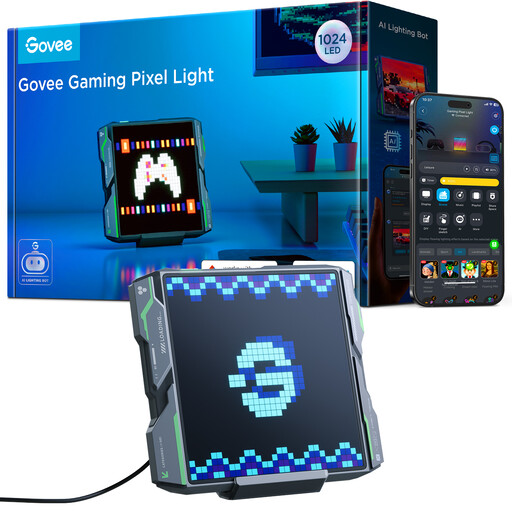
Why it stands out: This product is more than just a light source. It's a smart LED panel for pixel art. With a 32x32 matrix of individually addressable LEDs, users can create their own images, animations, and GIFs or access a large community library.
Advantages:
Who is it for? For gamers, streamers, and tech enthusiasts who want to enhance their setup with a unique, interactive display and express their creativity through pixel art.
The products featured here cover specific use cases. If you are looking for different lengths, brightness levels, or features, there is a wide range of other options available. Every project has different requirements, and sometimes a simpler model or a different form factor is the right choice.
Browse our entire selection of remote control LED light strips to find the perfect solution for your project.
A standard RGB LED strip can only display one colour at a time across its entire length. An RGBIC LED strip has integrated chips (IC) that allow individual sections of the strip to be controlled independently. This permits the display of multiple colours simultaneously, resulting in dynamic effects like colour gradients or rainbow animations.
Yes, most LED light strips can be cut at designated points. These are usually marked with a scissor symbol on the strip. It is important to cut only at these markings to avoid damaging the functionality. Note that cutting the strip may void the warranty with some manufacturers. The cut-off section typically requires a separate connector and power source to be used again.
LED strips with music synchronisation use a small microphone integrated into the controller or directly into the strip. This microphone picks up ambient sounds like music, voices, or game audio. An internal processor analyses the rhythm and volume of the audio signal and converts this information into corresponding light effects in real-time. This allows the lights to flash, change colour, or pulse in time with the music.