
Lieferung heute & morgen

Qualitätsgarantie

Willkommens-Angebote freischalten: KOSTENLOSE Lieferung | Bis zu 80 % RABATT | Kostenlose 30-Tage-JoyPlus-Testphase
App herunterladen
The right lighting can completely transform a room's atmosphere. An RGB LED strip, in particular, offers the flexibility to switch from focused task lighting to a relaxed lounge vibe or a dynamic backdrop for your gaming room at the touch of a button. However, the market is flooded with products of widely varying quality. Many buyers only realise after a few weeks that their new lighting system fails to meet their expectations.
Before you make a decision, you should be aware of three common problems that often lead to disappointment and unnecessary expense:
To avoid these pitfalls, it's crucial to focus on the core technical features that determine the quality and functionality of an LED strip.
Perhaps the most important technical distinction is between standard RGB and the more advanced RGBIC technology.
The method of control determines how flexibly you can adjust your lighting.
The number of LEDs per metre (LED density) is critical for uniform illumination. A higher density (e.g., 60 LEDs/m instead of 30 LEDs/m) produces a more homogeneous line of light without distracting gaps. Some higher-end models also feature a protective silicone or plastic coating. This not only serves to protect against dust and touch but also acts as a diffuser, which softens the light and distributes it more evenly.
Instead of making a one-size-fits-all recommendation, we have identified products tailored to specific use cases and requirements.
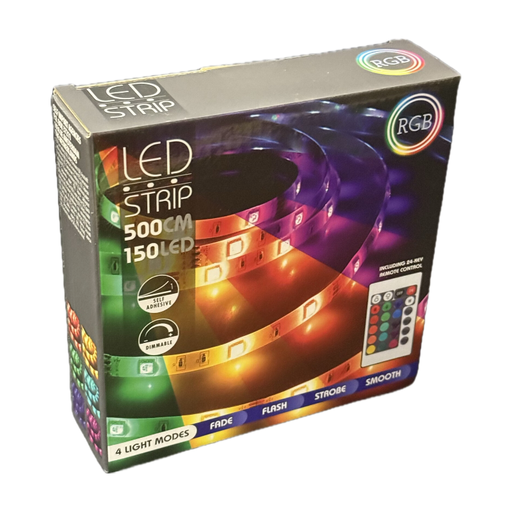
Why This Fits Their Persona: Ideal for users looking for a simple, out-of-the-box solution for accent lighting. Without the need for app installation or Wi-Fi setup, this kit offers direct control via the included remote. Perfect for easily highlighting shelves, bed frames, or desks.
This kit focuses on a single, reliable control function (infrared remote), thus bypassing the unreliability of poorly implemented smart features in the same price range.
Simple plug-and-play installation; direct control via the LED strip with remote; 5-metre length for versatile applications.
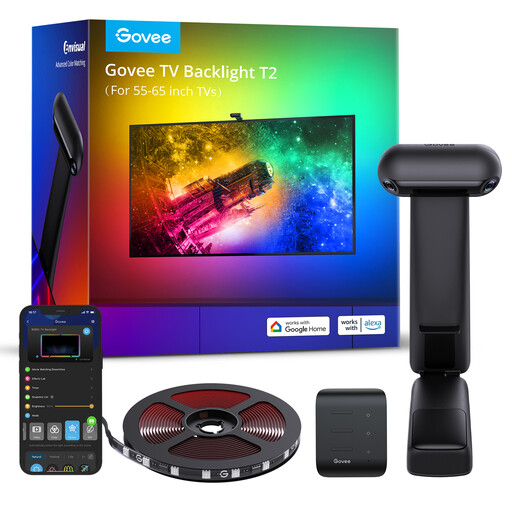
Why This Fits Their Persona: Specially designed for film and gaming enthusiasts seeking a dynamic Govee TV backlight. The system uses two cameras to analyse the colours on the edge of the screen in real-time and project them onto the LED strip. This creates a visual extension of the on-screen content, ensuring maximum immersion.
The camera-based system solves the problem of inaccurate colour matching. Instead of reacting to the audio signal, it precisely syncs with the visual action on the screen, thus avoiding inappropriate lighting effects.
Precise colour syncing via dual-camera technology; RGBIC for smooth colour transitions; full smart home integration.
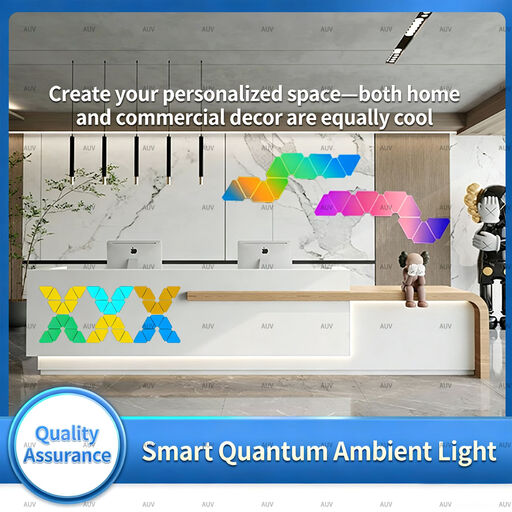
Why This Fits Their Persona: For anyone who wants more than just a light strip. These modular, triangular smart wall lights can be assembled into custom patterns on the wall. They are the ideal choice for unique gaming room decor that stands out from the crowd and can be controlled via app or remote.
Since these panels are designed for wall mounting and use rigid connectors, they bypass the problem of weakening adhesive that frequently occurs with flexible strips.
Modular system for creative freedom; music synchronisation and over 210 scene modes; control via app and remote.
We have compiled a complete, up-to-date list of products that fully meet these strict selection criteria and UK safety regulations.
Yes, most LED strips can be cut. However, make sure to only cut them at the designated cutting marks. These are usually indicated by a scissor icon and copper contacts. Cutting anywhere else will damage the circuit and render the severed segment unusable.
The main difference lies in the controllability. An RGB strip can only display one colour across its entire length at any time. An RGBIC strip has an additional IC chip that allows different segments of the strip to be controlled individually. This makes multi-colour gradients and dynamic effects like chasing lights or rainbow patterns possible, which cannot be achieved with a standard RGB strip.
For this, you need a smart LED strip that is Wi-Fi enabled. First, connect the strip to your home 2.4 GHz Wi-Fi network using the manufacturer's app (e.g., Govee Home, Smart Life). Then, open the Alexa or Google Home app, search for the manufacturer's skill or service, and link your account. After that, the LED strip should appear as a new device and be controllable via voice command.