
Lieferung heute & morgen

Qualitätsgarantie

Willkommens-Angebote freischalten: KOSTENLOSE Lieferung | Bis zu 80 % RABATT | Kostenlose 30-Tage-JoyPlus-Testphase
App herunterladen
An RGB LED strip can completely transform a room. Whether used as atmospheric TV backlighting, dynamic gaming room lighting, or for subtle furniture accenting, these flexible light strips are incredibly versatile. However, the market is crowded, and many products fail to deliver on their promises. Before you make a purchase, it's crucial to understand the typical weaknesses that often only become apparent after a few weeks or months.
This guide will help you distinguish marketing hype from solid product features and make an informed choice. We focus on the critical characteristics that determine longevity and functionality.
Many budget-friendly offers quickly turn out to be a bad investment. Pay close attention to these three common problems to avoid disappointment.
To avoid the problems mentioned above, you should check three core technical features before buying. These provide insight into the actual quality and performance of an LED strip.
The quality of the light depends directly on the LEDs used. Two factors are crucial here:
Operation should be convenient and reliable. Check which options the product offers:
For flexible use, dimmable LED strips are essential. This allows you to adjust the brightness according to your mood and the time of day. The protection rating, indicated by the IP code, defines where the strip can be safely used. IP20 means it is only suitable for dry indoor areas. IP65 offers protection against water jets and is often coated with a silicone layer. However, this coating can impair heat dissipation and slightly distort the colours.
Based on the quality criteria mentioned, we have selected a few products for different user profiles and requirements.
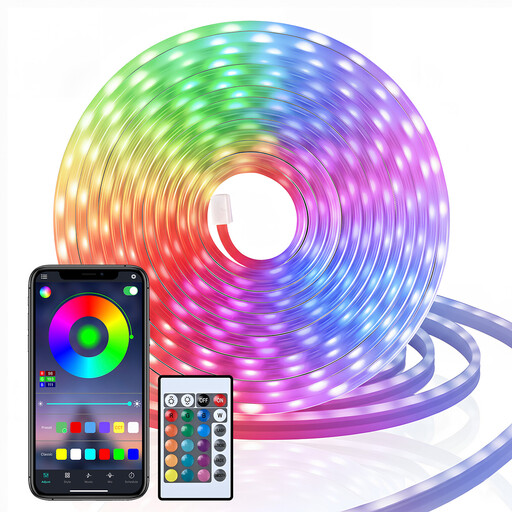
Why This Fits Their Persona: Ideal for immersive gaming room lighting. The music sync reacts to in-game sounds, creating a dynamic atmosphere. Its flexible neon design allows for creative DIY installations around monitors or along desk edges.
Control via app and remote offers more reliability than simple IR systems. The integrated microphone for music sync works more accurately than solutions that rely on a smartphone's mic.
1. Smart control via app and remote. 2. Flexible neon design for uniform, dot-free illumination.
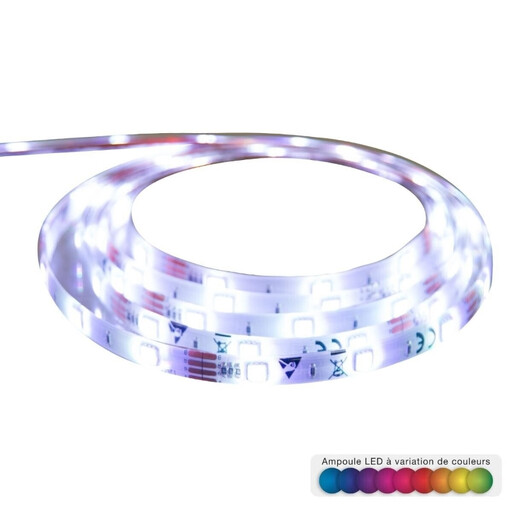
Why This Fits Their Persona: A straightforward solution for simple applications like TV backlighting or illuminating shelves. With a 5-meter length and a mains plug, the set is ready to use out of the box, requiring no technical knowledge.
This kit focuses on the basics. Instead of a potentially buggy app, it includes a simple IR remote that is perfectly adequate for basic functions (colour selection, brightness) and requires no setup.
1. Complete set with a power adapter and remote for quick installation. 2. With 150 LEDs over 5 meters (30 LEDs/m), it provides solid basic illumination for accent lighting.
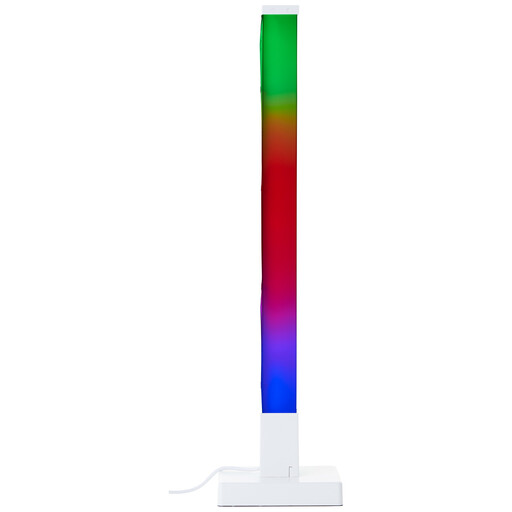
Why This Fits Their Persona: For those who want more than just an LED strip. This table lamp is a standalone design object that bundles dynamic light effects and music sync into a finished product. Ideal as an eye-catcher on a sideboard or in a party room.
As a finished lamp, it eliminates the typical problems of LED strips, such as adhesive issues or complicated wiring. The digital RGB LEDs are designed for impressive colour gradients and effects that go beyond simple strips.
1. Integrated music sensor for light effects that sync with the beat. 2. No installation needed—simply set it up and control it with the remote.
We have compiled a complete, up-to-date list of products that fully meet these strict selection criteria and relevant safety standards.
Yes, most LED strips can be cut at the designated markings (often indicated by a scissor icon). These cutting points are usually located every 3 to 6 LEDs. Cutting at the wrong spot can render the entire segment unusable. Cut-off sections can be reused with special connectors.
The lifespan of LEDs is often stated as 20,000 to 50,000 hours. However, this is not a measure of total failure, but the point at which the luminosity has decreased to 70% of its original value (L70 value). The actual lifespan heavily depends on heat dissipation. Mounting on metal profiles can extend the lifespan as heat is dissipated more effectively.
Power consumption is low compared to traditional light sources. It depends on the length, LED density, and set brightness. A typical 5-meter RGB strip with 60 LEDs/m consumes about 30 to 60 watts at full brightness with white light, which is equivalent to a single old-fashioned incandescent bulb. In a dimmed state or when displaying single colours, consumption is significantly lower.