
Lieferung heute & morgen

Qualitätsgarantie

Willkommens-Angebote freischalten: KOSTENLOSE Lieferung | Bis zu 80 % RABATT | Kostenlose 30-Tage-JoyPlus-Testphase
App herunterladen
An RGB LED strip can completely transform a room—from a relaxing oasis to a dynamic gaming zone. But the market is flooded with products whose marketing promises often shine brighter than the lights themselves. Many buyers quickly discover that the adhesive fails, the colours are uneven, or the remote control is unreliable.
As your Joybuy Product Recommendation Officer, I'm here to help you navigate these common pitfalls. This guide focuses on the crucial technical features that define a durable and functional RGB light strip, enabling you to make an informed decision.
Before you choose a product, you should be aware of the three most common issues found in low-quality LED strips. Knowing these will help you avoid a bad purchase.
To avoid the problems mentioned above, you should focus on three technical specifications. These will provide an objective basis for your purchasing decision.
LED density is a crucial factor for the quality of illumination. It is specified in LEDs per metre.
The IP (Ingress Protection) code indicates how well an electrical device is protected against the ingress of foreign objects and water. For LED lights for rooms, this is an important safety feature.
Operating your colour-changing LED strip should be convenient and reliable. There are several options here:
Here is a selection of products tailored to specific user profiles that meet the quality criteria mentioned.
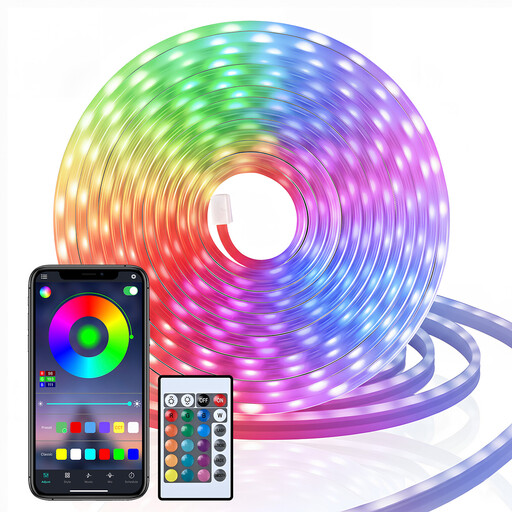
Why This Fits Their Persona: Ideal for dynamic gaming room lighting. The music sync reacts to game sounds or music, creating an immersive atmosphere. The flexible neon design allows for creative installations around monitors or along desk edges.
The silicone diffuser ensures continuous, soft light without visible hotspots. Control via app and remote offers a reliable alternative to purely infrared-based systems.
Integrated music sync mode; flexible neon design for creative shapes; control via app and remote.
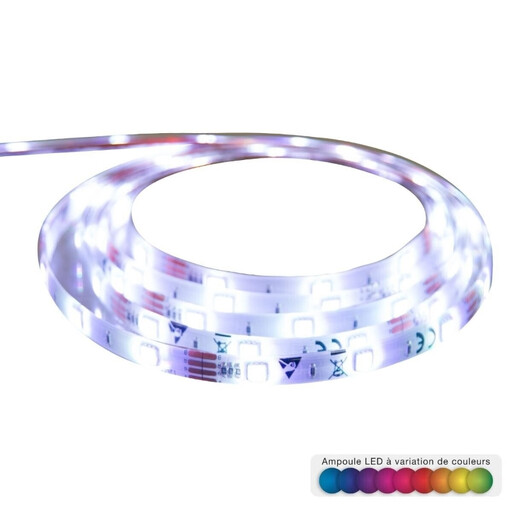
Why This Fits Their Persona: A straightforward and cost-effective solution for anyone looking to try accent lighting for the first time. With a 5-metre length and a simple remote control, this kit is ideal for quickly and easily upgrading a teen's room or a living area.
This kit relies on a proven, simple infrared remote that works without complication. The polyurethane strip is more durable than basic plastic backings, and its self-adhesive back is designed for smooth surfaces.
Complete kit with power adapter and remote; generous 5-metre length; simple plug-and-play installation.
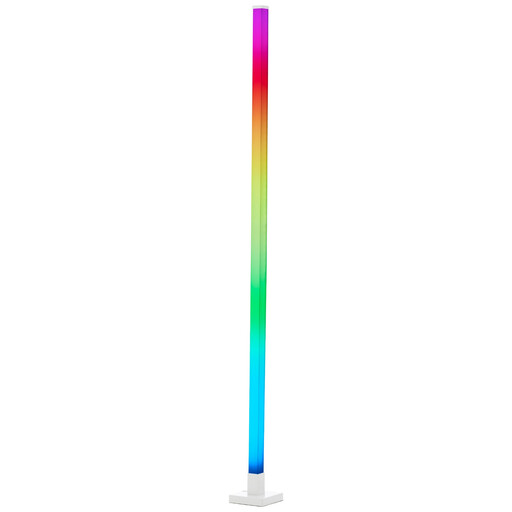
Why This Fits Their Persona: Perfect for renters or anyone who doesn't want a permanent installation. This floor lamp offers the same dynamic RGB effects as a dimmable LED strip, but is mobile and can be repositioned at any time. Ideal for party rooms or as atmospheric lighting in the living room.
As a freestanding lamp, it completely bypasses the problem of poor adhesive strength. It is controlled via a dedicated remote that is tailored to the lamp's functions, including the music sensor.
No installation required; integrated music sensor for dynamic light effects; mobile and flexible to use.
We have compiled a complete, up-to-date list of products that fully meet these strict selection criteria and safety regulations.
Thoroughly clean the surface with a degreasing agent (e.g., isopropyl alcohol) and ensure it is completely dry and dust-free. After applying the strip, press it down firmly for several seconds. For rough surfaces like textured wallpaper, using additional double-sided mounting tape or small, transparent mounting clips can be helpful.
LEDs are very energy-efficient. A typical 5-metre RGB strip consumes about 20 to 30 watts at full brightness. As an example, if you run it for four hours daily, the annual electricity cost would be minimal, typically just a few dollars or euros, depending on your local rates. When dimmed, the consumption is even lower.
Yes, most LED strips can be shortened. Look for the marked cutting lines, which are usually found every few centimetres on the strip and are often indicated by a scissors icon. Only cut at these markings, as you will otherwise interrupt the circuit and render a segment of the strip inoperable.