
Lieferung heute & morgen

Qualitätsgarantie

Willkommens-Angebote freischalten: KOSTENLOSE Lieferung | Bis zu 80 % RABATT | Kostenlose 30-Tage-JoyPlus-Testphase
App herunterladen
The right lighting can completely transform the atmosphere of a room. RGB LED strips, in particular, have become a popular tool for designing gaming setups, living areas, or creating unique ambient lighting. However, the market is flooded with products of widely varying quality. Many buyers only realise after installation that the result doesn't meet their expectations. This guide will help you identify the typical pitfalls and make an informed decision.
Before you invest in new smart lighting, you should be aware of the weaknesses that often only become apparent in everyday use with inexpensive models.
To avoid the problems mentioned above, it's crucial to understand a few technical specifications. These parameters are the primary determinants of the quality and longevity of your new lighting.
The LED density, measured in LEDs per metre, is critical for a homogeneous, seamless line of light. Strips with only 30 LEDs per metre often create visible "hotspots," which is particularly distracting when the strip is in direct view. For uniform, indirect lighting, models with 60 LEDs per metre or more are preferable.
Also, pay attention to the chip type. Standard RGB chips mix red, green, and blue to simulate white. For authentic and bright white light, RGBW strips are the better choice, as they feature an additional, dedicated white LED chip.
The method of control significantly impacts the user experience.
Instead of making a one-size-fits-all recommendation, we have matched products to different needs and user profiles.
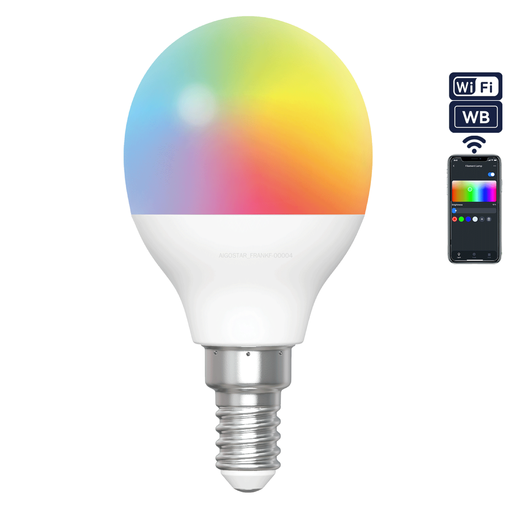
Why This Fits Their Persona: Ideal for anyone looking to enter the world of smart lighting without any installation hassle. This bulb fits into any existing E14 socket, instantly transforming a standard desk or bedside lamp into a controllable light source.
Completely bypasses issues with adhesive and installation. Control via Wi-Fi and Bluetooth is more reliable than basic IR remotes.
Easy integration into existing fixtures; RGB and CCT functionality (2700K-6500K) for both coloured light and high-quality white light.
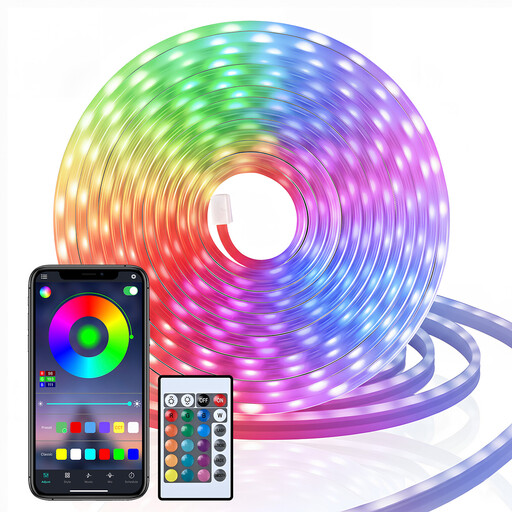
Why This Fits Their Persona: Designed specifically for gamers and creators. The flexible neon design allows for custom shapes and lettering, while music sync makes the gaming experience more immersive. Perfect for outlining monitors, desks, or walls.
The silicone casing provides diffuse, dotless lighting and protects the LEDs. Control via app and remote offers a reliable alternative to basic IR-only solutions.
Music sync via a built-in microphone; highly flexible material for creative DIY installations.
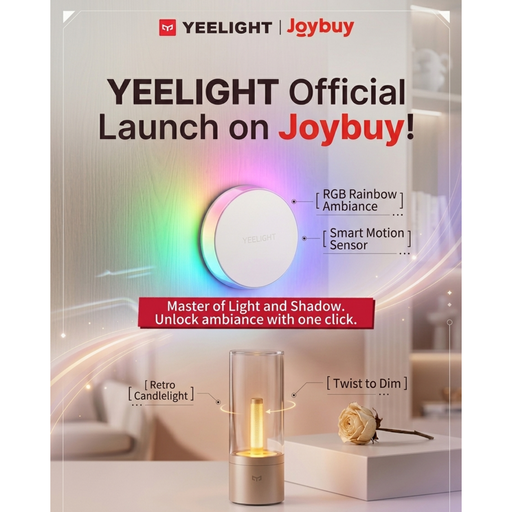
Why This Fits Their Persona: Perfect for users seeking a flexible, non-permanent lighting solution. Thanks to its rechargeable battery and magnetic mount, this mood light can be placed anywhere – on a bookshelf, under a cabinet, or as a night light in the hallway.
As a standalone, portable device, it bypasses all the typical problems of LED strips, like adhesive failure or cutting. It's a plug-and-play solution for ambient lighting.
Rechargeable via USB-C; magnetic mount for flexible placement; integrated motion sensor for automatic activation.
The world of smart lighting is vast. If you're looking for other solutions that meet our criteria for quality and functionality, you can find a broader selection here.
Most LED strips can be cut to length, but only at the designated markings (often indicated by a scissor icon). These cut points are usually located after every third or sixth LED. Cutting in the wrong place will interrupt the circuit, causing the severed segment to no longer light up.
The power consumption of LED strips is very low compared to traditional light sources. It depends on the length, LED density, and the set brightness level. A typical 5-metre strip consumes between 15 and 30 watts at full brightness. The exact power draw in watts (W) is listed in the product specifications and helps in estimating operating costs.
That depends on the technology. Wi-Fi and Bluetooth-based lights connect directly to your router or smartphone and generally do not require a separate bridge. In contrast, systems based on standards like Zigbee or Z-Wave require a central hub that acts as an intermediary between the devices and your network. For beginners, Wi-Fi or Bluetooth solutions are often the more straightforward choice.