
Lieferung heute & morgen

Qualitätsgarantie

Willkommens-Angebote freischalten: KOSTENLOSE Lieferung | Bis zu 80 % RABATT | Kostenlose 30-Tage-JoyPlus-Testphase
App herunterladen
An RGB LED strip can completely transform a room—from a gaming den to the ambient lighting in your living room. But the market is flooded with products whose marketing claims often fall short. Many buyers get frustrated by weakening adhesive, inconsistent colours, or a clunky app experience. This guide will help you navigate these pitfalls and make an informed decision.
As a Joybuy Product Recommendation Officer, I'll filter the essential information for you, so you can find a solution that you'll be happy with for years to come.
Before you invest, you should be aware of the three most common problems with low-quality LED strips, which often only become apparent after a few weeks.
To avoid the problems mentioned above, focus on three core technical features. These are the primary determinants of your LED strip's quality and longevity.
The type of LEDs is crucial for the lighting experience.
Also, pay attention to the LED density, specified in LEDs per metre. A higher density (e.g., 60 LEDs/m) ensures a more uniform and brighter light band without visible gaps.
Consider how you want to control your LED strip.
A good music sync feature depends on a sensitive, built-in microphone in the controller that reliably picks up the beat.
Measure the installation area precisely before you buy.
Here are some recommendations tailored to specific user profiles and requirements, which take the quality criteria mentioned above into account.
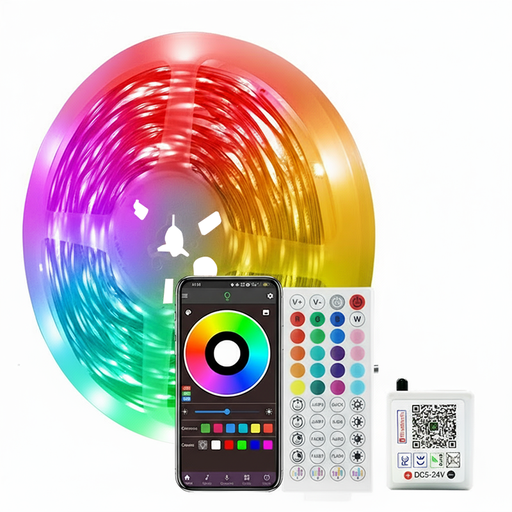
Why This Fits Their Persona: Ideal for users looking for a straightforward and flexible solution for accent lighting. The combination of a remote control and a Bluetooth app provides an easy entry into the world of smart lighting without the complexity of a Wi-Fi setup.
The dual control via a physical 40-key remote and the Vivreal app ensures functionality is maintained even if Bluetooth issues arise. The FPC circuit board is designed for reliable performance.
Offers a comprehensive feature set, including music sync and a timer function, at an accessible price point. The 5-metre length is versatile for TV backlighting or accenting furniture.
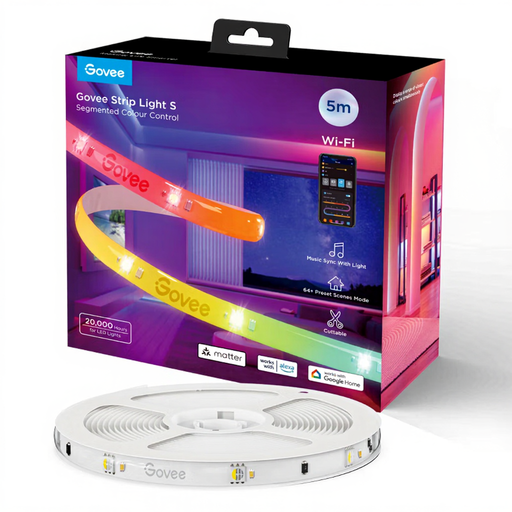
Why This Fits Their Persona: Perfect for demanding users who want maximum control and dynamic effects for their gaming setup or smart home. The RGBIC technology enables impressive, flowing colour gradients that intensify the gaming experience.
Matter certification and the well-established Govee Home app ensure stable, cross-platform connectivity, bypassing the issues of unstable no-name apps. The protective coating provides more even light distribution and protects the LEDs.
RGBIC technology for segmented colour control and Matter support for seamless integration into all major smart home ecosystems (Apple Home, Google Home, Alexa). This offers a high degree of customisation and future-proofing.
Why This Fits Their Persona: Designed for lighting entire rooms, long hallways, or for perimeter cove lighting. With a total length of 20 metres, this kit provides enough material for large-scale projects without having to buy and sync multiple individual kits.
This kit consists of two 10-metre rolls controlled by a single controller. This prevents the brightness and colour deviations that can occur when connecting multiple independent strips end-to-end.
The enormous length of 20 metres is the key advantage for large-scale installations. Despite its length, all smart features like app control, dimmability, and music sync are fully retained.
We have compiled a complete, up-to-date list of products that fully meet these strict selection criteria and comply with German safety regulations.
Power consumption depends on the length, LED density, and set brightness. A typical 5-metre RGB strip consumes between 15 and 30 watts at full brightness. In a dimmed state or when displaying darker colours, consumption is significantly lower. Most power adapters are rated for the maximum consumption of their respective strip.
Yes, most LED strips can be cut with standard scissors at the designated markings (often indicated by a scissor icon). To reconnect sections, you will need special solderless "connectors." Make sure to buy connectors that match the pin count (e.g., 4-pin for RGB) and width of your strip.
The most common cause is an improperly prepared surface. Before applying, thoroughly clean the surface with a degreasing agent (e.g., isopropyl alcohol) and ensure it is completely dry and dust-free. Adhesion can be poor on rough, porous, or powder-coated surfaces. In such cases, additional mounting clips or a stronger, double-sided mounting tape can help.