
Lieferung heute & morgen

Qualitätsgarantie

Willkommens-Angebote freischalten: KOSTENLOSE Lieferung | Bis zu 80 % RABATT | Kostenlose 30-Tage-JoyPlus-Testphase
App herunterladen
An RGB night light with motion sensor should do more than just brighten a dark hallway. You’re likely looking for changing colours, automatic activation, flexible mounting and a rechargeable design that doesn’t need a fixed power cable. At the same time, products differ significantly in their sensor technology, brightness, fixing method and intended use.
To make sure a decorative purchase doesn’t become an impractical solution, it’s worth looking at the technical specifications rather than just the number of colours or advertised light effects.
Many RGB products are primarily LED ambient lights or mood lights with a motion sensor. Their job is to create a decorative lighting effect, not to fully illuminate a room. For a gaming desk, a shelf or the night-time trip to the bathroom, that can be enough. However, as the sole light source in a living room or bedroom, the brightness may not be sufficient.
So pay attention to details such as lumens, colour temperature and dimmability. A high number of colours says nothing about how bright the light actually appears in everyday use.
“Automatic” can mean different things. A PIR sensor reacts to detected movement, whereas a dusk sensor only assesses the ambient light level. Some lights combine both principles, while others switch on with every movement detected, regardless of the time of day.
For a hallway, staircase or child’s bedroom, it’s also important to know whether the detection range is stated and how long the light stays on after the last movement. If this information is missing, it’s hard to judge how practical the light will be day to day.
A magnetic night light is usually easier to remove and recharge than a lamp that’s stuck in place with adhesive. With adhesive strips, durability depends heavily on a clean, dry and smooth surface. The weight of the product and the position of the sensor also play a role.
Check before you buy whether the light is designed for a wall, furniture, metal surfaces or a flat shelf. For changing locations, a portable night light with a rechargeable battery is generally more flexible than a plug-in model.
A PIR motion sensor detects changes caused by moving heat sources. The actual range should be stated in metres. With the Ultra-thin Cabinet Light, for example, the detection distance is given as 3 to 5 metres. That’s useful for cupboards, kitchen areas and short hallways, but it won’t suit every room equally well.
A dusk sensor works differently: the Aigostar LED Night Light is said to activate at less than 20 lux. So this product reacts to darkness, not movement. If you’re specifically looking for an RGB night light with a motion sensor, don’t confuse the two sensor types.
A USB-C night light can be easier to charge in everyday use, provided you already have suitable adapters or cables. Details about battery capacity, charging time and usage duration are important. You shouldn’t assume a specific operating time without checking, as it depends on brightness, colour and how often the light is activated.
With a rechargeable LED lamp, you should also check whether the charging cable is included and whether the light can be used while it’s charging. Plug-in models, on the other hand, don’t need battery changes or charging schedules, but they are tied to the installation location.
RGB light can appear as a static colour, colour cycling or a preset effect. According to the product details, the Yeelight Vega RGB Night Light offers 11 preset effects and a magnetic fixing. That makes it suitable for users who want to combine decorative scenes with automatic activation.
The IP rating is also important. IP20 is intended for dry indoor spaces only. A higher rating doesn’t automatically mean a product is suitable for direct contact with water. Always check the manufacturer’s specific instructions and don’t position the light in damp areas unless it’s expressly designed for that.
The recommendations below group products by specific use cases. What matters isn’t just the number of features, but whether the sensor, power supply and mounting suit the intended location.

Why this product fits the profile: Two compact lights with a PIR sensor, USB charging and tool-free adhesive mounting cover several small areas.
The detection distance of 3 to 5 metres is clearly stated. USB charging is also specified, rather than assuming an unexplained continuous power supply.
800 mAh battery per light, three adjustable colour temperatures and two lamps per pack.
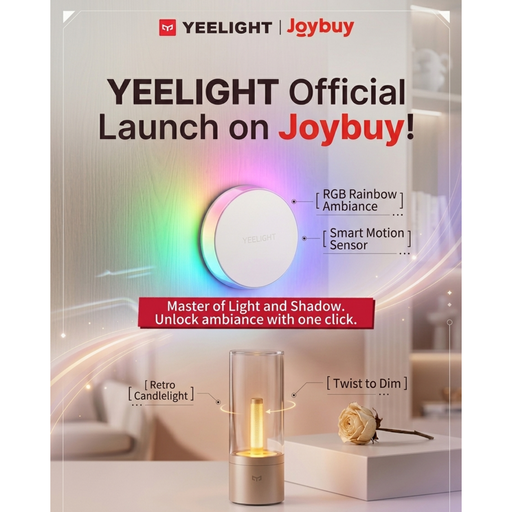
Why this product fits the profile: This product combines RGB mood light functions with motion sensors, magnetic fixing and USB-C charging.
The product description states the number of preset effects as well as the sensor and mounting features. This makes it easier to assess the specification.
11 preset light effects, magnetic fixing and rechargeable USB-C power supply.
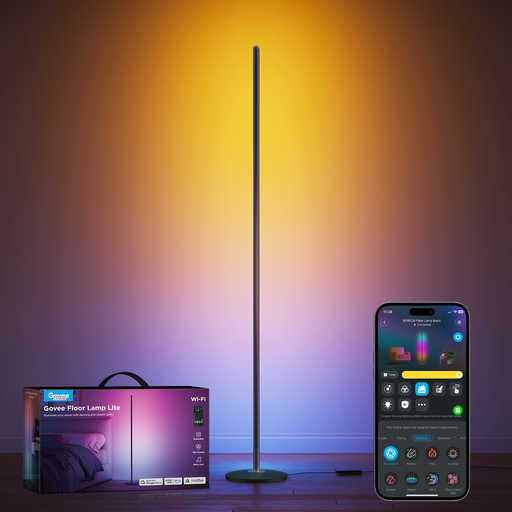
Why this product fits the profile: For gaming rooms, living rooms and home entertainment areas, this floor lamp provides stationary RGB lighting with app and voice control.
The specifications state 1,000 lumens, 24 watts, 58 scenes plus Wi-Fi, Bluetooth and voice control. Its use is therefore much clearer than with a small sensor light.
16 million colours, dimmable control, music mode and compatibility with Alexa and Google Assistant.
We’ve put together a complete, regularly updated list of products that fully meet these strict selection criteria and the safety regulations in force in the EU.
Depending on the model, mounting can be magnetic, with adhesive strips, on a shelf or via a fixed power connection. The surface should be clean, dry and as smooth as possible. Before final fixing, it’s a good idea to check the sensor position and the desired detection area.
The running time depends on brightness, colour, effect mode and how often the light is activated. Without a specific manufacturer’s figure, it can’t be reliably generalised. For frequent use in a hallway or bedroom, the charging port, charge indicator and the ability to easily remove the light are important selection criteria.
A battery-powered light uses energy from the battery during operation and then needs to be recharged. Stationary models usually state their consumption in watts – for example, the Govee LED Floor Lamp Lite at 24 watts. So the ongoing costs depend on how long the light is used, the brightness setting and actual usage.