
Lieferung heute & morgen

Qualitätsgarantie

Willkommens-Angebote freischalten: KOSTENLOSE Lieferung | Bis zu 80 % RABATT | Kostenlose 30-Tage-JoyPlus-Testphase
App herunterladen
Choosing the right RGBIC LED strip can be a challenge. The market is filled with products promising dynamic lighting effects and easy smart home integration. However, not all of them live up to their advertising claims. Many users invest in smart lighting only to be confronted with uneven colours, unstable connections, or weakening adhesive shortly after.
This guide is here to help. It highlights which technical features truly matter and how you can avoid common pitfalls to find a durable and functional lighting solution for your home, whether it's for the living room or the gaming room.
Before you make a purchase, it's important to know the typical weaknesses that often only become apparent after installation.
To avoid the problems mentioned above, you should pay attention to a few core parameters. These define the quality and future-viability of your smart lighting.
The technology behind the colours is the most important feature.
The new smart home standard Matter solves one of the biggest problems in the connected home: incompatibility between devices from different manufacturers. An LED strip with Matter can be seamlessly integrated into the ecosystems of Apple Home, Google Home, Amazon Alexa, and Samsung SmartThings, without relying on manufacturer-specific workarounds or multiple apps. Investing in Matter-certified products ensures stable, future-proof, and straightforward control.
The quality of the light is largely determined by two other factors:
Based on the criteria mentioned above, we have selected some products from our range that are suitable for different users and applications.
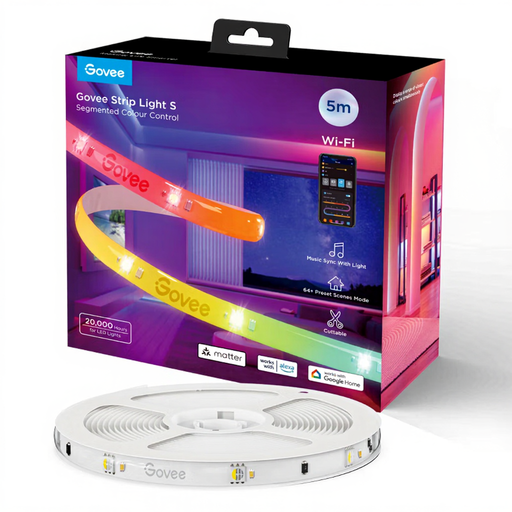
Why This Fits Their Persona: Ideal for users seeking a future-proof and seamlessly integrated solution. The Matter certification ensures smooth integration into existing smart home systems without compatibility issues.
Thanks to Matter support, it bypasses the trap of unstable, proprietary apps. The protective coating ensures durability and uniform light distribution without hotspots.
The combination of RGBIC technology for segmented colour control and future-proof Matter connectivity makes this Govee 5m LED Strip a versatile choice.
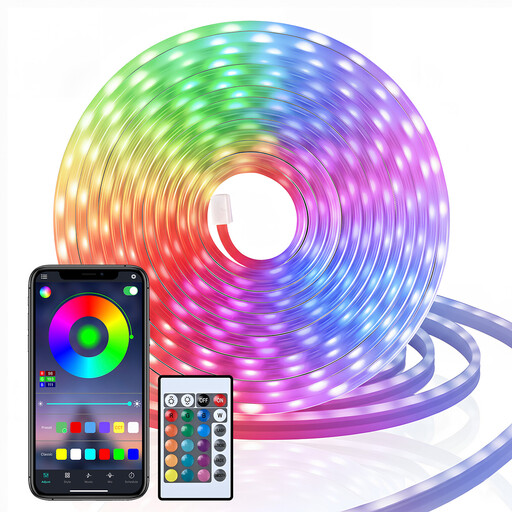
Why This Fits Their Persona: Perfect for creative setups where an immersive atmosphere is a priority. The music sync and flexible neon design allow for dynamic and custom light installations in a gaming room or studio.
The neon design with a silicone diffuser prevents visible hotspots from the start and ensures a continuous glow. The integrated microphone for music synchronisation works reliably and directly.
The high flexibility of the material allows for creative shapes and DIY neon signs. Control via the LED strip app and remote offers versatile customisation options.
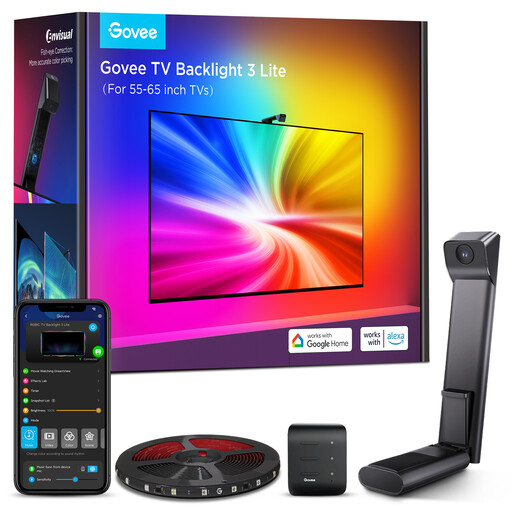
Why This Fits Their Persona: Specifically designed for TV backlighting to reduce eye strain and make the viewing experience more immersive. The installation is tailored for the back of the device.
As a complete kit for TVs, it avoids the problem of mismatched lengths and complicated installations. The Govee Home app provides stable and feature-rich control that is more reliable than no-name applications.
The RGBICW technology includes a dedicated white LED for more accurate warm white reproduction. Control via the Govee app provides access to numerous scene modes.
We have compiled a complete, up-to-date list of products that fully meet these strict selection criteria and all relevant safety standards.
1. What is the difference between RGB and RGBIC LED strips? The main difference lies in the control. An RGB strip can only display one colour across its entire length. An RGBIC strip has IC chips that allow different sections of the strip to light up in different colours. This enables dynamic effects like colour gradients or rainbow patterns.
2. Do I need a separate hub for a Wi-Fi LED strip with Matter? If you already have a Matter controller (also known as a Thread Border Router) in your home, you do not need an additional hub. Newer devices like an Apple TV 4K (Wi-Fi + Ethernet), Google Nest Hub (2nd Gen), or Amazon Echo (4th Gen) already act as such controllers. The LED strip then connects directly to your Matter network.
3. What is the lifespan of a high-quality LED strip? The lifespan of an LED strip is specified in operating hours and is often between 15,000 and 30,000 hours for quality models. The actual durability depends on the intensity of use, heat dissipation, and the quality of the components. A strip with good heat dissipation and a protective coating generally has a longer lifespan.