Who is photographing what?

Photographing against the light

If you want to retain detail in both bright skies and shadowy walls, look at the exposure controls available and whether exposure bracketing would suit you. Canon describes exposure bracketing for the PowerShot V1; Nikon explains that it captures several shots at different exposure levels.

Photographing from a distance

If you want to bring distant sections of wall closer from a path or viewpoint, without being able to change your position, compare the optical telephoto range in 35 mm equivalent terms. Panasonic lists 24–360 mm for the TZ300 and 24–720 mm for the TZ99.

Photographing close to the stonework

For tight architectural shots and surfaces in shade, the right wide-angle view can matter more than a long telephoto zoom. Canon lists 24 mm at the wide end for the PowerShot G7 X Mark III; Ricoh gives the GR IV a fixed focal length of around 28 mm in 35 mm equivalent terms.

What should you look for when buying?

Travel-zoom compact camera

A good fit if: You want to photograph distant sections of wall from a path or the opposite bank of the Rhine without moving closer. Panasonic lists 24–360 mm for the TZ300 and 24–720 mm for the TZ99, both in 35 mm equivalent terms.

The trade-off: A long telephoto range alone tells you nothing about image quality in low light.

Compact zoom with a shorter focal-length range

A good fit if: You want to photograph whole walls and subjects at medium distances while exploring. Sony lists 24–200 mm for the RX100 VII; according to Canon, the G7 X Mark III offers 24–100 mm at F1.8–2.8.

The trade-off: According to Sony, the RX100 VII reaches a maximum aperture of F4.5 at the telephoto end; the G7 X Mark III can’t frame the same distant subjects as the RX100 VII.

Wide-angle or fixed-lens camera

A good fit if: You want to compose close-up architecture and stonework with care. Canon lists 16–50 mm for the PowerShot V1; the Ricoh GR IV has a fixed focal length of around 28 mm in 35 mm equivalent terms.

The trade-off: A fixed lens has no optical zoom for distant battlements, so your framing depends more on your position and perspective.

Priority What to check when buying Who is it important to?
Contrast between sky and stonework Exposure compensation and bracketing; keep the camera steady for multiple shots. If I want to capture bright areas of sky and shadowy walls together, controllable exposure is important. Around 28% of consumers prioritise contrast.
Distant details in the stonework Check the optical focal-length range in 35 mm equivalent terms, not just a zoom figure. If I can’t change my position, the right optical telephoto framing matters to me. Around 22% of consumers put reach first.
Stonework in the shade Assess the maximum aperture at the focal length you need, the sensor specification and image stabilisation separately. For shady stone surfaces, I want to know what shooting conditions the lens can handle. Around 22% of consumers consider shooting in shade their top priority.
Fitting the whole wall into the frame from nearby Compare the wide-angle end in 35 mm equivalent terms with your typical shooting distance. If I’m standing close to a long wall, I need an angle of view that captures enough of the architecture. Around 17% of consumers prioritise a wide field of view.
Carrying it on a walk Compare the dimensions and weight of the complete camera, including the battery. If I want to carry the camera throughout my walk, it needs to be easy for me to take along. Around 11% of consumers put portability first.

Common buying mistakes

  • Confusing digital zoom with optical zoom

    For distant details in the stonework, the optical focal-length range is the key specification; digital magnification doesn’t provide extra optical reach.

    Compare the optical zoom range in 35 mm equivalent terms with the distance you expect to shoot from.

  • Assuming a long telephoto zoom means good results in the shade

    Zoom and aperture are different features. For the RX100 VII, Sony gives an aperture of F2.8 at the wide end and F4.5 at the telephoto end.

    Check the maximum aperture at the focal length you plan to use for details in the shade.

  • Choosing a fixed lens for photographing distant walls

    According to Ricoh, the GR IV has a fixed focal length of around 28 mm in 35 mm equivalent terms and no optical zoom.

    Choose this type of camera only if you can get the framing you want from your shooting position.

Camera brands worth considering

Sony

The RX100 VII is aimed at buyers looking for a 24–200 mm zoom range in a compact camera.

  • Sony specifies a 1.0-type sensor.
  • According to Sony, the maximum aperture changes from F2.8 at the wide end to F4.5 at the telephoto end; these specifications are no substitute for an independent image-quality test.

Panasonic

According to Panasonic, the TZ300 and TZ99 travel-zoom models offer 24–360 mm and 24–720 mm respectively, in 35 mm equivalent terms.

  • The stated long telephoto range can be useful for photographing distant sections of wall from a viewpoint.
  • The focal-length figures don’t prove equivalent performance in low light. F.A.Z. Kaufkompass ranked the TZ300 behind its recommendations for image quality.

Canon

According to Canon, the G7 X Mark III offers 24–100 mm at F1.8–2.8; the PowerShot V1 favours wider views, with a 16–50 mm range.

  • Canon documents exposure bracketing for the PowerShot V1.
  • The G7 X Mark III has less optical reach than the RX100 VII. According to Canon, the PowerShot V1 has no built-in viewfinder; the two models aren’t interchangeable, as they offer different angles of view.

Ricoh

The GR IV is an alternative for carefully composed architectural and surface shots with a fixed focal length.

  • Ricoh specifies an APS-C sensor and image stabilisation.
  • The built-in fixed lens is equivalent to around 28 mm in 35 mm terms and has no optical zoom for distant sections of wall.

Fujifilm

The X100VI is a fixed-lens alternative for buyers who value composition and a viewfinder more than telephoto reach.

  • Fujifilm specifies 40.2 MP, a hybrid viewfinder and in-body image stabilisation.
  • The X100VI isn’t a travel-zoom camera and has no optical telephoto range for distant details in the stonework.

Camera options at Joybuy

The camera options below for taking out and about include wide-angle, zoom and gimbal models. For distant sections of wall, check in particular whether the stated zoom is optical.
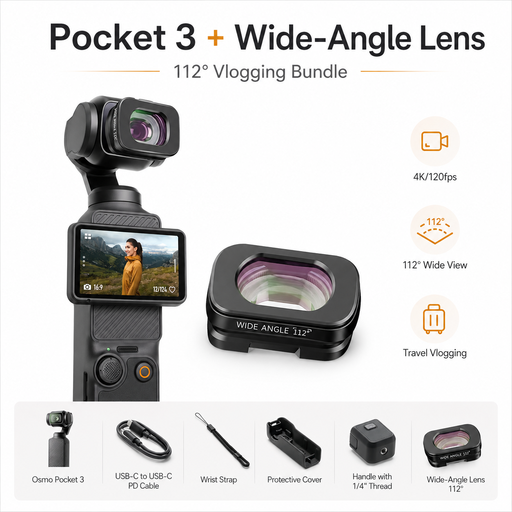
DJI Osmo Pocket 3 Standard Combo with ULANZI F35 112° wide-angle lens

DJI Osmo Pocket 3 Standard Combo + ULANZI F35 112° Wide-Angle Lens

The 112° wide-angle lens is useful for close-up, expansive architectural views; this is listed as a gimbal camera rather than a traditional compact camera.

The product details specify a 1-inch CMOS sensor, 4K/120fps and 3-axis stabilisation.

View at Joybuy

KOMERY G7-A digital camera, pink

KOMERY G7-A 4K Digital Camera, Pink

This portable digital camera with zoom could be an option for a day out; for distant details in the stonework, check whether the stated 18× zoom is optical.

The product name lists 80 MP, 4K and 18× zoom.

View at Joybuy
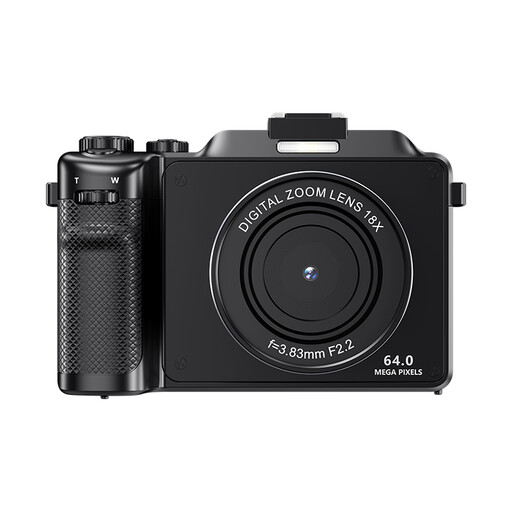
KOMERY X9 digital camera with autofocus, flash and 18× zoom

KOMERY X9 4K Digital Camera, Black

The zoom specification matters for subjects at different distances; before choosing this camera for distant sections of wall, check whether the 18× zoom is optical.

The product details specify 64 MP, autofocus, flash and image stabilisation.

View at Joybuy
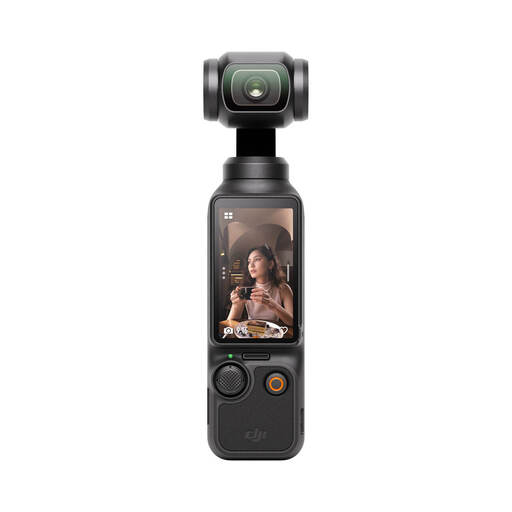
DJI Osmo Pocket 3 gimbal camera

DJI Osmo Pocket 3

This model is described as a compact camera for taking out and about, for both video and photography; it’s a gimbal camera, not a traditional travel-zoom compact camera.

The product details specify a 1-inch CMOS sensor, 4K/120fps and 3-axis stabilisation.

View at Joybuy

Songdian digital camera with 8× optical zoom, white

Songdian Digital Camera with 8× Optical Zoom, White

The zoom is specifically described as optical, which could be useful for distant sections of wall; compare the framing you need with your usual shooting distance.

The product name lists 8× optical zoom, 5K and 64 MP.

View at Joybuy

Frequently asked questions

How can I handle bright skies above dark castle walls?

For still subjects, you can take several shots at different exposure levels and, if appropriate, combine them into an HDR image. Before buying, check whether your chosen model offers exposure bracketing; Canon documents this feature for the PowerShot V1, for example.

Do I need to change the lens on a compact camera?

The compact cameras mentioned here have fixed lenses, so there’s no need to change lenses. Instead, choose a focal-length range that suits your shooting distance; you can’t later swap a fixed lens for a telephoto lens.

What happens if my camera develops a fault after I buy it in Germany?

When you buy from a trader, you’re generally entitled to a statutory guarantee of at least two years from the date you receive the goods. Your Europe, the European Union’s information portal, distinguishes this from a voluntary manufacturer’s guarantee; the seller is responsible for the statutory guarantee.

Can I photograph castle walls from a public path and publish the pictures?

Under certain conditions, § 59 UrhG permits the photographic reproduction and public communication of permanent works from public paths, roads or squares; for buildings, this applies only to their exterior. This doesn’t amount to blanket permission to enter private property or disregard the rules at a particular castle. The specific place where you take the photograph matters; the provision is reproduced by Gesetze im Internet, Federal Republic of Germany.