If you want to capture distant details in castle walls without changing lenses, a compact travel zoom camera is a natural place to start. If you’d rather have more control over framing and editing, consider a mirrorless camera with a carefully chosen set of lenses. When the light is changeable, check that the specific model supports RAW and exposure bracketing. Also compare the actual telephoto reach and the weight of your complete kit, not just the zoom rating or camera body.
Which camera is right for you?
Photographing in backlit conditions
You want to capture bright castle walls and deep shadows in the same scene, and you also take photos as the daylight fades. RAW and exposure bracketing are worth considering when dealing with strong differences in brightness.
Distant castle details
You photograph walls or towers from paths and viewpoints, and can’t move closer for every detail. What matters is whether the optical field of view suits the distances you’ll actually be shooting from.
Walking with your camera
You carry your kit over longer distances and are weighing up a compact camera against a complete kit of camera body and lenses. For a fair comparison, consider the weight of the entire kit.
What should you consider when choosing?
Compact travel zoom camera
A good fit if: You want to photograph castle views and distant sections of wall without changing lenses.
The trade-off: A long telephoto reach alone doesn’t tell you how the camera performs in low light.
Compact camera with a moderate zoom
A good fit if: You prefer a compact camera with a built-in zoom and don’t need a particularly long telephoto reach.
The trade-off: A shorter telephoto range may not be enough for distant details in castle walls.
Mirrorless camera with a set of lenses
A good fit if: You want more control over framing and later editing, and are happy to carry lenses with you.
The trade-off: The body alone won’t automatically cover both wide-angle and telephoto shots; lenses add to the packing and overall weight.
| What matters to you |
What to look for |
Who should consider it? |
| Light and contrast |
Check RAW support and exposure bracketing on the exact model; don’t assume HDR is available across an entire camera range. |
If I want to capture bright walls and deep shadows in the same photo in changeable daylight, contrast is my top priority. Around 33% of consumers put this concern first too. |
| Distant details |
Compare the optical focal-length range in 35mm-equivalent terms for photos; with mirrorless cameras, check which lenses are included. |
If I can’t move closer to a tower or wall detail, a suitably tight frame matters to me. Around 27% of consumers prioritise distant subjects. |
| Portability and weather |
Compare weights on the same basis, including lenses for mirrorless cameras; check weather protection for the specific combination. |
If I’m covering longer distances, the complete camera kit needs to fit in with my luggage; in changeable weather, protection for the kit I’m using matters too. Around 20% of consumers prioritise carrying weight. |
| Lenses and editing |
Check the mount, included lenses and RAW format on the exact model; note the conditions attached to advertised stabilisation figures. |
If I want to use different lenses to create a variety of angles and edit my photos later, I’m happy to carry extra kit. Around 20% of consumers prioritise lens choice and editing. |
Common buying mistakes
-
Assuming a high zoom rating means great photos at dusk
Telephoto reach and low-light performance are different things. For the Panasonic TZ99, the specifications list a maximum aperture of F6,4 at the telephoto end and a 1/2,3-inch sensor.
For your subjects, compare the optical field of view, sensor size and maximum aperture at the zoom setting you need separately.
-
Confusing camera body weight with the weight of your travel kit
Weight figures for mirrorless cameras don’t automatically include the lenses you’ll need for castle views and telephoto shots.
First put together the set of lenses you need, then compare the weight of the complete kit.
You may need another lens, depending on the angles of view you want.
-
Assuming the camera body’s weather protection applies to every lens
A protection rating for the camera body doesn’t automatically confirm that the attached lens combination is protected too.
Check the body and the specific lens as a combination before taking photos in changeable weather.
Key camera brands at a glance
Panasonic LUMIX
The TZ99 is a compact travel zoom camera, while the G97 is an interchangeable-lens camera. The two models offer different ways to cover reach and creative control.
- Panasonic lists a 30x optical zoom, RAW and an approximate weight of 322 g with battery and SD card for the TZ99; its maximum aperture at the telephoto end is F6,4.
- For the G97, Panasonic lists a 20,3-megapixel sensor and built-in 5-axis stabilisation; you’ll need a suitable lens for the angle of view you want.
Canon
The SX740 HS Lite Edition is a compact camera with a long zoom, while the EOS R50 is part of an RF/RF-S lens system.
- Canon lists a 40x optical zoom and an approximate weight of 299 g with battery and memory card for the SX740 HS Lite Edition.
- According to Canon, the EOS R50 doesn’t have sensor-shift image stabilisation. For telephoto shots, the specific lens or kit is therefore particularly important.
Sony
The RX100 VII combines a built-in zoom with a 1,0-inch sensor, making it an option for travellers who don’t need very long telephoto reach.
- Sony lists a 24–200 mm 35mm-equivalent focal-length range and maximum apertures of F2,8–4,5 across the zoom range.
- Its stated telephoto range ends sooner than the Panasonic TZ99’s; the specifications alone don’t establish a measured advantage in image quality.
Fujifilm
The X-S20 is a mirrorless camera for travellers looking to combine RAW, interchangeable lenses and in-body stabilisation.
- Fujifilm lists RAW and 5-axis in-body stabilisation. Its advertised 7-stop figure is based on a CIPA test using the XF35mmF1.4 R lens.
- Lenses and their weight need to be added to the camera body; the stated stabilisation figure doesn’t apply universally to every lens.
OM SYSTEM
The OM-5 Mark II is an interchangeable-lens camera for walks and photography in changeable weather.
- OM SYSTEM lists a weight of 418 g including battery and SD card, and an IP53 rating for the body. Its range also includes weather-sealed lenses.
- The body’s rating doesn’t confirm protection for every lens or complete camera kit.
Cameras to consider at Joybuy
The following Joybuy offers include compact zoom cameras and an APS-C mirrorless camera. What matters is whether the angle of view, the weight of the complete kit and its suitability for changeable weather match the way you take photos.
 No image available
Sony Alpha 6100 APS-C mirrorless camera with 16–50 mm power zoom lens
The included 16–50 mm zoom lens is useful for shooting at different angles; check whether its range covers your distant subjects.
The listing states that the camera is not waterproof.
Joybuy
 No image available
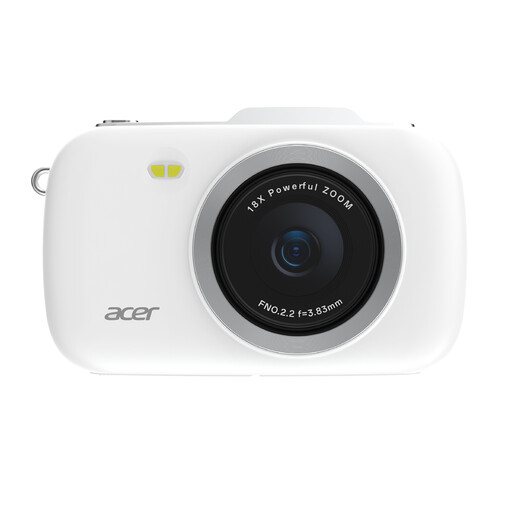
Komery G7-A digital camera with 18x zoom, white
The stated 18x zoom is useful for shooting at different distances; check that its reach suits your castle subjects.
The safety instructions advise against using the camera in damp conditions or immersing it in water.
Joybuy
 No image available
Komery W6 digital camera with 12x optical zoom and 4K
The title specifies 12x optical zoom; check whether this angle of view is enough for distant details in castle walls.
The instructions advise against using the camera in damp conditions or immersing it in water.
Joybuy
 No image available
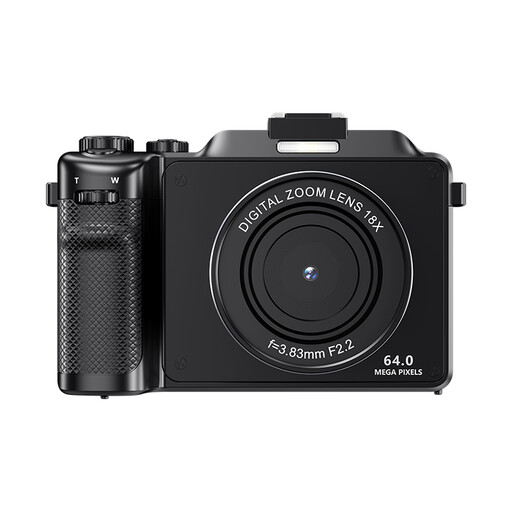
KOMERY X9 digital camera with 18x zoom, black
The title specifies 18x zoom for shooting at different distances; compare the stated reach with your subjects.
The safety instructions advise against exposing the camera to liquids or damp conditions.
Joybuy
 No image available
Songdian digital camera with 8x optical zoom, white
The title specifies 8x optical zoom; check whether this angle of view is wide enough for the distances you’ll be shooting from.
The safety instructions advise against pointing the camera directly at bright light sources for long periods, and warn against exposure to liquids and damp conditions.
Joybuy
Frequently asked questions
How do I photograph a castle wall in sunlight with a shadowy area in the frame?
Check the exposure in both the bright and dark areas of the frame. In high-contrast conditions, you can combine differently exposed shots into an HDR image; check the exposure bracketing function on the specific camera model to do this.
Is a stabilised camera body enough in the rain?
No. A protection rating for the body doesn’t automatically cover the attached equipment. OM SYSTEM lists an IP53 rating for the OM-5 Mark II body and offers weather-sealed lenses; before use, check that your chosen lens and complete set-up are suitable.
What should I look for in a camera kit besides the body?
Check which lenses are actually included and whether their angles of view cover your subjects. Canon’s EOS R50 kit with the RF-S 18–45 mm and RF-S 55–210 mm includes two lenses; other R50 offers may not include the same items.
Can I photograph a castle from a public path and publish the image?
Under the conditions set out in § 59 UrhG, photographs may be made and publicly shared of works that are permanently situated on public paths, roads or squares. For buildings, this only applies to the exterior view. The provision doesn’t automatically clarify access to a particular castle site or the rules for indoor areas.


