What should you look for when buying?
Freestanding appliance with a dedicated steam function
A good fit if: you can’t renovate the kitchen and want to use the appliance for other dishes too.
Things to consider: The appliance takes up worktop or storage space; the tank, condensation and accessories need looking after.
Built-in steam oven
A good fit if: you have a suitable housing space and several people will use the oven for baking too.
Things to consider: You’ll need to check the installation dimensions and connection, and agree who is responsible for cleaning.
Basic food steamer
A good fit if: you mainly want to steam food and don’t need oven functions.
Things to consider: Baking or browning functions aren’t included as standard; compatibility with tins and inserts depends on the model.
When choosing an appliance for steaming rice cakes in a shared kitchen, each row highlights the main buying consideration.
| Buying consideration |
What to look for |
Who should pay particular attention? |
| Dedicated steam cooking function |
Check the operating modes for the exact model and whether your chosen rice cake tin will fit inside. |
If you specifically want to steam your recipe, the appliance should clearly list this as an operating mode. Around 36% of consumers put a dedicated steam function first. |
| Footprint and storage |
Compare the external dimensions and weight with the available worktop and storage space, and check the required clearance around the appliance. |
If you share worktop space or need to put the appliance away after use, the available space often determines which type is right for you. Around 29% of consumers prioritise the appliance’s footprint. |
| Cleaning and maintenance |
Check the instructions for the tank and descaling; only use products suitable for that particular model. |
If several people use the appliance, it helps to agree who will clean the tank, drip tray and cooking compartment. Around 21% of consumers prioritise shared maintenance. |
| Tins and batch size |
Measure your tins and check the internal dimensions, shelf spacing and compatible accessories. |
If you want to use several rice cake tins at once, make sure they will actually fit on the shelves. Around 14% of consumers prioritise batch size. |
Steamers at Joybuy
The products below are food steamers and steaming pots that offer alternatives to a steam oven. You’ll need a suitable hob for a steaming pot. For all appliances, check whether you can use a suitable tin for your rice cake mixture.
 No image available
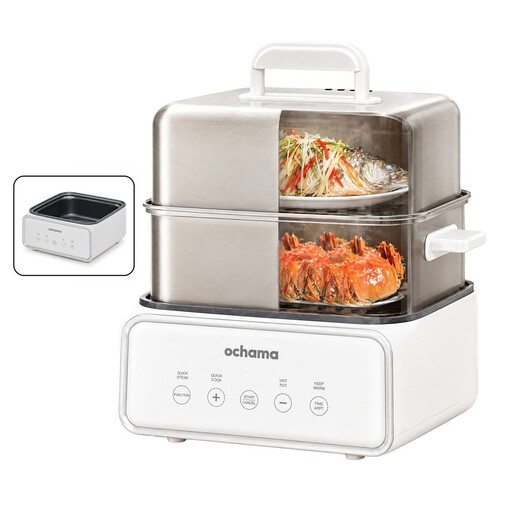
ochama Electric Food Steamer, 1500 W, 12 l, Two Compartments
For steaming separate portions; check whether your rice cake tin will fit inside the cooking compartment.
12 l, two independently usable levels and a removable steaming tray, according to the product description. The steam vent and inner pot get hot; use on a flat, heat-resistant surface.
View at Joybuy
 No image available
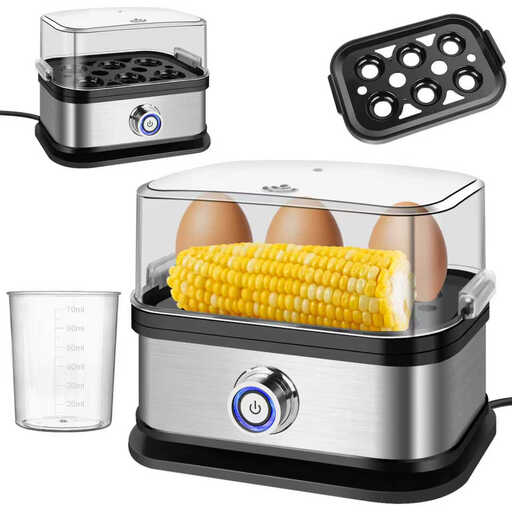
Electric Egg Cooker and Food Steamer, 350 W, for up to 6 Eggs
For small portions, if the stated uses suit your needs; the appliance is described as an egg cooker for up to six eggs.
350 W. The product description also mentions vegetables and poached eggs, but doesn’t confirm that a suitable rice cake tin will fit.
View at Joybuy
 No image available
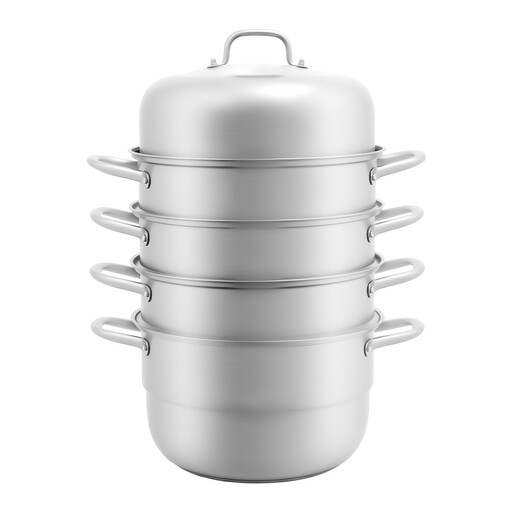
304 Stainless Steel Steaming Pot, 5 Tiers, 9 l
For steaming several portions on top of one another, provided you have a suitable hob and suitable tins.
Five tiers and a 9 l capacity, according to the product title. The inserts are perforated and won’t contain runny mixture on their own.
View at Joybuy
 No image available
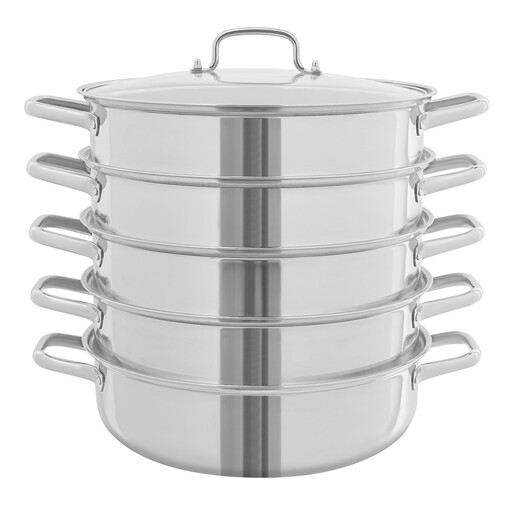
304 Stainless Steel Steaming Pot, 4 Tiers, 32 cm
For steaming several portions on stacked tiers, if you have a suitable hob.
Four tiers and a diameter of 32 cm, according to the product details. The inserts are perforated and won’t contain runny mixture on their own; check that the pot is compatible with your hob.
View at Joybuy
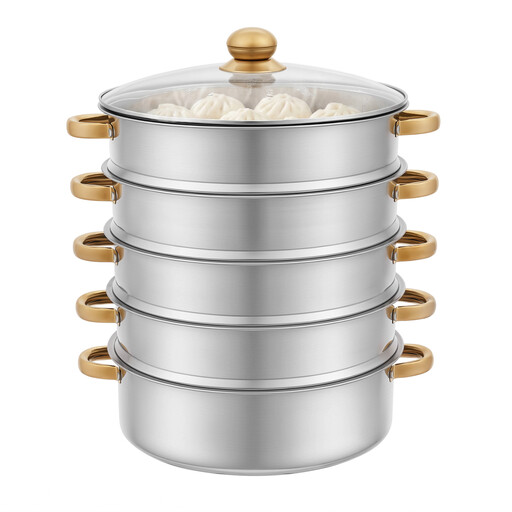 No image available
Stainless Steel Steaming Pot, 5 Tiers, 30 cm, 9 l
For steaming several portions on stacked tiers, if you have a compatible hob and the tins fit on the tiers.
Five tiers, a diameter of 30 cm and a 9 l capacity, according to the product details. Described as suitable for gas and induction hobs; the perforated inserts won’t contain runny mixture on their own.
View at Joybuy
Frequently asked questions
Can I steam rice cakes in any oven with steam assistance?
No. “Steam assistance” doesn’t automatically mean the oven has a dedicated steam cooking mode. Check the operating modes and tin requirements for the exact model; Panasonic explicitly lists steam cooking as a selectable function for the NN-DS59NMETG. This doesn’t confirm a cooking time for rice cakes that applies across different models.
What should I check before installing an appliance in a shared kitchen?
Check with the person responsible that you’re allowed to install the appliance, and check the required space or installation dimensions, power supply and instructions in the appliance manual. Steba specifies external dimensions of 44 × 52.5 × 43 cm and a power rating of 1,900–2,200 W for the DG 30. These figures apply to this model; they aren’t general minimum requirements.
How should I look after the water tank?
Follow the instructions for the specific model and agree who will clean the tank, drip tray and cooking compartment after use. For the steam oven ranges covered in its guidance, AEG advises against adding vinegar essence to the water tank; descaling instructions vary by model.
How should I store steamed rice cakes for later?
Don’t leave cooked rice dishes at lukewarm temperatures for a long time without checking them. Following heat treatment, the German Federal Institute for Risk Assessment recommends cooling food quickly to no more than 7 °C, or keeping it sufficiently hot at a minimum of 60 °C throughout the product.
Which labels and documents should I check for an electrical appliance in Germany?
If an appliance is covered by relevant harmonised EU legislation, it must carry the CE marking required under that legislation. Also check the appliance’s identity, manufacturer details and safety instructions in German; Germany’s Federal Network Agency lists these as criteria in its market surveillance. The CE marking is not an independent quality mark.


