Who needs to take care when choosing

Families with a specific allergen avoidance list

For trips out or days in childcare, they need a snack whose current ingredients and allergen information match their child’s avoidance list. A claim such as ‘gluten-free’ doesn’t answer questions about other substances they need to avoid.

Parents looking for easy snacks to take out and about

They want to pack handy rice cakes with an ingredients list that’s easy to check. Even with a plain variety, it’s important to read the precautionary allergen information on the specific pack.

Families choosing between different flavours

When choosing fruit or chocolate rice cakes, they weigh up the taste against additional ingredients and declared allergens. The figures per 100 g provide a consistent basis for comparing nutritional values.

What to look for when buying

If your child has a specific avoidance list, checking it against the pack comes first. Only then is it worth choosing between a plain recipe and other flavours.

Criteria What to check when buying Who it matters most to
Individual allergens Compare the current ingredients and allergen information with the avoidance list; assess precautionary allergen information according to the agreed individual guidelines. If my child needs to avoid certain substances, I want to know whether this specific pack is suitable before putting it in their bag. Around 42% of consumers put this check first.
A simple snack option Check the ingredients list and pack size; read the precautionary allergen information on plain rice cakes too. For a day in childcare, I need something handy with a recipe I can check quickly. This is the top priority for around 33% of consumers.
Flavour and nutritional values Compare additional ingredients and allergens, as well as sugar and saturated fat per 100 g. If my child is more likely to eat a fruit or chocolate variety, I want to understand its ingredients and nutritional values before choosing. This is the first consideration for around 25% of consumers.

Common mistakes when choosing

  • Assuming ‘made with rice’ or ‘gluten-free’ means ‘allergen-free’

    A simple recipe doesn’t rule out precautionary allergen information: EDEKA says its organic plain rice cakes may contain traces of sesame; Kallo says its unsalted organic rice cakes may contain traces of milk, sesame and soya.

    If your child has a specific allergy, compare the current pack with their individual avoidance list and the agreed guidelines for precautionary allergen information.

  • Treating coated rice cakes like plain ones

    The EDEKA rice cake with white chocolate, matcha and strawberries contains milk and soya. Its recipe is therefore different from EDEKA’s organic plain variety.

    Check the allergens for every variety and compare the nutritional values per 100 g, rather than relying on the flavour description alone.

  • Planning rice cakes as the only snack served regularly

    The German Federal Institute for Risk Assessment notes that rice products, including rice cakes, may contain relatively high levels of inorganic arsenic.

    Alternate rice cakes with other types of snack that are suitable for your child.

  • Checking an online product description instead of the pack

    EDEKA notes that online information may differ from the packaging. ALDI SÜD says that a GUT BIO rice cake may come from different suppliers, which can mean differences in nutritional values.

    Check the pack you’ve actually bought before putting it in your child’s bag. If they have a strict avoidance list, have another option that you’ve also checked ready.

Brands to consider

EDEKA Bio / EDEKA Herzstücke

The rice cakes described range from a plain variety to apple and chocolate flavours.

  • According to EDEKA, the organic plain variety contains rice as an ingredient and may contain traces of sesame.
  • For the apple variety, EDEKA lists possible traces of soya, sesame and milk; milk and soya are listed as allergens in the chocolate variety described. Always check the relevant pack.

Kallo

Kallo describes, among other options, unsalted, lightly salted and chocolate-coated rice cakes.

  • Kallo describes its unsalted organic wholegrain rice variety as gluten-free and lists organic wholegrain rice as an ingredient.
  • Even for this variety, Kallo lists possible traces of milk, sesame and soya. Information about other varieties doesn’t apply to this one.

GUT BIO / MAMIA BIO bei ALDI SÜD

ALDI SÜD lists salted organic rice cakes and MAMIA BIO mini apple rice cakes in its range.

  • You can assess each variety separately by checking the information on its specific pack.
  • For one GUT BIO variety, ALDI SÜD notes that it uses different suppliers and that nutritional values may vary. When choosing for allergens, the pack in your hand is what counts.

Rice cakes at Joybuy

These apple rice cakes are one option for a snack on the go. You’ll need to check the current pack to see whether its ingredients and precautionary allergen information match your child’s avoidance list.
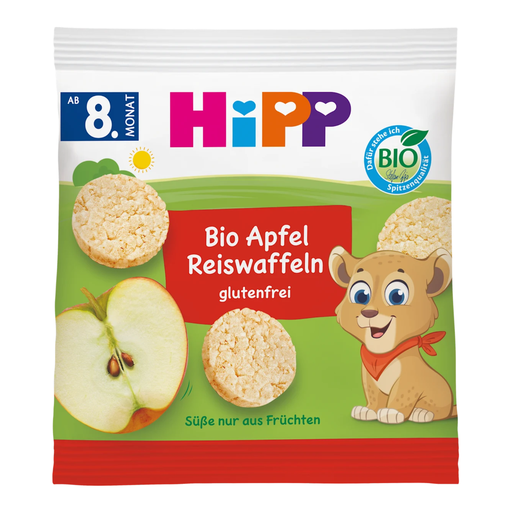
HiPP Apple Rice Cakes 8 Months+, 30 g

HiPP Apple Rice Cakes 8 Months+, 30 g

Apple rice cakes as a snack for children aged 8 months and over; the pack contains 30 g.

If you’re choosing these for a child with an allergy, check the current pack: this product may contain traces of milk, sesame and soya. Supervise children while they eat and don’t give them rice cakes while they’re lying down.

View at Joybuy

Frequently asked questions

Is a gluten-free rice cake suitable for people with other allergies too?

Not necessarily: ‘gluten-free’ doesn’t tell you whether the product contains milk, soya, sesame or other substances your child needs to avoid. Kallo says its unsalted organic rice cakes may contain traces of milk, sesame and soya, so check the specific pack against your child’s individual avoidance list.

How are allergens labelled on packaged rice cakes?

For prepacked foods, information must be provided about any allergens listed in Annex II of the EU Food Information Regulation. The European Commission explains this for prepacked foods, particularly in relation to Article 21. Also read any precautionary allergen information and assess it according to the individual guidance for your child.

Should rice cakes be the only snack your child has every day during the holidays?

Rice cakes shouldn’t be the only snack you serve regularly. The German Federal Institute for Risk Assessment notes that rice products may contain relatively high levels of inorganic arsenic, so alternate them with other suitable snacks.

What should holiday childcare staff know about a food allergy?

Staff should know about your child’s specific allergy and the measures agreed for them. The NRW Network for Childcare and School Meals recommends having an information chain and an allergy plan in place. Also check which snacks brought from home are suitable according to your child’s individual avoidance list.