Parents looking for gluten-free snacks
For everyday snacking, they want a straightforward rice cake with clear labelling. Ingredients and warnings about sesame, milk or soya are separate things to check.


For a quick snack for yourself, check the label on the specific rice cake: “gluten-free” doesn’t tell you whether it contains sesame or may contain traces of other allergens. If your baby will be eating them too, choose an option specifically labelled as suitable for their age and check the allergens as well. The German Federal Institute for Risk Assessment recommends offering a varied diet rather than relying solely on rice products, due to the possibility of inorganic arsenic.
For everyday snacking, they want a straightforward rice cake with clear labelling. Ingredients and warnings about sesame, milk or soya are separate things to check.
The ingredients and any precautionary allergen warnings on the specific pack will determine whether a rice cake meets their individual needs.
They need an option specifically labelled as suitable for their baby’s age, rather than assuming an ordinary rice cake is baby food based on its ingredients alone.
First, decide who will be eating the rice cakes. Then check the gluten-free labelling, ingredients and precautionary allergen warnings on the specific pack.
| What to check | What to look for | Who it matters to |
|---|---|---|
| Allergens and traces | Compare the ingredients, highlighted allergens and precautionary allergen warnings on the current pack with your individual needs. Under European Union rules, allergens present must be highlighted in the ingredients list. | If I need to avoid sesame, “gluten-free” isn’t enough: I also need to read the other ingredients and precautionary warnings. For around 42% of consumers, checking for allergens is the top priority. |
| Gluten-free snack | Look for an explicit gluten-free label. If you also need to avoid other ingredients, check the full ingredients list. | For my own snack, I want to find a rice cake clearly labelled gluten-free. Around 33% of consumers put this first when choosing. |
| Snack for a child | Check the age recommendation and serving instructions on the pack. The German Federal Institute for Risk Assessment advises offering a varied diet rather than relying solely on rice products. | If my baby will be eating them too, I need an option with an appropriate age recommendation rather than an ordinary rice cake. For around 25% of consumers, suitability for their child comes first. |
According to REWE, its gluten-free REWE Bio Rice Cakes contain sesame and may also contain traces of milk and soya. The gluten-free label doesn’t answer these questions.
If you need to avoid an allergen, check the ingredients and precautionary allergen warnings on the current pack individually.
EDEKA labels its Apple Mini Rice Cakes as suitable from 8 months. You can’t apply this age recommendation to other rice cakes.
For a baby, choose an option labelled as suitable for their age and follow the serving instructions. The German Federal Institute for Risk Assessment also recommends offering a varied diet when it comes to rice products.
According to EDEKA, its EDEKA Bio Natural Rice Cakes are made from rice, but may contain traces of sesame.
If you have a sesame allergy, check the precautionary warning as well as the ingredients list.
EDEKA notes that product information may differ from the packaging. The label on the pack you actually receive is what matters when choosing.
Before eating, check the ingredients, allergens and age recommendations on that pack again.
REWE sells a range of rice and corn cakes. If you’re choosing with allergens in mind, it’s important to check the specific variety.
EDEKA sells Bio Natural Rice Cakes and an apple mini variety labelled as baby food.
Kallo describes Organic Unsalted as a gluten-free wholegrain rice cake.
ALDI SÜD describes a salted organic rice cake sold in a 135-g pack.
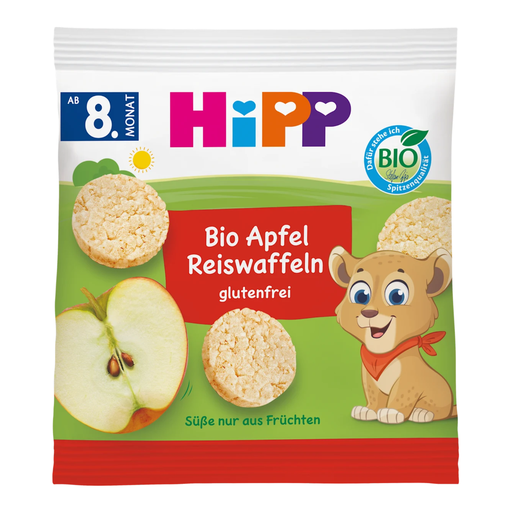
This selection features an apple rice cake labelled as suitable for babies from a particular age. Before buying, check the pack for ingredients, allergens and serving instructions. The same applies to the specific labelling if you’re choosing a gluten-free snack for yourself.
 No image available
An option if you’re looking for apple rice cakes labelled as suitable from 8 months. The listing states that the pack contains 30g. Check the ingredients and any potential allergen traces against the current packaging. Supervise your child while they’re eating, and don’t offer rice cakes when they’re lying down.
No. According to REWE, its gluten-free REWE Bio Rice Cakes contain sesame and may contain traces of milk and soya. Check the ingredients and precautionary allergen warnings on the current pack for each variety.
It indicates that the product may have been unintentionally exposed to the allergen; it doesn’t mean it’s a regular ingredient. The gluten-free label alone can’t tell you whether the rice cake is suitable for your individual needs.
An ordinary rice cake shouldn’t be considered a baby snack based on its ingredients alone. Look for an age recommendation that’s right for your baby and follow the serving instructions on the specific pack. For example, EDEKA labels its Apple Mini Rice Cakes as suitable from 8 months.
The German Federal Institute for Risk Assessment notes that rice and rice products can contain relatively high levels of inorganic arsenic. It recommends a varied diet rather than relying solely on rice-based products.
Before eating the product, check the pack you receive. EDEKA notes that its product information may differ from the packaging, so check the ingredients, allergens and, where relevant, the age recommendation on the pack too.