When choosing rice cakes for baby-led weaning, the number of calories per cake is not a useful main consideration. Once your child is ready for solids, an unsalted, not-too-sweet option may be suitable as an occasional finger food – but not as a substitute for a varied weaning diet. The German Federal Institute for Risk Assessment highlights the possibility of inorganic arsenic in rice products, so the German Consumer Advice Centre recommends varying the types of grain you offer.
Who these questions matter to
Parents looking for simple finger food
You might want to offer an unsalted, not-too-sweet rice cake with a short ingredients list now and then, without making it a meal. The German Healthy Start Network recommends avoiding added salt and strongly sweet flavours when introducing solid foods.
Parents who want to vary the grains they offer
You may not want rice products to become an everyday habit. The German Federal Institute for Risk Assessment highlights the possibility of inorganic arsenic in rice products, while the German Consumer Advice Centre recommends varying the types of grain offered to babies and toddlers.
Parents comparing baby products with plain alternatives
What matters is whether the product suits your child, as well as the ingredients, sugar content and allergen information on the specific pack. An age recommendation on a baby product does not replace checking whether your individual child is ready for solid foods.
What to consider when choosing
Plain rice cakes, fruity mini rice cakes for babies and finger food made from other grains each suit different needs. A low calorie count per cake alone does not make any of these products the right choice.
Unsalted plain rice cake
Suitable if: You want to offer a child who is ready for solids a simple finger food now and then, and a short ingredients list is important to you.
Bear in mind: A plain rice cake is still a rice product. The EDEKA example contains rice as its only ingredient; the pack warns that it may contain traces of sesame.
Fruity mini rice cake for babies
Suitable if: You want a smaller format and the ingredients and age recommendation are right for your child.
Bear in mind: Fruity does not mean sugar-free: according to EDEKA, its apple rice cakes contain apple juice concentrate and 9,5 g of sugar per 100 g.
Finger food made from other grains
Suitable if: You already offer rice products regularly and want to vary the types of grain you give your child.
Bear in mind: Choosing a different grain does not remove the need to check the ingredients, age recommendation and suitability of the finger food for your child.
| What matters |
What to check when buying |
Who it matters most to |
| Variety of grains |
Consider rice cakes alongside other rice products in your meal plan, and include finger foods made from other grains too. |
Rice is already a regular part of our meals, so I want to offer some variety with finger food. Around 33 % of consumers considering rice cakes for baby-led weaning would make grain variety their top purchasing consideration. |
| Readiness for solids and meals |
Look for individual signs of readiness and check the age recommendation; offer rice cakes only as part of a varied weaning diet. |
Before I choose a snack, my child needs to be ready for finger foods and continue to get suitable solid foods. For around 33 % of these consumers, using the product as part of a suitable weaning diet would be the top priority. |
| Ingredients, salt and sweetness |
Compare the ingredients list and the salt and sugar per 100 g; read the allergen and traces information on the pack. |
I’m looking for something with no added salt and no strong sweetness, rather than relying on the words “baby product” alone. This ingredient profile would be the main consideration for around 20 % of consumers. |
| Calorie information |
Compare the energy value per 100 g on a like-for-like basis; treat the per-cake figure as portion information. |
A low figure per rice cake doesn’t tell me how energy-dense the food is per 100 g. Around 14 % of consumers would want to understand the calorie information this way first. |
Common misconceptions
-
Assuming few calories per cake means “low-calorie”
Kallo gives 27 kcal per cake for its Organic Lightly Salted Wholegrain Rice Cakes. The portion figure does not tell you the energy value per 100 g. Lebensmittelklarheit explains that, for solid foods to be described as “low-calorie”, they must contain no more than 40 kcal per 100 g.
Compare the nutrition information per 100 g, and don’t choose weaning foods based on energy value alone.
-
Thinking an organic or baby label answers the question about rice
Rice cakes remain rice products, even when they carry these labels. The German Federal Institute for Risk Assessment notes that rice products may contain inorganic arsenic.
Offer rice cakes occasionally and, as recommended by the German Consumer Advice Centre, vary the types of grain you give your child.
-
Treating fruity rice cakes like plain ones
A fruity variety may contain apple juice concentrate. EDEKA states that its apple rice cakes contain 9,5 g of sugar per 100 g; its plain variety was found to contain 0,6 g per 100 g.
Read the ingredients list and nutrition information on the specific pack if you’re looking for a snack that isn’t too sweet.
-
Taking age recommendations and allergen information at face value
A label such as “from 8 months” applies to that particular product, but it doesn’t tell you whether an individual child is ready for solid foods. Traces warnings can also vary between products.
Check the current pack. According to the German Healthy Start Network, signs of readiness include being able to hold their head up and sit upright with support.
Brands and product ranges to help you choose
EDEKA Bio
EDEKA offers both plain organic rice cakes and apple rice cakes marketed as a baby product.
- The plain variety lists rice as its only ingredient; EDEKA says the apple variety is suitable from 8 months.
- The plain variety may contain traces of sesame. The apple variety contains apple juice concentrate; EDEKA states that it contains 9,5 g of sugar per 100 g.
MAMIA BIO (ALDI SÜD)
MAMIA BIO is a range of products for babies and toddlers from ALDI SÜD, including organic mini apple rice cakes.
- ALDI SÜD labels its apple mini rice cakes as gluten-free and states that no flavourings have been added.
- The fruity variety contains sugars from fruit. Check the ingredients, age recommendation and allergen information for the specific product to make sure it’s suitable for your child.
Kallo
Kallo describes a range made from wholegrain rice, including Organic Lightly Salted Wholegrain Rice Cakes.
- Kallo gives a portion size of 27 kcal per cake for this variety.
- This variety contains sea salt. The German Healthy Start Network recommends avoiding added salt when choosing weaning foods; a low calorie count per cake doesn’t change that.
Suitable products at Joybuy
Here, an apple rice cake for occasional finger food sits alongside grain sticks as an alternative to rice. For both products, check the information on the current pack and make sure they’re suitable for your child.
 No image available
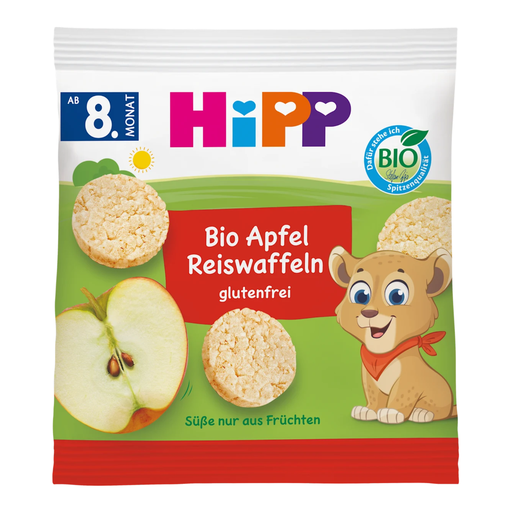
HiPP apple rice cakes from 8 months, 30 g
An option if you’d like to offer a fruity rice cake as finger food now and then. The product name gives a pack size of 30 g and an age recommendation from 8 months; also check that your child is ready for solid foods, along with the ingredients and allergen information on the pack.
View at Joybuy
 No image available
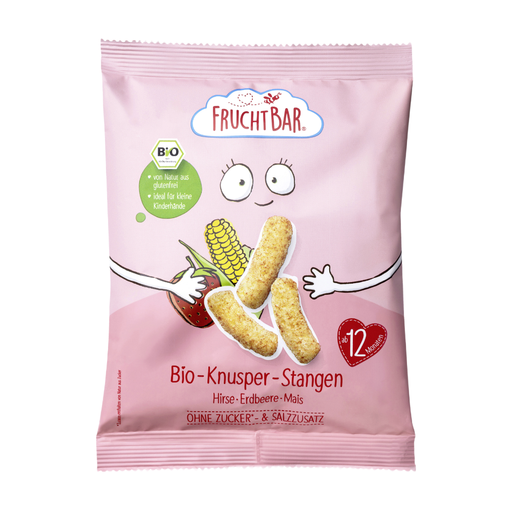
FruchtBar Organic Crispy Sticks millet and strawberry, 30 g
These grain sticks may suit you if you’re looking for finger food made with millet and strawberry instead of a rice cake. The pack size is 30 g. Before offering them to your child, check the age recommendation, ingredients and suitability.
View at Joybuy
Frequently asked questions
Are rice cakes a low-calorie choice for baby-led weaning?
Few calories per rice cake don’t make a product “low-calorie”. Lebensmittelklarheit sets a limit of 40 kcal per 100 g for this claim on solid foods, so compare the energy value per 100 g rather than just the portion. Your child’s readiness for solids, the ingredients and variety are also important when choosing weaning foods.
When can I offer my baby a rice cake?
An age recommendation on the pack does not replace checking whether your individual child is ready for solid foods. According to the German Healthy Start Network, a child should be able to hold their head up and sit upright with support, among other things. Also follow the age recommendation for the specific product.
Are rice cakes always gluten-free?
Rice itself is gluten-free, but the ingredients and allergen information for the specific product determine how it is labelled. EDEKA and ALDI SÜD label the apple rice cakes described here as gluten-free; don’t assume the same applies to other recipes.
Why should rice cakes only be offered occasionally?
Rice cakes should not be a regular staple of your child’s weaning diet, as rice products may contain inorganic arsenic and a varied diet remains important. The German Federal Institute for Risk Assessment highlights the potential for contamination; the German Consumer Advice Centre recommends varying the types of grain offered to babies and toddlers.


