Who should pay particular attention to their choice?

Anyone keeping an eye on their snack portion

If you want to pack a manageable portion for the festival, the energy listed per rice cake or stated portion is more helpful than the figure per 100 g alone. With chocolate-coated varieties, factor in the coating and the size of each cake too.

Festival-goers travelling light

Plain rice cakes make an easy snack to take with you. Check the storage instructions on your chosen pack, and stow the cakes somewhere dry where they won’t get crushed.

Anyone with questions about ingredients or regular consumption

If you have allergies, check the labelling on the specific product: rice cakes may contain additional ingredients or carry warnings about traces. If you eat rice products regularly or are choosing snacks for young children, consider including other grains too. This is advised by Germany’s Federal Institute for Risk Assessment and consumer advice centres.

What should you look for when buying?

First, compare the energy for the snack portion you plan to eat. Then choose a variety based on its ingredients, salt content and pack instructions.

What to consider What to check when buying Who should pay particular attention
Energy in your snack portion Compare kcal per rice cake or stated portion, and check the portion weight. REWE lists 26 kcal per 6.7-g portion for its organic rice cakes. If you want to plan how many rice cakes to pack, you’ll need a clear serving size. For around 36% of consumers, energy per portion would be the main concern.
Transport and storage Check the storage instructions and choose a pack that you can stow somewhere dry and protected from pressure. If you want to eat your snack on the go without any preparation, choose a pack that’s easy to take with you. This would be the main priority for around 29% of consumers.
Ingredients, salt and allergens Read the ingredients and allergen information on the current pack; for salted varieties, compare the salt content per 100 g. If you need to avoid certain ingredients or choose between plain and salted varieties, you’ll need reliable information about the specific product. This would be the most important buying criterion for around 21% of consumers.
Variety if you eat them regularly If you eat rice regularly, include snacks made with other grains too; this is particularly important for young children. If rice cakes are a regular snack or a young child will be eating them too, it’s more important to include a range of grains. Around 14% of consumers would give this priority.

Common mistakes when choosing

  • Comparing only kcal per 100 g

    The amount you actually eat as a snack also depends on how much each rice cake weighs and how many you take with you. The coating is included in the energy value for each variety.

    Compare the figures per rice cake or portion, including the weight, and decide how much you want to pack as a snack.

  • Treating plain, salted and chocolate-coated rice cakes as the same

    The varieties have different recipes. EDEKA lists 0.3% sea salt in its rice cakes with sea salt; chocolate-coated cakes contain additional ingredients.

    Choose a variety to suit your taste only after checking its ingredients list and nutritional information.

  • Assuming rice cakes are suitable for allergies because they contain rice

    According to REWE, its REWE Bio gluten-free rice cakes contain sesame and may contain traces of milk and soya. Other recipes have different labelling.

    Before buying, check the ingredients, highlighted allergens and trace warnings on the current pack.

  • Making rice cakes your only regular grain-based snack

    Germany’s Federal Institute for Risk Assessment points out that rice products such as rice cakes can contain relatively high levels of inorganic arsenic. Consumer advice centres particularly recommend varying the grains children eat, especially infants and toddlers.

    If you eat rice cakes regularly, include snacks made from other grains too, rather than relying on rice cakes alone.

Brands to help guide your choice

REWE Bio

REWE lists 26 kcal per stated 6.7 g portion for its gluten-free organic rice cakes made with wholegrain rice and sesame.

  • The portion information makes it easier to plan a specific number of rice cakes.
  • The product contains sesame and may contain traces of milk and soya.

EDEKA Bio

EDEKA sells plain organic rice cakes with no added salt, as well as a variety with 0.3% sea salt. Both come in 135-g packs.

  • The two varieties give you a clear choice between unsalted and salted.
  • Check for possible traces of sesame and read the information on the pack you actually buy.

ALDI

ALDI SÜD describes its GUT BIO organic rice cakes as salted; ALDI Nord lists organic varieties with sea salt and without salt.

  • For its salted variety, ALDI SÜD lists 381 kcal and 0.28 g of salt per 100 g.
  • According to ALDI SÜD, nutritional values may vary by supplier, so check the pack.

Kallo

On its UK product pages, Kallo lists 27 kcal per lightly salted rice cake and 84 kcal per milk chocolate rice cake. To compare the varieties, check the weight of each cake too.

  • The manufacturer’s figures show the energy per rice cake for two different recipes.
  • Check the allergen information for the milk chocolate variety; the UK product pages don’t say whether it’s available in Germany.

Joybuy products: lentil cakes as an alternative

If you’re open to a snack made with pulses as well as rice cakes for your festival, you could consider this lentil cake. It isn’t a rice cake, so check the nutritional information on the pack when working out your portion.
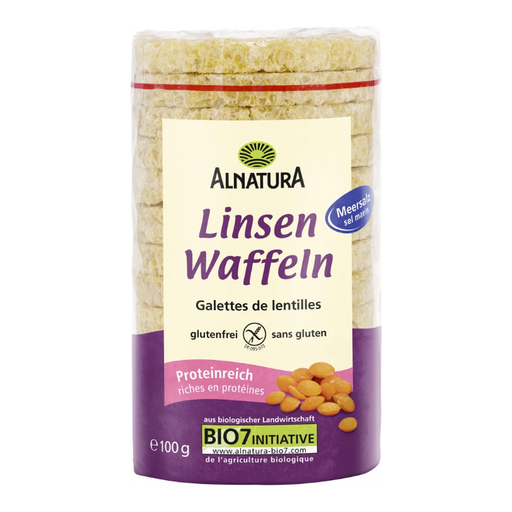
Alnatura organic lentil cakes, 100 g

Alnatura organic lentil cakes, 100 g

An alternative if you’d like to take a crunchy lentil-based snack instead of a rice cake. Check the portion and allergen information on the current pack to work out how many to take.

View at Joybuy

Frequently asked questions

Are rice cakes automatically low in calories?

No. The name alone doesn’t tell you how much energy is in your snack portion. REWE lists 26 kcal per 6.7-g portion for its organic rice cakes; on a UK product page, Kallo lists 84 kcal per milk chocolate rice cake. Always check the weight of the portion or individual cake too.

Can I take rice cakes to a festival without keeping them chilled?

Plain rice cakes can be taken along as a snack without refrigeration, provided you follow the storage instructions for your chosen product. For the biozentrale organic plain rice cakes listed by REWE, the advice is to store them somewhere dry and away from heat. You should also keep them protected from pressure. Toppings may need to be stored differently.

Are all rice cakes gluten-free and free from other allergens?

No. Always check the labelling for the specific product. REWE Bio rice cakes are described as gluten-free, but contain sesame and may contain traces of milk and soya. If you have allergies or need to avoid gluten, always check the current pack for the variety you’ve chosen.

Why should I vary the grains in my snacks if I eat them regularly?

According to Germany’s Federal Institute for Risk Assessment, rice products, including rice cakes, can contain relatively high levels of inorganic arsenic. Consumer advice centres recommend varying the grains children eat, particularly for infants and toddlers. So if you snack regularly, don’t make rice cakes your only grain-based option.