For a gluten-free snack cupboard, plain rice cakes are a sensible place to start, provided the specific product is labelled gluten-free. However, ‘gluten-free’ does not automatically mean free from milk, soya or sesame: the ingredients list and any may-contain warning on the individual pack are what matter. For snacks for young children, also check the age guidance and offer a variety of grains.
Who is this choice relevant to?
People avoiding specific allergens
When choosing a product, you need to distinguish specific ingredients such as sesame from warnings about possible traces of milk or soya. According to the German Food Federation, the ingredients list identifies allergens that must be declared; may-contain warnings refer to possible accidental presence.
People stocking up on gluten-free snacks
You’re looking for a rice cake with an appropriate gluten-free label, for home or when you’re out and about. Whether a plain option or a coated one is right for you also depends on the ingredients and flavour.
Parents of young children
The age guidance and ingredients on the individual pack are important. If rice cakes are eaten often, variety in grains matters too: Germany’s Federal Institute for Risk Assessment notes that rice products may contain inorganic arsenic, while the consumer advice centre recommends varying the types of grain in meals for young children.
What should you look for when buying?
First, decide which ingredient or allergen matters most to you. A gluten-free label does not answer other questions about allergens.
| Criteria |
What to check when buying |
Who it matters most to |
| Allergens and traces |
Check the ingredients list for allergens and look for a separate warning about possible traces. |
If I need to avoid sesame, milk or soya, the words ‘gluten-free’ aren’t enough to help me decide. For around 42% of consumers, checking for specific allergens and possible traces is the main priority. |
| A gluten-free snack base |
Check that the specific product is labelled gluten-free, and look at its ingredients and any coating. |
For my cupboard, I mainly want a plainly labelled rice cake with a simple list of ingredients. This straightforward gluten-free option is the main concern for around 33% of consumers. |
| A snack for young children |
Check the age guidance and ingredients; if the snack is eaten often, include other grains too. |
When choosing a snack for a young child, I want to know that it’s suitable for the stated age, without making rice cakes their main source of grain. This is the first consideration for around 25% of consumers. |
Common mistakes when choosing
-
Assuming ‘gluten-free’ means ‘free from all allergens’
According to REWE, its gluten-free REWE Bio rice cakes contain sesame and may contain traces of milk and soya. In a coated variety, milk and soya may also be regular ingredients.
Identify the specific allergen you need to avoid, then read both the ingredients list and any may-contain warning.
-
Treating coated rice cakes like plain ones
The strawberry variety described by EDEKA contains white chocolate with milk and soya. Its recipe is therefore quite different from that of a plain rice cake.
Compare the ingredients and nutritional information per 100 g when choosing between a plain and a sweet variety.
-
Making rice cakes a regular grain snack for young children
Germany’s Federal Institute for Risk Assessment notes that rice products, including rice cakes, may contain inorganic arsenic. For meals for young children, the consumer advice centre recommends varying the types of grain.
Follow the age guidance and include other suitable grain products as well as rice cakes.
-
Relying on online information instead of checking the pack
EDEKA notes in its product information that details may differ from those on the packaging. When you need to avoid an ingredient, the current label is especially important.
Before eating, check the ingredients list, highlighted allergens and any may-contain warnings on the pack you receive.
Brands to consider
REWE Bio
REWE offers rice cakes in different varieties. When checking for allergens, the specific variety matters more than the brand name.
- For its gluten-free REWE Bio rice cakes, REWE lists wholegrain rice and sesame as ingredients.
- They contain sesame; REWE also warns that they may contain traces of milk and soya.
EDEKA Bio / EDEKA Herzstücke
The varieties described range from mini blueberry rice cakes to a rice cake coated in white chocolate.
- EDEKA labels its organic blueberry variety gluten-free and suitable from 8 months.
- For the blueberry variety, EDEKA warns that it may contain traces of milk, sesame and soya. The white chocolate variety contains milk and soya.
Kallo
Kallo’s unsalted wholegrain rice cakes offer a point of comparison for a simple recipe.
- According to Kallo, its Organic Unsalted variety is made from organic wholegrain rice and is labelled gluten-free and vegan.
- Kallo warns that it may contain traces of milk, sesame and soya.
Rice cakes at Joybuy
This selection features a rice cake with age guidance for young children and a variety coated in milk chocolate. Which one suits your snack cupboard depends especially on the ingredients you need to avoid and the recipe you’re looking for.
 No image available
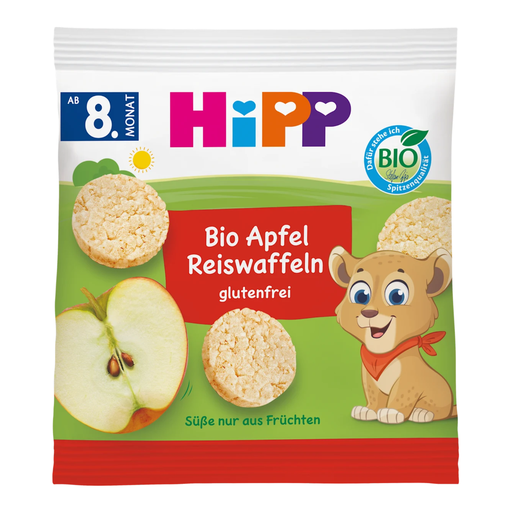
HiPP apple rice cakes, from 8 months, 30 g
If you’re looking for a rice cake snack labelled as suitable from 8 months, this variety may be an option, provided its ingredients meet your individual requirements.
The product description says it is gluten-free and warns that it may contain traces of milk, sesame and soya. Check the details on the current pack, supervise young children while they eat and don’t let them eat lying down.
View at Joybuy
 No image available
Alnatura organic rice cakes with whole milk chocolate, 100 g
This coated variety is a good match if you’re looking for a sweet rice cake, but not if you need to avoid milk.
The product description says it is gluten-free; it contains milk and may contain soya. Check the ingredients and allergen information on the pack before choosing it.
View at Joybuy
Frequently asked questions
Are all rice cakes automatically gluten-free?
No. The gluten-free claim must apply to the specific product. REWE labels the REWE Bio rice cakes mentioned here as gluten-free, as does Kallo for its Organic Unsalted variety; that doesn’t tell you anything about other varieties.
Are gluten-free rice cakes also free from milk, soya and sesame?
Not automatically. According to REWE, its gluten-free REWE Bio rice cakes contain sesame and may contain traces of milk and soya. Check the current ingredients list and any may-contain warning for the allergen that matters to you.
What does ‘may contain traces of …’ mean?
This warning refers to possible accidental presence, rather than an allergen being a regular ingredient. According to the German Food Federation, a may-contain warning is voluntary; it doesn’t confirm that the allergen is actually present, nor does its absence rule out accidental presence.
What should I look for in rice cakes for young children?
Check the age guidance, ingredients and allergen information on the specific pack, and offer a variety of grains. Germany’s Federal Institute for Risk Assessment notes that rice products may contain inorganic arsenic, so rice cakes shouldn’t make up the main source of grain.


