Which pack sizes suit different needs?

Shift teams needing smaller portions

If you’re dividing snacks between several breaks, people or lunchboxes, clearly stated individual quantities make planning easier. Also check whether they’re individually wrapped or need to be portioned out before your shift.

Stock-up shoppers who portion snacks themselves

If you’re buying for several night shifts and portioning snacks at home, you could choose several standard bags instead of smaller snack packs. Check the storage instructions on the packaging for any opened packs.

Shoppers keeping an eye on ingredients and salt

If you’re looking for a plain variety or a sweet alternative, compare the ingredients, nutrition information and allergen details on the individual pack. The name ‘rice cake’ alone tells you little about its sugar or salt content.

What should you look for when buying?

First, decide whether you need individual portions to take with you or larger bags to portion yourself. Then compare the specific variety and its pack details.

CriteriaWhat to checkWho is it important for?
Easy portioning Check how the pack is divided and whether the portions are individually wrapped: 3 × 32 g is a different format from three bags of 130 g each. If I’m sharing snacks with colleagues or packing lunchboxes, I want to plan the quantities without having to transfer them into other containers. Around 36% of consumers prioritise this need.
Short night-time break Check the pack size and nutrition information per 100 g; only use serving suggestions for the amount you actually plan to eat. For a short break, I want to take just a small snack and plan a larger meal separately. Around 29% of consumers prioritise portions for their breaks.
Ingredients and nutritional information Compare sugar and salt per 100 g, as well as the ingredients and highlighted allergens on the specific pack. If I’m choosing between plain, salted and chocolate rice cakes, I want to know how their labels differ. Around 21% of consumers prioritise this comparison.
Flavour and format For sweet or mini varieties, check the pack size, coating, sugar, fat and allergens. For an occasional sweet treat during a break, I’m looking for a different variety from plain rice cakes. Around 14% of consumers prioritise this choice of flavour.

Which assumptions can make choosing harder?

  • ‘Multipack’ doesn’t necessarily mean individual snack portions

    REWE lists a honey variety in a 3 × 32 g format, while a Kallo format described by Fruugo DE contains three bags of 130 g each. The quantities alone don’t tell you whether the smaller amounts are individually wrapped.

    Check the number and size of the individual packs, and see whether you’ll need to portion them yourself for breaks or lunchboxes.

  • Assuming chocolate rice cakes are the same as plain ones

    EDEKA’s product information gives the sugar content of its Bio Reiswaffeln Natur as 0.6 g per 100 g, compared with 28 g per 100 g for the dark chocolate variety. The chocolate variety also lists soya as an allergen.

    For coated varieties, compare the latest nutrition information and allergen labelling with those of a plain variety.

  • Relying on rice cakes as the only food for every night shift

    The German Nutrition Society recommends keeping meals during night shifts as light as possible. The German Federal Institute for Risk Assessment also notes that rice products such as rice cakes can contain relatively high levels of inorganic arsenic.

    Plan rice cakes as one of several snack options and, if needed, make separate arrangements for a complete meal. It’s also a good idea to vary the grains and types of snacks you eat.

  • Assuming a product listing means it’s available locally

    A listed format may not be available in every store or delivery area. EDEKA notes on its product pages that availability can vary between stores.

    Check availability at your chosen store before shopping, and read the information on the current packaging.

Brands and product ranges to consider

REWE Bio / REWE Beste Wahl

REWE lists organic rice cakes with honey in a 3 × 32 g format, as well as Beste Wahl mini rice cakes in a 50 g pack. These formats suit different break-time plans.

  • The honey variety’s pack information shows three individual quantities; check the packaging to see whether they’re individually wrapped.
  • For its mini rice cakes, REWE recommends storing them in an airtight container after opening and eating them within five days.

EDEKA Bio / EDEKA Herzstücke

EDEKA provides product information for plain rice cakes, as well as varieties with sea salt or dark chocolate. This makes it possible to compare the ingredients and nutritional information for each one.

  • According to EDEKA, the plain variety is unsalted; the sea salt version lists rice and sea salt as its ingredients.
  • The chocolate variety lists soya as an allergen. EDEKA notes that products may not be available in every store.

ALDI BIO / GUT BIO

ALDI Nord lists 135 g packs of organic rice cakes, with and without sea salt; ALDI SÜD also lists a 135 g salted variety.

  • You can tell the salted varieties apart by checking the details on each pack.
  • Check availability at your local store and the labelling on the specific variety.

Kallo

A Fruugo DE listing describes Kallo organic rice cakes with no added salt in a multipack of three 130 g bags. This format is better suited to people who want to stock up and portion them themselves.

  • The three stated 130 g packs make this a stock-up format, rather than a set of small individual portions.
  • Before ordering, check the latest delivery information and whether the larger format suits how you store and portion your snacks.

Joybuy products for break-time snacks

If you’re planning for breaks or sharing, a WANT WANT Senbei multipack could be worth considering. Senbei are seasoned rice crackers, not plain rice cakes, so compare the product type and current pack labelling with the snack you’re looking for.
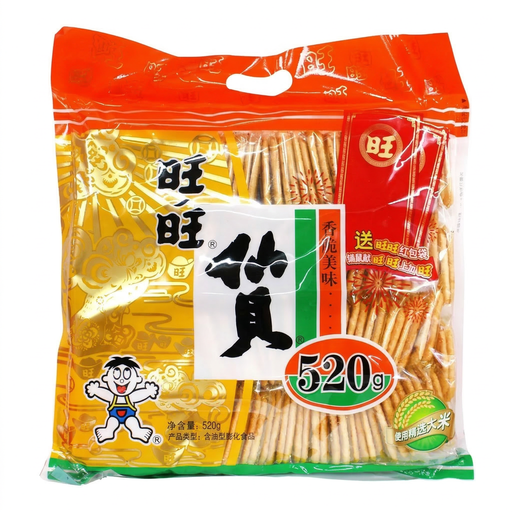
WANT WANT Senbei (Large), 520 g, 88 packs

WANT WANT Senbei (Large), 520 g, 88 packs

The individual packs could be useful for several breaks or for sharing if you’re after rice crackers rather than plain rice cakes.

The product name states 520 g and 88 packs. Check the portion size for your break-time plans. If you have a wheat or soya allergy, check the current ingredients and allergen information too.

View at Joybuy

Frequently asked questions

How can I tell whether a multipack is suitable for several breaks?

Check the number and size of the individual portions, and whether they’re separately wrapped. For example, REWE lists a honey variety in a 3 × 32 g format, while a Kallo three-pack described by Fruugo DE contains bags of 130 g each, which you’d need to portion yourself for smaller breaks.

Are rice cakes enough for a meal during a night shift?

Rice cakes aren’t automatically a complete meal. The German Nutrition Society recommends having meals that are as light as possible during night shifts. Whether you plan other foods as well depends on whether you need just a small snack or a full meal.

How should I store opened rice cakes for future shifts?

Follow the storage instructions on the specific pack. For REWE Beste Wahl mini rice cakes, REWE recommends using an airtight container after opening and eating them within five days. This guidance doesn’t automatically apply to other products.

What should I compare between plain and chocolate rice cakes?

Compare the ingredients, highlighted allergens, and sugar, fat and salt per 100 g on the current packaging. EDEKA’s stated sugar values differ between its plain and dark chocolate varieties; EDEKA also lists soya as an allergen for the latter.

Should I plan to have rice cakes as my only snack every day?

It makes sense to vary the grains and types of snacks you eat, rather than relying only on rice cakes. The German Federal Institute for Risk Assessment notes that rice products such as rice cakes can contain relatively high levels of inorganic arsenic.