A small pack is easier to plan as a single snack portion for a nursery lunchbox, while a larger pack is better suited to portioning out at home. A true multipack contains individually wrapped snack packs – the name alone tells you nothing about ingredients or allergens. So check the specific pack and avoid making rice cakes a daily, one-sided grain snack.
Who needs to think about pack size?
Parents packing a nursery lunchbox every day
When you pack a lunchbox every morning, a manageable portion matters. EDEKA and ALDI SÜD describe small pack sizes for children’s products, but the ingredients and any warnings about possible allergen traces still need to be suitable for your child.
Families who need to account for allergens
The name ‘rice cake’ isn’t enough to help you choose. For example, the REWE Bio variety contains sesame and may contain traces of milk and soya. Always check the information on the specific pack and follow your nursery’s requirements.
Households that eat rice products regularly
If you already include rice dishes or other rice snacks in your meals regularly, consider the full range of grains you eat. The German Federal Institute for Risk Assessment recommends varying the types of grain, particularly for babies and toddlers.
What should you look for when buying?
First decide whether you need a small pack for one snack, a bag to portion out at home or individually wrapped portions. Then check the ingredients and pack information against your child’s needs and your nursery’s requirements.
| What to consider |
What to check when buying |
Who it matters most to |
| Portion and pack format |
Check the weight, the number of separate snack packs and, where applicable, the age guidance. |
If you need a portion that can go straight into the lunchbox without splitting it up, the actual pack format is key. This is a priority for around 42% of consumers. |
| Ingredients and allergens |
Check the current ingredients list, highlighted allergens and any precautionary allergen warnings against your individual requirements. |
If my child has an allergy, I need to know which ingredients and allergen warnings are listed on the specific pack before putting it in their nursery lunchbox. Around 33% of consumers put this check first. |
| Variety in grain-based snacks |
Consider how often other rice products are on the menu alongside rice cakes. |
If we eat rice products often at home, I want to include other grain-based snacks in the lunchbox too. This variety is the main priority for around 25% of consumers. |
Common selection pitfalls
-
Assuming ‘gluten-free’ means ‘allergen-free’
According to the German Federal Institute for Risk Assessment, rice is naturally gluten-free. But that doesn’t tell you anything about other ingredients: the REWE Bio rice cakes described here contain sesame, and EDEKA lists possible traces of sesame, milk and soya for its apple rice cakes.
Read the ingredients list and allergen warnings on the current pack, and check them against your child’s needs and your nursery’s requirements.
-
Planning rice cakes as a daily grain-based snack
Rice products can contain inorganic arsenic. That’s why the German Federal Institute for Risk Assessment and the Verbraucherzentrale (German consumer advice centre) emphasise the importance of including different grains in the diets of young children.
Take other rice products in your usual diet into account too, and vary the grains you choose for snacks.
-
Mistaking a large bag for a portioned multipack
The 100-g pack of REWE Bio rice cakes is a larger format that you can portion out at home. By contrast, Kallo explicitly describes its chocolate product as a pack containing four snack packs.
Check whether the portions are individually wrapped and how much each one contains. If you have a larger bag, you can put the amount you need into a suitable container yourself.
Brands and product ranges to consider
EDEKA Bio
EDEKA describes apple rice cakes in a 35-g pack, with age guidance stating they are suitable from 8 months.
- The product page says they are shaped for little hands and labelled gluten-free.
- Possible traces of soya, sesame and milk are listed. A small pack doesn’t mean it contains several separate snack packs.
REWE Bio
The REWE Bio rice cakes featured here come in a 100-g pack, which you can portion out at home.
- REWE lists wholegrain rice and sesame as ingredients in this variety.
- The product contains sesame and may also contain traces of milk and soya. The portions are not individually wrapped.
MAMIA BIO / ALDI SÜD
ALDI SÜD describes MAMIA BIO mini apple rice cakes in a 50-g pack. The retailer also sells a 135-g version under the GUT BIO brand.
- The MAMIA BIO product page describes the mini rice cakes as gluten-free.
- For your choice, check the ingredients and allergen information on the specific pack. Don’t assume the details for one variety apply to the other.
Kallo
On its UK product page, Kallo describes milk chocolate rice cake minis in four separate snack packs. This is a good example of what to look for in a portioned multipack.
- The number of snack packs is stated clearly.
- The product contains milk and soya and may contain sesame and nuts. The UK product description doesn’t confirm that it is available in German shops.
ALDI / BISCOTTO
ALDI lists BISCOTTO rice cakes in a 150-g pack – a larger format than the children’s packs described here.
- The pack size is given in ALDI’s announcement.
- Before packing them for nursery, check the ingredients, allergens and portion size you need against the specific pack.
Rice cakes at Joybuy
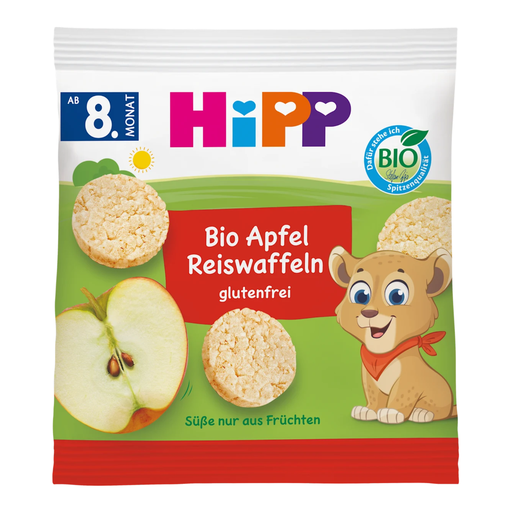
This small rice cake pack could suit anyone looking for a portion for a nursery lunchbox. Check before buying whether it contains several individually wrapped snack packs.
 No image available
Hipp apple rice cakes from 8 months, 30 g
The 30-g pack could work as a small portion in a nursery lunchbox, but its size alone doesn’t make it a multipack. The product name says it is suitable from 8 months. Before packing it, check how the pack is divided up, as well as the ingredients and allergen warnings, and follow your nursery’s requirements. A child should be supervised while eating and should not be lying down.
View at Joybuy
Frequently asked questions
Should rice cakes go in a nursery lunchbox every day?
Rice cakes shouldn’t become a daily, one-sided grain-based snack. The German Federal Institute for Risk Assessment notes that rice products can contain inorganic arsenic, while the Verbraucherzentrale recommends varying the grains in young children’s diets. You don’t necessarily need to rule rice cakes out, but you can alternate them with snacks made from other grains.
Do rice cakes always contain gluten?
No, rice is naturally gluten-free. Even so, the only way to tell whether a processed rice cake is suitable for a particular child is to check its ingredients list and labelling. Other allergens may be a concern regardless of gluten.
Is ‘gluten-free’ enough if you have other allergies to consider?
No. ‘Gluten-free’ doesn’t tell you whether other allergens are present. For example, the REWE Bio variety described here contains sesame and may contain traces of milk and soya. Check the current pack information against your child’s individual needs and your nursery’s requirements.


