Households planning ahead for several school days
If rice cakes regularly go into the lunchbox, it’s worth considering whether the number of portions is right and whether opened packs will stay crisp until they’re used up.


A larger pack of rice cakes only makes sense for school snacks if the individual portions suit your needs and you can store and use up the pack properly once it’s open. Check the ingredients and allergen information for every variety. Rice cakes shouldn’t be your child’s only snack every day, either.
If rice cakes regularly go into the lunchbox, it’s worth considering whether the number of portions is right and whether opened packs will stay crisp until they’re used up.
It’s the specific pack that matters when choosing. A gluten-free label doesn’t tell you whether the product contains sesame, for example, or whether it may contain traces of other allergens.
Rice cakes can be part of a lunchbox without being the only snack every day. The German Federal Institute for Risk Assessment points out that rice cakes can contain relatively high levels of inorganic arsenic.
First, work out how many portions you’ll need for the school week. Then compare varieties and labels, rather than choosing on pack size alone.
| What matters | What to check before buying | Who it matters to |
|---|---|---|
| Right amount for your needs | Total weight, number of individual packs and how the pack can be resealed once opened. | When I’m planning for several school days, I only want to stock up on as much as we’ll actually use. This is the main consideration for around 40% of consumers. |
| Taste and convenience | Compare plain, salted and coated varieties; check the ingredients in coated products. | For the lunchbox, I want to know that my chosen variety will be eaten and is easy to pack. This matters most to around 30% of consumers. |
| Gluten and allergens | The current gluten-free label, ingredients list and allergen traces information for the specific variety. | If someone in my family needs to avoid gluten or certain allergens, the information on the pack determines what we choose. This is the main concern for around 20% of consumers. |
| Variety | Plan which days to pack other suitable foods in the lunchbox. | I want to make use of a stock-up pack without making rice cakes the only snack every day. Around 10% of consumers put variety first. |
A large pack isn’t much help if it contains more portions than you need or you can’t use up the opened rice cakes.
Compare the total weight and number of individual packs with how much you expect to use over several school days.
According to the German Federal Institute for Risk Assessment, rice is gluten-free. However, some products may contain other ingredients, such as sesame, or state that they may contain traces of other allergens.
Check the current label on every variety you buy, even if you’ve bought the product before.
The German Federal Institute for Risk Assessment notes that rice cakes may contain relatively high levels of inorganic arsenic.
Vary rice cakes throughout the school week with other suitable bread, cereal, fruit or snack options.
Moisture can affect their crisp texture. The consumer advice centre recommends storing dried foods in a dry place in a tightly sealed container.
Seal the pack securely after opening or transfer the rice cakes to an airtight container.
REWE offers a range of rice cakes, including a sesame variety labelled gluten-free.
EDEKA lists plain and sea salt rice cakes, each in a 135 g pack.
Kallo offers unsalted wholegrain rice cakes for households looking for a plain option.
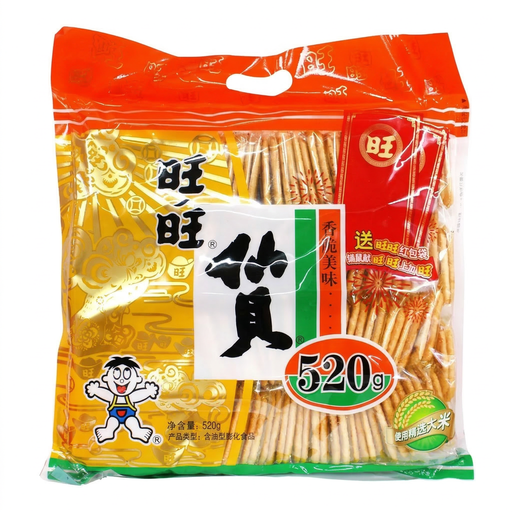
A pack of individually wrapped rice crackers could also be an option if you’re stocking up on snacks for school. Senbei aren’t the same as traditional rice cakes, though, so check the product type, ingredients and portion size to make sure they suit your needs.
 No image available
The individual packs may suit you if you’re planning rice crackers rather than traditional rice cakes for several school days.
The product name states a total weight of 520 g and 88 individual packs. According to the product description, it contains wheat (gluten) and soya. Check the current ingredients and allergen information before packing.
No. According to the German Federal Institute for Risk Assessment, rice is gluten-free. However, if you need to follow a gluten-free diet, check the label on the specific rice cakes you’re buying. Other ingredients and traces information vary by product.
Choose an amount you’re likely to use up before the quality of the opened pack deteriorates. Consider the number of individual packs and whether you can seal the pack tightly after opening.
Store them in a dry place in a tightly sealed container. The consumer advice centre recommends keeping dried foods in tightly sealed containers and protecting them from unsuitable storage conditions.
Don’t plan rice cakes as the only snack every day. The German Federal Institute for Risk Assessment points out that they may contain relatively high levels of inorganic arsenic, so vary them with other suitable snack options.