For a shared-house snack stash where everyone can choose their own portions and toppings, plain rice cakes are a sensible starting point. REWE lists its organic rice cakes at 26 kcal per 6.7 g cake. In a comparison of two EDEKA organic varieties, plain cakes contain 379 kcal per 100 g, compared with 509 kcal per 100 g for cakes coated in whole milk chocolate. Salt, ingredients and allergens are also important factors to consider, alongside portion size.
Which options are right for you?
Housemates keeping an eye on portions
If you want to portion out individual cakes and choose your own toppings, figures per cake can be useful. REWE lists its organic rice cakes at 26 kcal per 6.7 g cake. When choosing a chocolate-coated option, remember that the coating is part of the overall portion.
Housemates planning a shared snack stash
For a shared kitchen, it’s worth checking the pack size, preferred variety and whether the cakes are likely to get eaten. ALDI Nord describes its organic rice cakes as including a sea salt variety and a no-added-salt variety.
Housemates mindful of ingredients or allergens
When sharing a snack stash, check the labelling on each variety. REWE organic rice cakes contain sesame, while the ingredients and may-contain information also differ between the plain and chocolate varieties documented by other brands.
What matters when stocking up for a shared house?
First decide whether you want a plain base to add toppings to, or a cake that’s already salted or sweet. Then compare the portion size, pack size and labelling for the specific variety.
| Criteria | What to check when buying | Who it matters to |
|---|
| Portion and toppings |
Compare kcal per 100 g and, where listed, per cake; factor in your chosen topping. |
If I’m topping individual cakes, I want to be able to judge the whole snack portion. Around 33% of consumers put this kind of portion planning first. |
| Pack size and stock |
Check the pack weight, variety and local availability. |
When moving into a shared house, I want to choose a pack size we can finish together. For around 25% of consumers, this is the most important consideration. |
| Variety |
For rice and pulses-based cakes, compare the ingredients and the protein, fibre and salt content on each pack. |
If I don’t want rice to be my only snack option, I’d like another type of cake to choose from too. Around 25% of consumers value this variety above all. |
| Ingredients and allergens |
Read the salt information, ingredients list and allergen or may-contain warnings for the variety you’re buying. |
If we share a snack box, I want to know which ingredients matter to my housemates. For around 17% of consumers, labelling comes first. |
Common selection mistakes
-
Looking only at the kcal per cake
REWE lists its organic rice cakes at 26 kcal per 6.7 g cake, but they contain 383 kcal per 100 g. The figure per cake doesn’t include any toppings.
Use the per-cake figure to plan your portion, and remember to add any spread or other ingredients.
-
Treating chocolate-coated cakes like plain ones
According to the product information, EDEKA Bio’s whole milk chocolate variety contains 60% milk chocolate and has 509 kcal and 28.2 g of sugar per 100 g. The plain variety has 379 kcal and 0.6 g of sugar per 100 g.
Compare the nutritional information for the varieties you’re actually choosing, and treat the chocolate option as a sweet snack.
-
Filling the shared snack box without checking allergens
REWE organic rice cakes contain sesame and, according to the product information, may contain traces of milk and soya. EDEKA Bio’s whole milk variety contains milk.
Check the labelling on the current pack and store varieties with different allergen information separately.
-
Relying on rice products as your only snack
The German Federal Institute for Risk Assessment points out that rice and rice products such as rice cakes may contain relatively high levels of inorganic arsenic. This is not a measurement for any particular pack.
Include other grain-based or pulses-based snacks in your shared-house stash rather than relying on rice products all the time.
Key brands to consider
REWE Bio
The documented rice cakes are useful for comparing portion sizes and ingredients; REWE also lists lentil cakes as a different type of product.
- REWE lists its organic rice cakes at 26 kcal per 6.7 g cake.
- The rice cakes contain sesame and may contain traces of milk and soya.
EDEKA Bio
Plain, sea salt and whole milk chocolate rice cakes make it easy to compare specific varieties within this product range.
- EDEKA lists 379 kcal per 100 g for both the plain and sea salt varieties; their salt levels are 0.01 g and 0.31 g per 100 g respectively.
- For its whole milk chocolate variety, EDEKA lists 509 kcal and 28.2 g of sugar per 100 g.
ALDI Nord
The documented organic rice cakes include sea salt and no-added-salt varieties.
- ALDI Nord lists a pack size of 135 g for the rice cakes described.
- Check which variety is available at your local shop before you buy.
Kallo
The unsalted wholegrain rice cakes provide another documented per-cake figure to help you compare portions.
- Kallo lists 27 kcal per cake for its Organic Unsalted Wholegrain Rice Cakes.
- Kallo says the product may contain traces of milk, sesame and soya; check the labelling on the pack available to you.
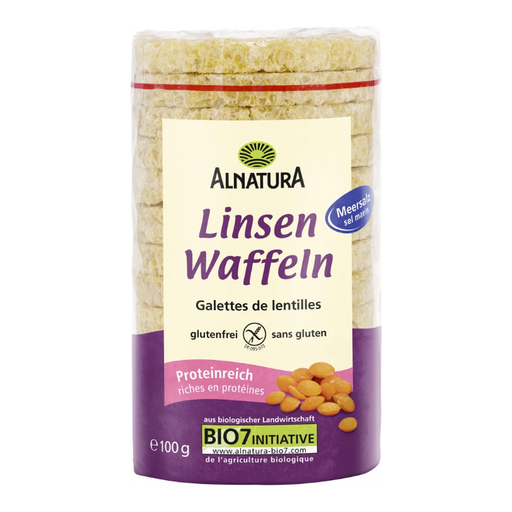
Joybuy: lentil cakes for a change
These lentil cakes offer a different snack base for your shared-house stash; they’re not a rice alternative for a direct comparison with plain, salted and chocolate rice cakes.
 No image available
Alnatura organic lentil cakes, 100 g
These lentil cakes are worth considering if you want to mix things up and eat fewer rice products.
Pack size: 100 g. Check the nutritional information on the current pack to work out your portion. If you have a soya allergy, pay particular attention to the ingredients and allergen information on the pack.
View on Joybuy
Frequently asked questions
Does a low kcal count per rice cake mean it’s “low calorie”?
No. The energy figure per cake only describes that portion. REWE lists its organic rice cakes at 26 kcal per 6.7 g cake and 383 kcal per 100 g. Compare both figures, and remember to include any toppings when making a snack with them.
How does a chocolate coating change rice cakes?
For the EDEKA Bio varieties documented here, the coating makes a noticeable difference to the ingredients and nutritional values. According to EDEKA, the whole milk chocolate variety has 509 kcal and 28.2 g of sugar per 100 g, while the plain variety has 379 kcal and 0.6 g of sugar per 100 g. This comparison applies to these two specific products.
Which allergens should I check in rice cakes?
It depends on the specific variety. REWE organic rice cakes contain sesame and may contain traces of milk and soya; EDEKA Bio’s whole milk variety contains milk. When you shop, always go by the labelling on the pack you’re actually buying.
Should rice cakes be the only regular snack in a shared house?
A varied stash means you don’t have to rely on rice products alone. The German Federal Institute for Risk Assessment points out that rice products such as rice cakes may contain relatively high levels of inorganic arsenic; this doesn’t tell you the level in any individual pack.


