Students who want to share portions
If you’re planning to share rice cakes between several people, lunchboxes or canteen days, distinguish between a pack that’s specifically divided into portions and one that simply has a larger total weight.


If you’re taking rice cakes for several days at the university canteen or to share, look for clearly labelled individual packs, such as REWE Bio’s 3 × 32-g format. A single 135-g pack is better suited to sharing or portioning yourself; its total contents don’t tell you whether it contains separate portions. For honey, chocolate and other varieties, also check the ingredients, allergens and nutritional information for the specific product.
If you’re planning to share rice cakes between several people, lunchboxes or canteen days, distinguish between a pack that’s specifically divided into portions and one that simply has a larger total weight.
The specific variety matters. For example, REWE Bio rice cakes labelled gluten-free contain sesame and may contain traces of milk and soya. So a gluten-free label is no substitute for checking the other information.
Different products suit different needs, whether you want a plain cake to top, a sweet coating or a cake made from other ingredients. The ingredients and nutritional information can help you tell these snack options apart.
First decide whether you need separate individual packs or would rather portion a single pack yourself. Then compare the ingredients of the varieties you’re considering for your university canteen break.
| What to consider | What to check | Who it matters most to |
|---|---|---|
| Portioning and carrying | Look for formats such as 3 × 32 g, rather than assuming that a single 135-g pack contains separate portions. Follow the storage instructions for opened packs. | If I’m dividing snacks between several lunchboxes or people, I don’t want to open and decant a large pack every time. For around 42% of consumers, portioning is the main priority. |
| Ingredients and allergens | Read the ingredients list, highlighted allergens and any precautionary statements about traces for the variety you choose. | For my university canteen break, the ingredients list for the specific product needs to meet my requirements; a single statement on the pack isn’t enough. Around 33% of consumers focus on these checks. |
| Taste and nutritional information | Compare plain and coated varieties separately. Use the nutritional information per 100 g to compare sugar, fat and protein. | Whether I want a plain cake or a sweet snack to take with me determines which product I choose. Taste and nutritional profile come first for around 25% of consumers. |
The 135 g figure tells you the total contents. Unlike a format such as 3 × 32 g, it doesn’t show that the pack contains separate portions for different lunchboxes or days.
If you want to take separate portions with you, check how the pack is divided. Alternatively, portion a single pack yourself and, once opened, seal it according to the storage instructions.
According to REWE, its REWE Bio rice cakes labelled gluten-free contain sesame and may contain traces of milk and soya. Coated varieties may also contain other allergenic ingredients.
For each specific variety, read the current ingredients list, highlighted allergens and any relevant statements about traces.
For its EDEKA Herzstücke milk chocolate and salted caramel rice cake, EDEKA24 lists 38.2 g of sugar and 13.3 g of saturated fat per 100 g. A chocolate coating therefore changes the ingredients and nutritional information compared with a cake without one.
Decide whether you want a plain cake to top or a sweet snack, then compare the nutritional information for the products you’re considering.
The German Federal Institute for Risk Assessment notes that rice and rice products may contain relatively high levels of inorganic arsenic. This doesn’t tell you anything about the level in an individual pack.
If rice cakes feature frequently in your diet, consider other grains and types of snack when choosing what to eat.
REWE sells organic rice cakes with honey in a clearly labelled 3 × 32 g format. Other varieties are also available, each with its own ingredients list.
ALDI Nord describes its vegan organic rice cakes as a 135-g pack, available with sea salt or unsalted.
ALDI SÜD describes GUT BIO organic rice cakes with salt as a 135-g product.
EDEKA Herzstücke includes chocolate-coated rice cakes in 70-g and 64-g packs.
Kallo describes its yoghurt-coated rice cakes as a Twin Pack on its own product page.
This selection features rice crackers for snacks around your university canteen break, not plain rice cakes. If separate portions are a priority, check how each product is divided into packs before you buy.
 No image available
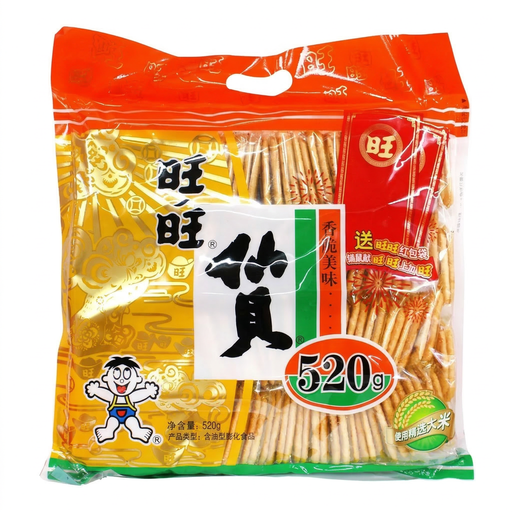
This format could suit a group or several days out, if you want to divide up lots of packs.
The product name states a total weight of 520 g and 88 packs. Check the ingredients and allergen information on the packaging itself.
 No image available
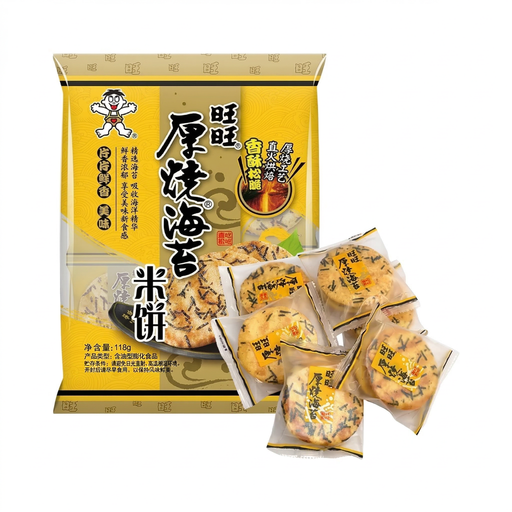
If you’re looking for seaweed-flavoured rice crackers to take to the university canteen, this 118-g variety is one option.
If you want to divide it into individual portions, check how the pack is divided before you buy. Also check the ingredients and allergen information.
 No image available
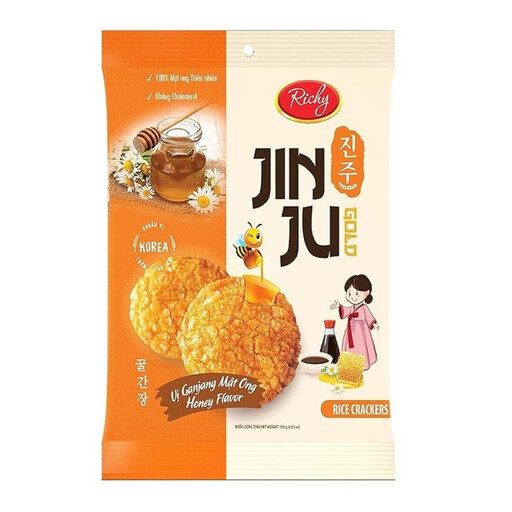
For a honey-flavoured rice cracker to enjoy during your university canteen break, you could consider this 100-g pack.
The flavour description alone doesn’t tell you the exact ingredients or how the pack is divided into portions. Check the information on the packaging.
Look for a clearly stated format such as 3 × 32 g rather than relying on the total pack weight alone. REWE labels its organic rice cakes with honey this way; the 135-g figure on a single pack doesn’t confirm that it contains separate portions.
No. A gluten-free label doesn’t tell you whether a product contains other allergens. According to REWE, the corresponding REWE Bio variety contains sesame and may contain traces of milk and soya, so check the information for the specific product.
Follow the storage instructions for the product and reseal an opened pack as directed. For its organic rice cakes with milk chocolate, REWE recommends storing them in an airtight container after opening and eating them within five days. This guidance doesn’t automatically apply to other varieties.
When choosing snacks to eat regularly, the possibility that rice products may contain inorganic arsenic is a reason to consider other grains too. The German Federal Institute for Risk Assessment notes that rice products may contain relatively high levels; this doesn’t indicate the level in any particular rice cake product.