If you want the cake itself to add as much protein as possible to your snack, it’s worth comparing it with lentil cakes. REWE and EDEKA each list 25 g of protein per 100 g for the varieties considered here, while Kallo lists 8.5 g for its classic wholegrain rice cakes. The portion you eat still matters: according to REWE, one lentil cake contains around 1.7 g of protein. Classic rice cakes are more suitable as a base for a topping.
Who is this comparison for?
People who train and focus on protein
If you’re planning to include cakes in a snack around your workout, the amount per cake you eat matters just as much as the protein per 100 g. The product information from REWE, EDEKA and Kallo makes it possible to compare lentil and classic rice cakes, but you’ll still need to consider your portion size.
People planning plant-based snacks
Whether you’re choosing cakes for when you’re out and about or as a base for a topping, check the ingredients and labelling for the specific variety. If you need to avoid certain ingredients, also check the allergen and may-contain information on the pack.
People who eat rice products regularly
If you often reach for rice cakes, you could also consider cakes made from other ingredients. The German Federal Institute for Risk Assessment recommends eating rice products such as rice cakes in moderation and varying them with other products.
What should you look for when buying?
First, decide what role you want the cake to play in your snack: should it contribute protein itself, or mainly provide a base for a topping? Then compare the portion size, ingredients and labelling on the specific pack.
Lentil cakes
A good choice if: You want the cake itself to contribute to the protein content of your snack. REWE and EDEKA each list 25 g of protein per 100 g for the lentil cakes considered here.
The trade-off: According to REWE, one cake provides only around 1.7 g of protein, despite the figure per 100 g.
Protein cakes with pulses
A good choice if: You’re considering a cake made with several ingredients and pea protein. REWE lists 18.4 g of protein per 100 g for Verival Organic Protein Waffles.
The trade-off: The recipe has more ingredients than the red lentil and sea salt cakes considered here.
Classic rice cakes
A good choice if: You’re mainly looking for a cake to use as a base for a topping, and are considering the protein content of the whole snack.
The trade-off: Kallo lists 8.5 g of protein per 100 g for the wholegrain rice cakes considered here. If you eat rice products often, it’s also a good idea to vary what you eat.
| Criteria |
What to check |
Who should pay particular attention? |
| Protein per portion |
Compare the nutritional information per 100 g with the number of cakes or portion size you’ll actually eat. |
If I want the cake itself to contribute protein to my snack, the amount on my plate matters more than the figure per 100 g. This would be the main reason to buy for around 33% of consumers. |
| Ingredients and allergens |
Read the ingredients list, allergen information and, where relevant, may-contain statements for the specific variety. |
If I need to avoid certain ingredients or allergens, I want to know what the chosen pack says before I eat it. Around 27% of consumers would put this first. |
| How you’ll eat it as a snack |
Decide whether you want to eat the cakes plain or with a topping, then compare the recipe and nutritional information. |
For my break, I’m looking for a cake that suits how I actually eat my snack. This would be the main priority for around 20% of consumers. |
| Variety in rice products |
If you eat rice products often, consider cakes made from other ingredients too. |
If I eat rice products often, I don’t want to choose the same base ingredient every time. Around 20% of consumers would put this variety first. |
Which misconceptions can make choosing harder?
-
Taking the figure per 100 g as the amount per cake
REWE lists 25 g of protein per 100 g for its organic lentil cakes, but around 1.7 g for one cake weighing 6.93 g.
When comparing, take account of how many you’ll eat and any topping you might add.
-
Assuming all classic rice cakes are high in protein
The Kallo wholegrain rice cakes considered here contain 8.5 g of protein per 100 g, compared with 25 g for the lentil cakes from REWE and EDEKA.
If you want the cake itself to contribute protein, compare the information for the specific rice and pulse-based varieties.
-
Choosing only rice products if you eat them regularly
The German Federal Institute for Risk Assessment notes that rice products can contain relatively high levels of inorganic arsenic.
The institute recommends eating rice cakes in moderation and varying rice products with products made from other grains.
-
Assuming a plant-based recipe is allergen-free
Kallo says the cakes considered here may contain traces of milk, sesame and soya.
Check the ingredients and allergen information on the current pack of any variety you choose.
Brands and product ranges to help you choose
REWE Bio
The organic lentil cakes considered here are an alternative to classic rice cakes if you want the cake itself to contribute protein to your snack.
- REWE lists 99.5% red lentils and 25 g of protein per 100 g.
- According to REWE, one cake contains around 1.7 g of protein, so the portion you eat matters for your snack.
EDEKA Bio
The organic lentil cakes considered here may suit shoppers looking for a recipe made with red lentils and sea salt.
- EDEKA24 lists 25 g of protein per 100 g for this variety.
- To assess the protein in an individual snack, you’ll need to take account of the portion you eat.
Kallo
The product ranges considered here include classic wholegrain rice cakes and lentil cakes. The protein information applies to each specific variety.
- Kallo lists 8.5 g of protein per 100 g for Organic Lightly Salted and 21 g per 100 g for Protein Packed Lentil Cakes.
- Kallo says these may contain traces of milk, sesame and soya. Check the labelling on the pack you choose.
Lentil cakes at Joybuy
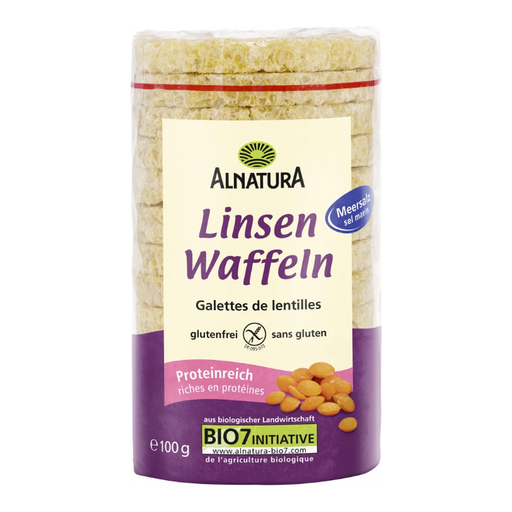
This selection features a lentil cake as an option for anyone who wants to check the protein content of their cake. Compare its nutritional information and the portion you eat with the rice and protein cakes that might also suit you.
 No image available
Alnatura Organic Lentil Cakes, 100 g
A lentil cake to compare with classic rice cakes if the protein content of your snack matters to you.
Check the pack for the protein content of your portion and the soya allergen information if you need to avoid soya.
View at Joybuy
Frequently asked questions
Are classic rice cakes automatically a high-protein snack?
No. The protein content depends on the specific product and how much you eat. Kallo lists 8.5 g of protein per 100 g for the Organic Lightly Salted variety considered here, while REWE and EDEKA each list 25 g per 100 g for the lentil cakes considered here. A topping can also contribute to the protein content of the whole snack.
What does ‘high protein’ mean?
EU Regulation (EC) No 1924/2006 sets the condition that at least 20% of a food’s total energy value must come from protein. A protein figure per 100 g on its own doesn’t show this proportion of the energy value, so check the nutritional information and labelling on the specific pack.
What should I bear in mind if I eat rice cakes often?
It’s a good idea to vary the rice products you eat. The German Federal Institute for Risk Assessment recommends eating rice cakes in moderation and varying rice products with products made from other grains, as rice products can contain relatively high levels of inorganic arsenic.
Are cakes labelled vegan or gluten-free suitable for every allergy?
No. These labels don’t cover every allergen concern. Kallo says the cakes considered here may contain traces of milk, sesame and soya. The ingredients and allergen information on the specific pack are what matter.


