If the protein content of the cake itself matters for your snack stash, lentil cakes are worth a closer look than classic rice cakes. The lentil products reviewed by dm, REWE and EDEKA24 contain 25 to 29 g of protein per 100 g, while Kallo lists 8.5 g for one wholegrain rice cake variety. If you prefer a rice-based option, you can choose a topping or the rest of your meal accordingly. The serving size, ingredients and allergen information on the specific pack are also worth checking.
Which cakes may suit you
For people who train and prioritise protein
If the protein content of your crunchy snack matters, lentil cakes are worth considering. Product information from dm, REWE and EDEKA24 lists 25 to 29 g of protein per 100 g for the varieties reviewed. The amount in a snack serving will depend on its size.
For a plant-based snack stash
If you’re looking for cakes made from pulses rather than rice, check each variety individually. EDEKA24 describes its organic lentil cakes as vegan and gluten-free; if you have an allergy, always check the information on the specific pack.
For fans of classic rice cakes
If you’d rather have a rice-based option that works well with a simple topping than more protein in the cake itself, classic rice cakes may be a good fit. Kallo lists 8.5 g of protein per 100 g for one wholegrain rice variety. This information comes from a UK product page, so check the details again on any pack bought in Germany.
What to consider when choosing
First decide whether you want the protein to come from the cake itself or whether you’d prefer a rice cake as a base for a topping. Then compare the nutrition information per 100 g and consider how much you’ll actually eat.
| Criteria | What to check when buying | Who it matters to |
|---|
| Protein content |
Compare protein and energy per 100 g, as well as your planned serving size. |
If I’m planning a cake snack around my workout, I want the protein to come from the cake itself, not just to be advertised on the front of the pack. For around 42% of consumers, protein content comes first. |
| Ingredients and allergens |
Read the ingredients list and information on the specific pack; consider claims such as vegan or gluten-free separately. |
If I follow a plant-based diet or have an allergy, the variety I choose needs to meet my requirements. For around 25% of consumers, suitability is the top priority. |
| Stocking up and availability |
Check the pack size, storage instructions and availability at your chosen shop. |
For my snack stash, I want a suitable pack size and the option to restock regularly. Around 17% of consumers prioritise this kind of everyday practicality. |
| Rice base and flavour |
Decide whether you want a rice- or pulse-based cake, and whether you’ll add a topping. |
I prefer a classic rice cake and, if needed, would get my protein from a topping or the rest of my meal. For around 16% of consumers, this preference is the deciding factor. |
Common mistakes when buying for your store cupboard
-
Assuming all rice cakes are high in protein
The products reviewed vary considerably: Kallo lists 8.5 g of protein per 100 g for one wholegrain rice variety, while dm, REWE and EDEKA24 list 25 to 29 g per 100 g for their lentil cakes.
Compare the protein content per 100 g. If a pack claims to be “High Protein”, the proportion of its energy value that comes from protein also matters.
-
Overlooking may-contain warnings because of other product claims
Claims such as vegan or gluten-free don’t answer every question about allergens. dmBio lentil cakes may contain traces of soya and sesame; the Biozentrale lentil and chickpea snack may contain traces of soya and milk.
If you have an allergy, check the labelling on the pack you’re actually planning to buy.
-
Comparing protein content alone
The recipe also affects the nutritional values. REWE lists 0.52 g of salt per 100 g for its organic lentil cakes, compared with 1 g of salt per 100 g for the Biozentrale snack.
Compare protein, salt, fat and ingredients on the same per-100 g basis.
-
Planning your stock without checking availability and storage
Whether you can regularly buy a particular cake depends on your chosen shop. dm also advises storing dmBio lentil cakes in a dry place in a well-sealed pack.
Check availability at your local shop and follow the storage instructions on the pack.
Brands to consider
dmBio
The range reviewed includes lentil and chickpea cakes as alternatives to classic rice cakes.
- dm lists 29 g of protein per 100 g for its salted lentil cakes.
- For this variety, check the specific pack for possible traces of soya and sesame.
REWE Bio
The lentil cakes with sea salt reviewed offer a pulse-based option in the supermarket range.
- REWE lists 25 g of protein per 100 g.
- The product information also lists 0.52 g of salt per 100 g; check local availability before stocking up.
EDEKA Bio
The organic lentil cakes reviewed are another lentil-based option available from food retailers.
- EDEKA24 lists 25 g of protein per 100 g for this product and describes it as vegan and gluten-free.
- This information applies to the lentil variety mentioned, not to every cake from the brand.
GENUSS PLUS
ROSSMANN sells, among other products, cakes made from lentils and peas under this brand.
- ROSSMANN lists 24 g of protein per 100 g for its lentil protein cake.
- Don’t assume the nutrition information for the lentil variety also applies to the pea variety.
Kallo
The brand’s classic rice cakes are a useful point of comparison if you prefer a rice-based option.
- Kallo lists 8.5 g of protein per 100 g for a lightly salted wholegrain rice variety.
- This information comes from a UK product page; check the recipe and nutrition information on packs bought in Germany.
Lentil cakes at Joybuy
This product selection features a lentil cake as an alternative for consumers who value the protein in the cake itself. It isn’t a selection of classic rice cakes.
 No image available
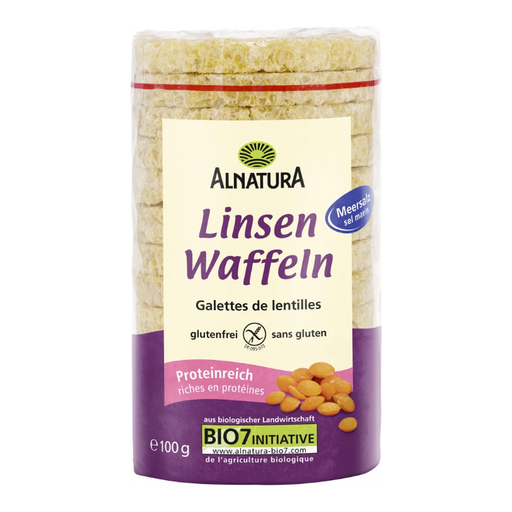
Alnatura organic lentil cakes, 100 g
A lentil-based cake for anyone looking for an alternative to classic rice cakes.
Pack size: 100 g. If you have a soya allergy, check the labelling on the specific pack before buying.
View at Joybuy
Frequently asked questions
When can a cake be advertised as “High Protein”?
Under EU Regulation (EC) No 1924/2006, at least 20% of a food’s energy value must come from protein for it to be described as “High Protein”. The protein figure in grams alone doesn’t answer this question, so compare it with the energy value in the nutrition information per 100 g.
Are classic rice cakes enough for a protein-focused snack?
It depends on whether you want the protein to come from the cake itself. Kallo lists 8.5 g of protein per 100 g for one wholegrain rice variety reviewed, while dm, REWE and EDEKA24 list 25 to 29 g for the lentil cakes reviewed. If you’d prefer to stick with rice, consider your topping or the rest of your meal.
Which nutrition details should I compare?
For these cake snacks, focus on protein, energy, salt and fat per 100 g, then factor in your serving size. The European Commission also lists saturated fat, carbohydrates and sugars as part of nutrition labelling; ingredients and allergen information are shown separately on the pack.
How should I store lentil cakes for my snack stash?
Follow the instructions on the pack. dm advises keeping its lentil cakes in a dry place in a well-sealed pack; other varieties may have different storage instructions.


