Late-night post-workout snackers looking for protein
You want something small that’s ready to eat straight away. The protein content per serving matters more to you than having a traditional rice cake.


If protein is a priority for a small snack after a late workout, it’s worth comparing lentil crackers and corn and legume cakes: REWE lists 26 g of protein per 100 g for Reis-fit Risbellis High Protein Tomato & Pepper and 18.4 g for Verival Organic Protein Wafers; EDEKA lists 8.7 g for its Organic Plain Rice Cakes. A plain rice cake is better suited as a base for a topping of your choice. For any option, compare the amount you’ll actually eat, the ingredients and the salt content.
You want something small that’s ready to eat straight away. The protein content per serving matters more to you than having a traditional rice cake.
You’re looking for a crunchy base to add toppings to, and want to compare protein and fibre using the nutrition information.
You prefer a neutral-tasting cake with a short ingredients list, so you can choose the topping yourself.
For a late-night snack, the protein content of the portion you actually eat is more useful than the figure per 100 g alone. Then check the ingredients and salt content to help you choose between a seasoned cracker, a cake to top or a plain rice cake.
| Criteria | What to check | Who it matters to |
|---|---|---|
| Protein per serving | Compare protein per 100 g and for the amount you’ll actually eat; check whether the stated serving size is the whole pack. | After a late workout, I want to know how much protein my small snack actually contains. For around 42% of consumers, protein per serving would be the most important factor. |
| Plant-based ingredients and suitability for toppings | Check the ingredients and, where relevant, the vegan label; compare fibre using the nutrition information. | If I want to add toppings to a cake, its ingredients and stated fibre content matter to me. Around 33% of consumers would make these their main reasons for buying. |
| Plain base and salt | Compare the ingredients list and salt per 100 g; distinguish plain cakes from seasoned crackers. | For a simple snack, I want to choose the salt and toppings myself, even if the cake on its own contains less protein. Around 25% of consumers would put plain ingredients and control over salt first. |
The products compared here differ considerably: EDEKA lists 8.7 g of protein per 100 g for its Organic Plain Rice Cakes, while REWE lists 26 g for the Reis-fit lentil cracker and 18.4 g for the Verival cakes. The latter two products aren’t made from rice alone.
Compare both the type of product and the protein content of the portion you plan to eat.
REWE lists 1.45 g of salt per 100 g for Reis-fit Risbellis High Protein Tomato & Pepper, or 0.58 g per 40 g serving. EDEKA lists 0.01 g of salt per 100 g for its Organic Plain Rice Cakes.
Compare the salt content for the serving size you’re considering for your snack.
Lidl’s recipe for a rice cake with peanut butter lists 10 g of protein per serving. That figure is for the complete combination.
When comparing shop-bought cakes, use their own nutrition information, not the figures for a topped recipe.
The German Federal Institute for Risk Assessment points out that rice products such as rice cakes can contain relatively high levels of inorganic arsenic. This doesn’t say anything about the levels in any of the individual products mentioned here.
Alternate rice-based snacks with other options rather than regularly relying on just one type of snack.
Risbellis High Protein Tomato & Pepper is a seasoned lentil cracker for a snack that’s ready to eat straight away.
According to REWE, the Organic Vegan Protein Wafers are made mainly from corn and legumes, and can be used as a base for toppings.
The lentil cakes with sea salt are a legume-based alternative to rice cakes.
The Organic Plain Rice Cakes are a simple base for a topping of your choice.
The salted organic rice cakes are another example of the traditional rice-based option.
The recipe for a rice cake with peanut butter shows one way to top a plain cake.
This selection includes a lentil cake and a plain spelt cake as crunchy snack alternatives. Neither is a traditional rice cake, so check the information on the relevant pack for your portion.
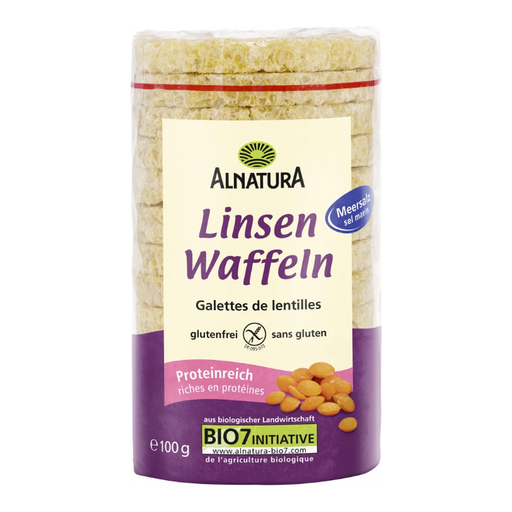 No image available
A crunchy lentil-based option if you’re looking for something different from a traditional rice cake.
Check the pack for the protein content of the portion you’ll actually eat. If you have a soya allergy, it’s also important to check the current allergen information.
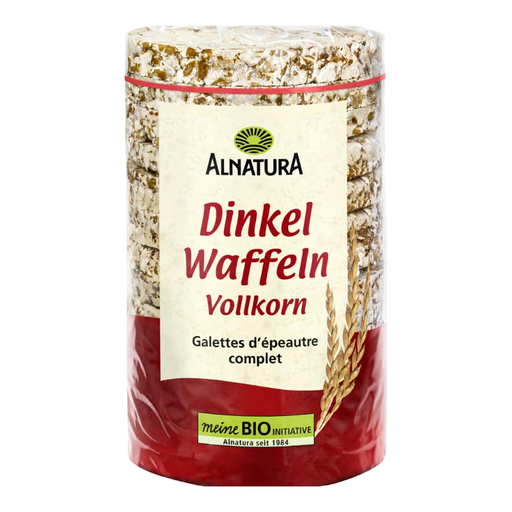 No image available
A plain cake to add toppings to if you’d prefer spelt rather than rice as your base.
Use the pack to compare the protein content for your portion. If you need to avoid gluten, check the allergen information.
No, you can’t tell from the type of product alone. EDEKA lists 8.7 g of protein per 100 g for its Organic Plain Rice Cakes; REWE lists 18.4 g for Verival Organic Protein Wafers and 26 g per 100 g for Reis-fit Risbellis High Protein Tomato & Pepper. Compare the nutrition information for the specific product and the portion you’ll eat.
It could be a good option if you want a ready-to-eat snack with a stated protein content. For Reis-fit Risbellis High Protein Tomato & Pepper, REWE lists 10 g of protein and 0.58 g of salt per 40 g serving. Check that the ingredients and seasoning suit your preferences.
You can choose the topping separately from the cake, then consider the nutrition information for the complete combination. According to EDEKA, EDEKA Bio Organic Plain Rice Cakes are made from rice and contain 8.7 g of protein per 100 g; the protein content of a topped snack also depends on your choice of topping.
According to the German Federal Institute for Risk Assessment, rice products such as rice cakes can contain relatively high levels of inorganic arsenic. This isn’t a measured value for any of the brands mentioned here; if you have snacks regularly, you can also choose other bases.