
Lieferung heute & morgen

Qualitätsgarantie

Willkommens-Angebote freischalten: KOSTENLOSE Lieferung | Bis zu 80 % RABATT | Kostenlose 30-Tage-JoyPlus-Testphase
App herunterladen
A rice cooker promises a simple solution to an everyday challenge: perfectly cooked rice, every time. But the market is filled with models whose marketing promises often create more confusion than clarity. Before you make a decision, it's crucial to know the most common pitfalls that can lead to an unused appliance collecting dust in a corner of your kitchen.
Many buyers invest in appliances that are either too complicated, too large, or disappointing in their core function—cooking rice. Three aspects in particular frequently lead to poor purchasing decisions:
To make an informed decision, you should focus on a few critical technical parameters. These will help you see through the marketing hype and find an appliance that truly fits your needs.
The size of the inner pot is the most important selection criterion. The capacity is usually specified in litres and determines how many cups of raw rice can be processed.
The quality of the inner pot directly affects the cooking result and the appliance's lifespan. Pay attention to the material and the type of coating. A thicker pot distributes heat more evenly and prevents scorching. A robust, multi-layered non-stick coating (e.g., ceramic) is more resistant to scratches and makes cleaning significantly easier. Some models also offer an additional stainless steel steamer basket, which allows for the simultaneous cooking of vegetables or fish.
The range of functions should match your cooking habits.
Based on these objective criteria, we have identified a few models that represent a considered choice for specific user profiles.
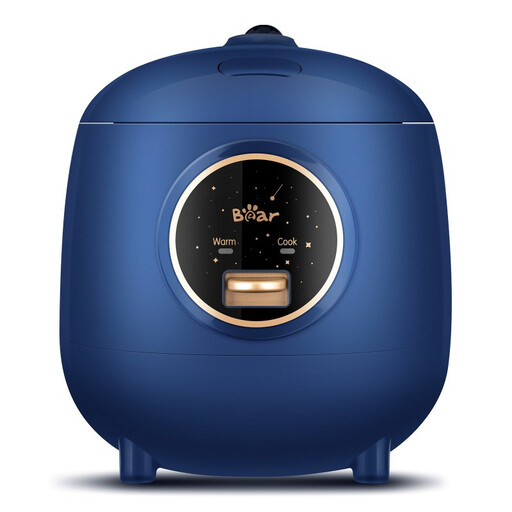
Why This Fits Their Persona: With a 1.2-litre capacity and a very compact design, this model is tailored for one to two-person households. It is ideal for small kitchens, student dorms, or even for use in a camper van. The simple one-button operation makes it straightforward for novice cooks.
It avoids the trap of being oversized. Instead of a large appliance that wastes space and energy, it offers the perfect capacity. It focuses on the core function rather than overwhelming users with unnecessary programs.
Compact Design: Fits into even the smallest kitchen. Simple Operation: A single button for the entire cooking process, including an automatic keep-warm function.

Why This Fits Their Persona: For families who value convenience and technology. The 3-litre capacity is designed for 2-6 people. The connection to the Mi Home app allows for remote control, scheduling, and customising the rice texture—a real asset in a hectic family life.
Although this model is a multi-cooker, its smart functions are specifically aimed at optimising the cooking result, rather than just offering a long list of programs. The app control allows for precise adjustments that simpler devices do not offer.
Smart App Control: Full control over the cooking process from anywhere. 24-Hour Timer: Allows for precise meal planning in advance.

Why This Fits Their Persona: For users looking for a powerful and versatile appliance that goes far beyond just cooking rice. With 45 programs and a large 5-litre capacity, this multi-cooker can bake, steam, cook soups, and even make yoghurt. It replaces several kitchen appliances.
Unlike cheap "all-in-one" devices, this model focuses on quality. The spherical 6-layer bowl ensures excellent heat circulation, which benefits both rice and other dishes. Here, versatility is not achieved by compromising on core performance.
45 Cooking Programs: Maximum versatility for creative cooking. High-Quality Spherical Bowl: Ensures even cooking results for all dishes.
We have compiled a complete, up-to-date list of products that fully meet these strict selection criteria and comply with German safety regulations.
1. How long does the non-stick coating on a rice cooker last? The lifespan of a non-stick coating heavily depends on the quality of the material and its care. For high-quality models with ceramic or multi-layer coatings, it can last for several years with proper use (no metal utensils, hand-washing with a soft sponge). On cheaper models, signs of wear can appear after just a few months.
2. What is the difference between a basic rice cooker and a multi-cooker? A basic rice cooker is specialised for one task: cooking and keeping rice warm. It usually operates mechanically via a temperature sensor. A multi-cooker is a digital rice cooker with an expanded range of functions. It has a microprocessor control and various programs that can regulate the temperature and time for different dishes like soups, stews, cakes, or yoghurt.
3. How much electricity does a rice cooker with a keep-warm function use? The power consumption during the cooking process is relatively brief, ranging from 200 to 900 watts depending on the model. The keep-warm function operates at a very low power, typically between 30 and 50 watts. While the electricity used for cooking itself is manageable, keeping it warm for hours throughout the day can noticeably increase energy consumption. It is therefore more energy-efficient to use the function only when needed.