
Lieferung heute & morgen

Qualitätsgarantie

Willkommens-Angebote freischalten: KOSTENLOSE Lieferung | Bis zu 80 % RABATT | Kostenlose 30-Tage-JoyPlus-Testphase
App herunterladen
A rice cooker can make cooking easier if rice, porridge or steamed sides regularly feature on your menu. However, not every model is the right choice. Buyers often choose a cooker with too much capacity, overestimate how useful a long list of programmes will be, or overlook important details about cleaning and the coating.
This guide explains which technical details really matter in a UK home and which models suit different needs.
The capacity in litres usually refers to the volume of the cooking pot, not the amount of cooked rice it will hold. A mini rice cooker with a 1.2-litre capacity may be enough for 1–2 people, while a 4- or 5-litre model is better suited to families, larger portions or batch cooking.
A pot that’s too large can be impractical for small portions. On the other hand, a pot that’s always nearly full can mean frequent extra batches if you have a rice cooker for families. Check the manufacturer’s recommended number of servings and the markings inside the pot before you buy.
A multifunction rice cooker may offer programmes for white rice, brown rice, porridge, steaming or slow cooking. What matters is whether these features suit your everyday needs. If you mainly cook rice, you may not need a wide range of programmes. If you also want to make soup, porridge or steamed vegetables, a rice cooker with a steamer may be a better fit.
Also check whether it’s operated using buttons, a dial or a display, and whether the instructions include clear guidance on quantities and water levels.
A non-stick coating can make it easier to serve the rice. If you choose a rice cooker with a ceramic coating, read the care instructions carefully: abrasive sponges and metal utensils can damage the surface. Look for a removable inner pot, easy-to-reach steam vents and, where specified by the manufacturer, dishwasher-safe parts.
Whatever the materials, never immerse the body, cable or plug in water.
As a practical guide, compare these capacities:
Don’t exceed the maximum fill line. Porridge, soups and starchy foods also need enough room to expand and produce steam.
The wattage indicates how much electrical power the cooker uses, not how well it cooks. Models rated at around 400 to 700 watts may be enough for smaller quantities. Larger cookers often have a power rating of 800 watts or more. Cooking time also depends on the amount of rice and water, the programme and the design of the cooker.
A rice cooker with a keep-warm function switches to this mode automatically once cooking is complete. Check how long the product description says the function is designed to run. A rice cooker with a timer or delayed start is handy if you want your meal to be ready at a particular time. Follow the manufacturer’s guidance when using perishable ingredients, and don’t keep food warm for longer than necessary.
Useful accessories include a measuring cup, rice paddle and, where supplied, a steam basket. Look for:
All rice cookers can pose a scalding risk from hot steam and heated surfaces. Open the lid carefully and keep your face and hands away from the steam outlet.
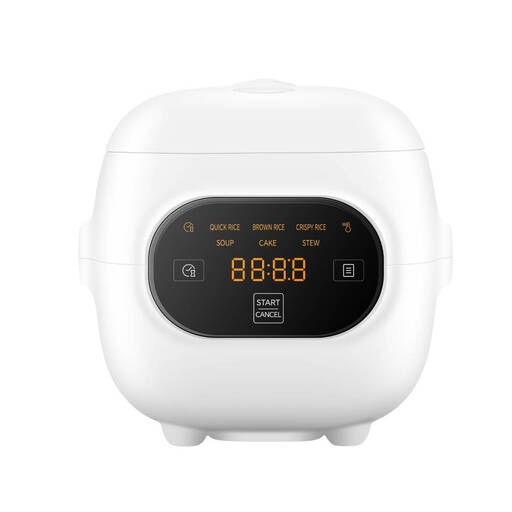
Why this product suits these needs: Its compact size is ideal for singles, couples and smaller kitchens. Six one-touch programmes, an LED display and a removable lid make everyday use easier.
Its capacity is specifically stated as suitable for 1–2 people, so you won’t end up with an oversized pot for small portions.
1.2-litre capacity, 24-hour preset timer, keep-warm function and removable non-stick inner pot.
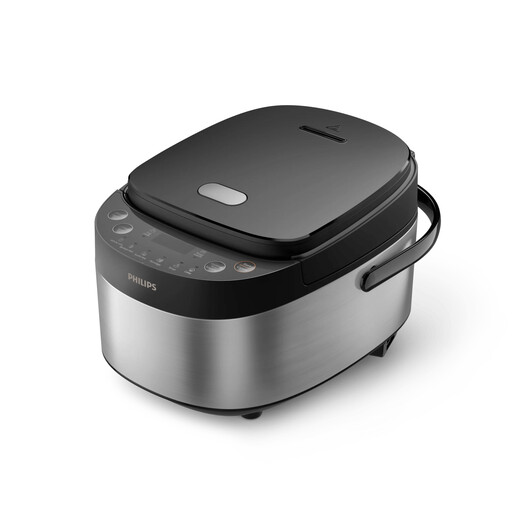
Why this product suits these needs: This compact model for smaller households combines button controls, a display, a removable pot and a plastic steam basket.
Its small capacity is well suited to individual portions. Dishwasher-safe parts make regular cleaning easier, as long as the instructions confirm this for each part.
0.85 litres, 653 watts, ready indicator, non-slip feet and steaming accessories.

Why this product suits these needs: Its large capacity and 17 cooking functions are well suited to families and anyone who wants to steam food or prepare other dishes as well as rice.
The wide choice of programmes comes with a clearly stated 5-litre capacity, rather than being described only in general terms as multifunctional.
17 functions, 970 watts, LED touchscreen, delay timer, keep-warm function and stainless-steel steam basket.
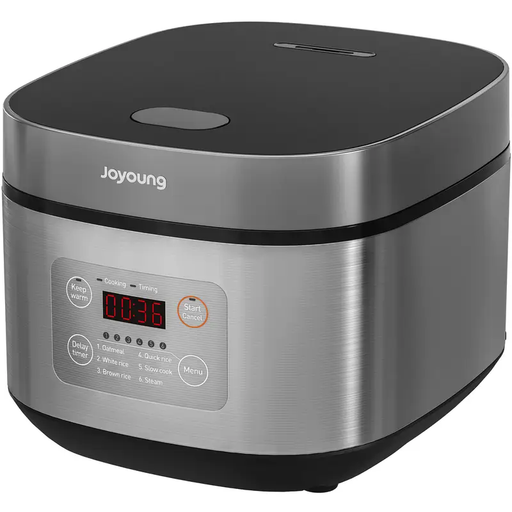
Why this product suits these needs: Six preset functions, a steam basket and flexible quantity settings make it suitable for a range of everyday family meals.
The timer and keep-warm settings are clearly specified: the product description states up to 24 hours for delayed start and up to 12 hours for keeping food warm.
4-litre inner pot, LED display, six programmes, five-layer pot construction and steam basket.
We’ve put together a complete, regularly updated list of products that meet these strict selection criteria and fully comply with the safety regulations in force across the EU.
It depends on the type and quantity of rice, as well as the texture you want. Start by using the markings inside the pot or following the instructions. Measure the rice before cooking and rinse it if required for that variety. Porridge usually needs a different ratio of rice to water than fluffy rice.
Its lifespan depends on how often you use it, how you clean it and the condition of the inner pot, coating, lid seal and cable. Don’t use metal utensils, exceed the maximum fill line or clean the cooker before it has cooled down. If the cable or body is damaged, stop using the rice cooker.
Energy use depends mainly on the cooker’s power rating and how long it runs. A higher-wattage model draws more power while heating, but may be designed for larger quantities. The keep-warm function usually uses less energy than active cooking, but runs for a longer period. To save electricity, cook only the amount you need and don’t use the keep-warm function for longer than necessary.