Class leaders serving food in stages
If rice is served at different times, you need a way to manage how it’s kept hot. The BfR recommends keeping heated food at a temperature of at least 60 °C throughout until it is eaten.


Choose a rice cooker based on the largest quantity of rice you’ll need to cook at one time and your serving schedule. For large groups, consider a catering model; for smaller groups, a domestic model or several freshly cooked batches may be more suitable. A stated keep-warm time alone doesn’t prove that food is being kept hot safely: the German Federal Institute for Risk Assessment (BfR) recommends a temperature of at least 60 °C throughout the food. Check the temperature in several places during a trial run and while serving.
If rice is served at different times, you need a way to manage how it’s kept hot. The BfR recommends keeping heated food at a temperature of at least 60 °C throughout until it is eaten.
If you’re catering for a lot of participants, compare the amount of uncooked rice you need with the usable capacity of the pot and how the model defines its cup or portion measurements.
For small groups, the priorities are suitable batch sizes, a manageable footprint and parts that are easy to clean.
Plan your serving schedule around the temperature of the rice, not just a setting or a time shown on the appliance. The BfR recommends keeping food at a temperature of at least 60 °C throughout until it is eaten.
| Consideration | What to check before buying | Who it matters most to |
|---|---|---|
| Keeping food hot safely | Keep-warm mode and permitted duration according to the instructions; measure the temperature of the rice in several places and have a plan for when it falls outside the required range. | If I need to serve rice at different times, I want to check the temperature of the food and know what to do if it falls outside the required range. Around 36% of consumers are likely to prioritise this consideration. |
| Batch size | Number of participants, recipe quantity of uncooked rice, fill markings and how the specific model defines cups or portions. | If I’m catering for a larger group, the batch needs to suit the recipe and the actual fill limit. Around 29% of consumers are likely to prioritise the amount they need to cook at one time. |
| Ease of use and cleaning | Removable inner pot and cleaning instructions for the lid and accessories; check whether the parts are easy to handle between class sessions. | If I’m cooking several batches in a row, I want to be able to use and clean the appliance easily between batches. Around 21% of consumers are likely to prioritise this. |
| Features and effort | Power rating, available sockets and the programmes you actually need; note that the wattage doesn’t tell you how much electricity the appliance will use during your class. | If I only want to use the features my class schedule really needs, a straightforward set of functions matters most. Around 14% of consumers are likely to put this first. |
A time stated in hours doesn’t show whether the rice stays at a temperature of at least 60 °C throughout, given your fill level and serving schedule.
Check the temperature of the rice and have an alternative plan in case it isn’t kept hot enough.
Manufacturers use different measurements. For example, the Rommelsbacher MRK 950 has a stated pot capacity of 5.0 l and a usable capacity of 3.5 l.
Start with your recipe and the amount of uncooked rice, then check it against the fill limit of the specific model.
If the usable capacity is too small, you may need to cook additional batches.
For the Rommelsbacher MRK 950, the manufacturer specifies a delay timer of up to 24 hours and a 60-minute keep-warm function for rice programmes. These are two different functions.
Check both details separately in the instructions for your model before planning your serving schedule.
For its catering model, Reishunger specifies a capacity of 5.8 l and says it can serve up to 32 people. The stated keep-warm time is up to 12 hours.
For its SR-4600 catering rice cooker, Cuckoo specifies a capacity of 4.6 l, or up to 26 cups.
The MRK 950 is described as having a usable capacity of 3.5 l and serving up to 16 portions.
Russell Hobbs describes the Maxi 27040-56 as making up to 14 portions of cooked rice, and the Cook@Home 19750-56 as having a capacity of 1.8 l.
Yum Asia describes the Sakura as a 1.5-l model that can cook up to eight cups of uncooked white rice.
This selection includes larger domestic models and compact rice cookers for small groups. The product specifications don’t prove that the rice will stay at a temperature of at least 60 °C throughout your class. Check the temperature of the food under the conditions you plan to use.
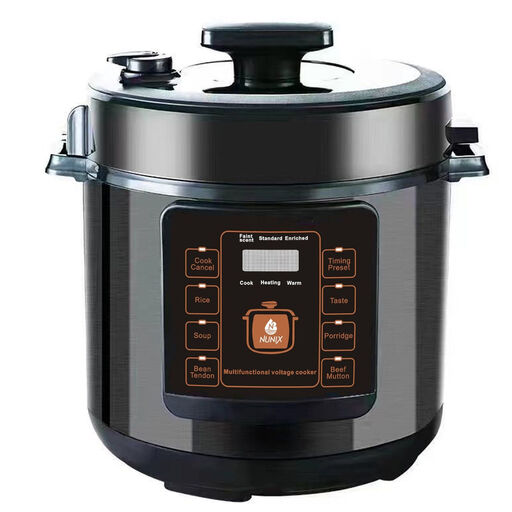 No image available
The stated 6-litre inner pot gives you a basis for comparing larger domestic batches with your recipe.
The product specifications list eight programmes and a steamer.
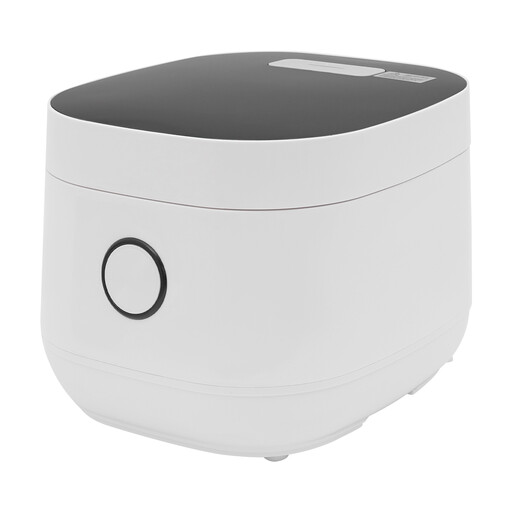 No image available
The stated capacity for 5–8 people can help you check whether the batch size is right for your group.
Specifications include a 5 l capacity, nine preset menus, a removable inner pot and a filter basket. The timer doesn’t prove how long the cooker will keep rice warm.
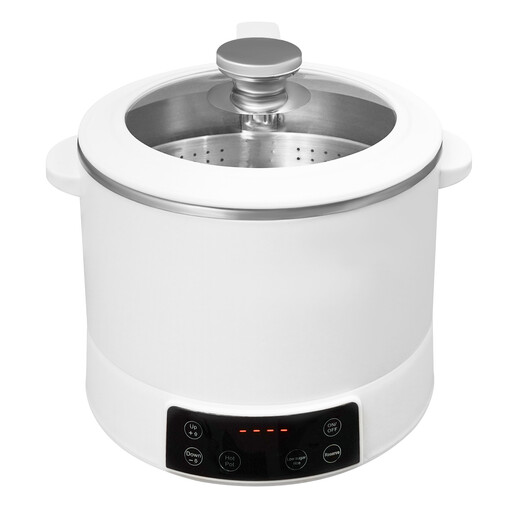 No image available
The stated capacity for 1–3 people is better suited to small groups or additional batches than to one large batch.
The title specifies 220 V, 1,500 W and a 12-hour delay timer. This time setting doesn’t indicate how long the cooker will keep rice warm.
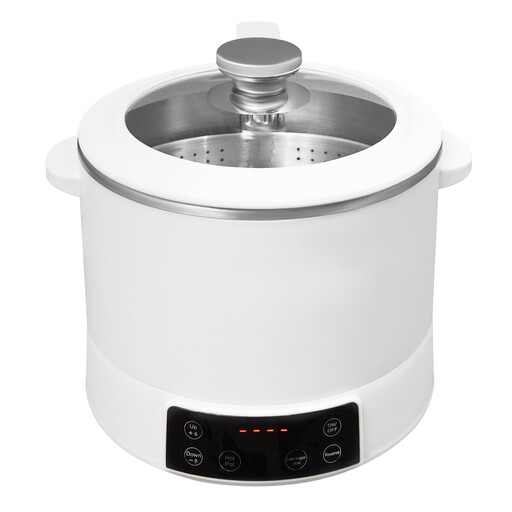 No image available
The product description recommends this model for 1–3 people, so you’ll need to plan several batches for larger groups.
Specifications include 1,500 W, separate rice and water compartments and a hot pot function.
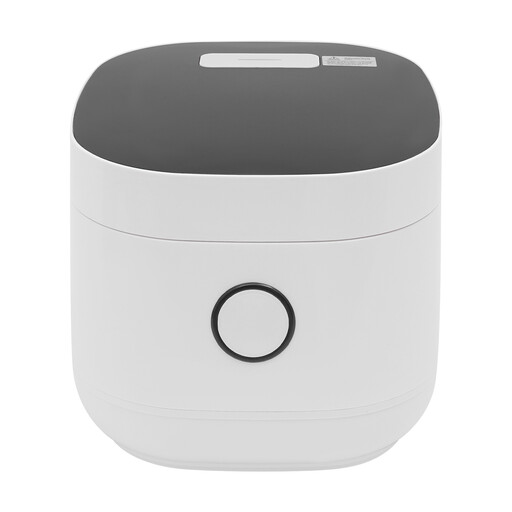 No image available
The stated capacity for 5–8 people can be taken into account when planning larger batches.
The product specifications list a 5 l capacity and nine menus, including rice, porridge, soup and steaming. The delay timer shouldn’t be confused with a keep-warm time.
No. A stated time doesn’t confirm the temperature of the food. The BfR recommends keeping heated food at a temperature of at least 60 °C throughout until it is eaten. Check the rice in several places while serving.
Don’t rely on this to keep the rice warm. According to the BfR, spores can survive cooking and may germinate if the rice is stored in unsuitable conditions. If the rice isn’t kept hot enough throughout, it needs to be chilled promptly and stored cold rather than left to stand.
Cook the planned quantity as a trial, following the instructions and using the measuring cup supplied with the model. Check that the cooker switches to keep-warm mode, then measure the temperature of the rice in several places during your planned serving period. Also check that the pot and lid parts are easy to clean in the workspace available.
No. The temperature recommended by the BfR applies to keeping food hot; it isn’t an appliance approval requirement. Whether a particular cookery class also has obligations as a food business depends on how it is organised. The words ‘weekend cookery class’ alone aren’t enough to determine this.