People who mix different grains
If you often combine different types of rice and grains, it’s important to have programmes and quantity guidance for the specific mix you’re making. Yum Asia points out that settings vary by model.


Choose a rice cooker based on the permitted quantity of uncooked grain for the types you usually cook, and check that its usable capacity suits the portions you have in mind. If you often cook brown rice, quinoa or grain mixes, clearly explained grain programmes with suitable quantity and water guidance are more useful than a long programme list on its own. If you’re planning meals for later, keeping food warm is no substitute for cooling it and storing it in the fridge.
If you often combine different types of rice and grains, it’s important to have programmes and quantity guidance for the specific mix you’re making. Yum Asia points out that settings vary by model.
If you cook several portions at once, compare the uncooked quantity and usable capacity with your meal plan. Manufacturers’ serving and volume figures may refer to different things.
If you mainly cook the same type of rice for several people, ease of use and cleaning may matter more than specialist programmes. A COMPUTER BILD test shows that handling and cleaning vary between models.
A good choice if: you regularly switch between brown rice, quinoa and other grains, and want to cook several portions.
Keep in mind: programmes don’t replace model-specific quantity and water guidance for your mix.
A good choice if: you mostly cook the same quantities of rice and prefer simple controls.
Keep in mind: not every basic model has a dedicated programme for quinoa or other grains.
A good choice if: you want to cook dishes other than rice, too.
Keep in mind: the total volume doesn’t automatically indicate the usable capacity for rice.
For the grains you usually cook, compare the permitted uncooked quantity with the usable capacity. The German Federal Institute for Risk Assessment (BfR) recommends keeping heated food hot at a temperature of at least 60 °C throughout until it is eaten. If you’re saving it for a later meal, cool it and store it in the fridge until you reheat it.
| What matters to you | What to look for when buying | Who is this especially important to? |
|---|---|---|
| Cooking different grains | Look for grain programmes, along with quantity and water guidance for the grains you use. | If I often switch between grains, I want to find the right setting and instructions for my mix. Around 31% of consumers put cooking different types of grain first. |
| Cooking several portions | Compare the uncooked quantity for each type of grain and the usable capacity with the batch you plan to cook. | If I’m planning several meals, I want to know how much I can actually add in one go. Around 31% of consumers prioritise getting the batch size right. |
| Storing portions for later | Don’t confuse keeping food warm with storing it for later; plan to cool it and keep it in the fridge. | If I’m batch-cooking for later meals, I want to be able to store the portions properly. Around 25% of consumers say safe food storage is their main concern. |
| Simple operation and cleaning | Check the control panel, removable parts, care instructions and model-specific spare parts. | If I mostly cook the same type of rice, I don’t want to pay for features I’ll hardly use. Around 13% of consumers put ease of use first. |
Total volume and usable capacity can differ. The permitted quantity may also vary depending on the type of grain.
Compare the usable capacity and uncooked rice limits with the batches you usually make.
A time stated in hours doesn’t prove that the food reaches the hot-holding temperature recommended by the BfR throughout.
Cool portions for later meals and store them in the fridge until you reheat them.
A programme name doesn’t automatically provide quantity and water guidance for every grain mix you put together. Yum Asia explains that settings vary by model.
Check the instructions and stated minimum and maximum quantities for the grains you actually use.
The range spans everything from a basic rice cooker to a digital model with programmes for different types of grain.
The MRK 500 Risa combines a brown rice programme with other cooking functions.
The CRC-R501 featured as a versatile model in a German rice cooker test.
The manufacturer’s information for the Sakura gives different quantities of uncooked rice for white and brown rice. Its grain guide also explains that settings vary by model.
The EasyCook+ RK7321 is a multicooker option for rice and other dishes.
The rice cookers below may be worth considering if you’re planning to make several portions. Before buying, check whether the instructions for your chosen model cover the quantities and settings for your types of grain. Volume figures alone don’t prove that a cooker has the right capacity for every mix.
 No image available
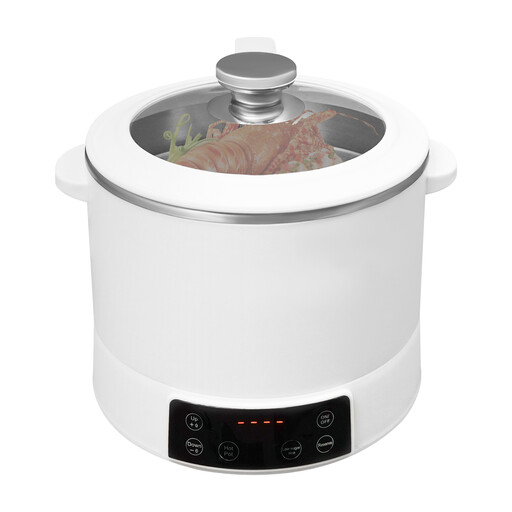
An option if you’re looking for a delay timer and an extra hot pot mode.
The product title lists 3 l, 1500 W and a 12-hour delay timer. The product description also mentions a rice and water separation function and a hot pot mode. Check the instructions for the permitted quantity of uncooked rice.
 No image available
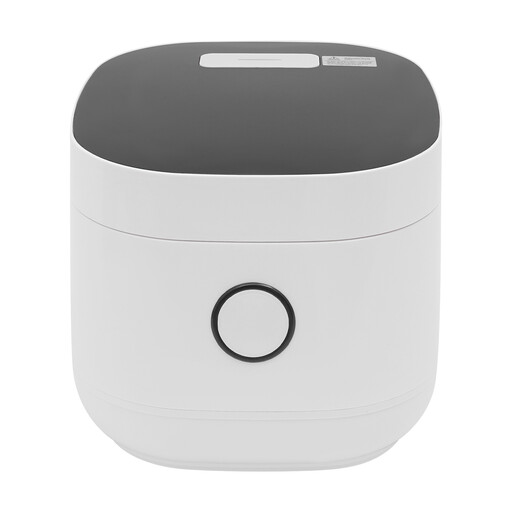
The product details say it’s suitable for five to eight people and has several menus.
Features listed include 5 l, 5.28QT, 900 W, a touch panel, a stainless steel filter basket and a 24-hour timer. Check the permitted capacity for the type of grain you’re cooking.
 No image available
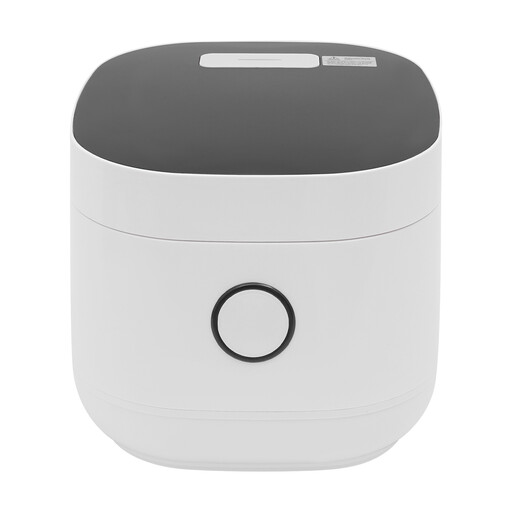
The description says it’s suitable for five to eight people and has several pre-set menus.
Listed features include 5 l, 900 W, a timer and a coated inner pot. Check the permitted capacity for the grains you plan to cook.
 No image available
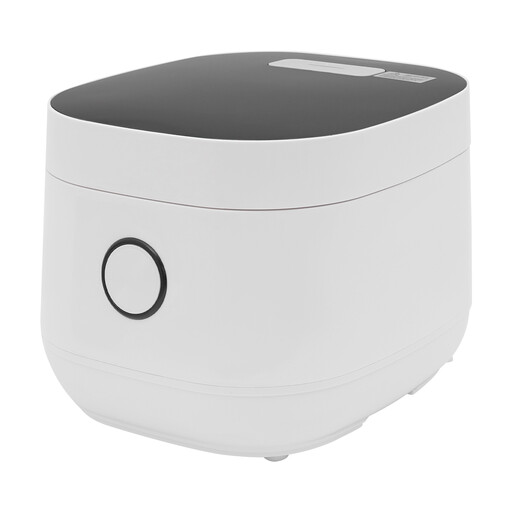
An option if you’d like to use additional cooking programmes as well as cooking rice.
The product description lists 5 l, 900 W, nine menus and a 24-hour timer. The stated capacity for five to eight people doesn’t replace model-specific guidance on the uncooked quantity for your grains.
 No image available
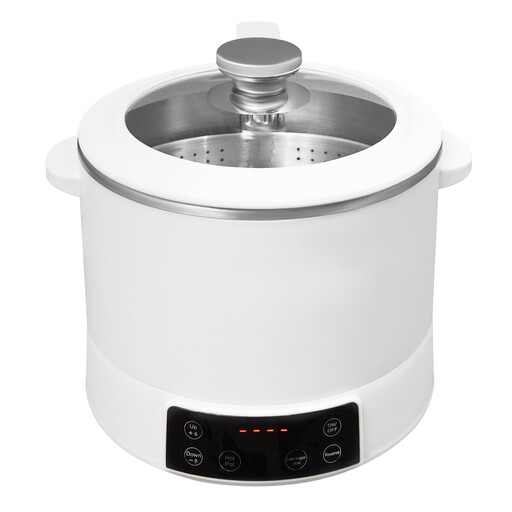
The product details say it’s designed for one to three people and has a delay timer for planned cooking.
Features listed include 3 l, 1500 W and a 12-hour delay timer. The description also mentions a rice and water separation function and a hot pot mode. Check the capacity limits for the amount of grain you plan to cook.
Not without checking the instructions for your specific model. Yum Asia gives different settings depending on the appliance and grain. For the Sakura, the manufacturer lists different maximum quantities for uncooked white and brown rice. Use the relevant quantity and water guidance as a starting point for your mix.
The litre figure may not correspond to the usable capacity for rice. For the EasyCook+ RK7321, Tefal lists a total volume of 5.0 l and a usable capacity of 1.8 l. Check the instructions and permitted capacity for the batch you plan to cook.
For food you plan to eat later, the BfR recommends cooling it and storing it in the fridge until you reheat it. To keep food hot until it’s eaten, the BfR recommends a temperature of at least 60 °C throughout. The cooker’s keep-warm function alone doesn’t prove that this temperature is maintained.
No. The number of programmes doesn’t automatically tell you which quantity and water settings to use for every mix. Yum Asia points out that settings vary by model. Check the instructions for the grains you’re actually using.
Check the care instructions and whether an inner pot or compatible accessories are available for the specific model. Tefal offers a model-specific spare parts search. Reishunger says its digital rice cooker isn’t dishwasher-safe.