
Same-day & Next-day Delivery

Quality Guaranteed

Unlock Your Welcome Offers: FREE Delivery | Up to 80% OFF | Free 30-day JoyPlus trial
Download the APP
Anyone looking to buy rice flour will find a wide range of products made from white rice, glutinous rice, maize, potatoes or coconut. Their names may look similar, but their properties when cooking and baking differ considerably. Fine rice flour, for example, is suitable for batters, noodles and sauces, while glutinous rice flour creates the characteristic elastic consistency of mochi and certain dumplings.
The following selection by the Joybuy Product Recommendation Officer will help you assess product information objectively and avoid common purchasing mistakes.
“Glutinous Rice Flour” means glutinous rice flour and does not mean that the product contains gluten. It is made from glutinous rice and develops a stretchy, sticky texture when heated. Ordinary rice flour made from white rice, on the other hand, remains more loose, dry or creamy and is not elastic enough for many mochi recipes.
For rice cakes, rice noodles, crispy batters or thickening, ordinary Thai rice flour is usually the more suitable choice. For mochi, tangyuan and certain filled dumplings, the ingredients list should explicitly state glutinous rice flour.
Rice flour is naturally gluten-free. However, it does not always replace wheat flour in the same ratio when baking. Gluten provides elasticity and stability in yeast doughs and cakes. That is why gluten-free baking often involves combining several ingredients, such as rice flour with potato starch, cornflour or a binding agent.
It is also worth checking the allergen information. According to the ingredients list, a product may contain only rice, but it could have been processed in a facility that also handles wheat, soya or nuts. For coeliac disease or severe allergies, the labelling on the relevant packaging is decisive.
Fine flour can usually be incorporated more evenly into sauces, creams and liquid batters. Coarser maize or buckwheat flours, by contrast, provide a more pronounced texture. Pack size is also relevant: 250 to 400 g is suitable for occasional recipes, while 500 g or 1 kg may be more practical for frequent users.
After opening, flours and starches should be stored in a dry, cool place in a tightly sealed container. This helps reduce moisture absorption, clumping and unwanted odours. The best-before date can be found on the packaging.
First check whether the product consists of 100% rice, glutinous rice, maize, potato or coconut. Erawan Rice Flour lists rice and water, while the glutinous rice flours from Cock Brand, Sunlee and Erawan explicitly consist of glutinous rice. This distinction is crucial for the consistency.
If you are looking for Asian flours for Vietnamese, Thai or Japanese dishes, you should also pay attention to the recipe description. “Rice Flour” and “Glutinous Rice Flour” are not interchangeable.
Nutritional values per 100 g are useful for objective comparison, but say little about whether a product is suitable for a particular recipe. Ingredients, grind, origin information, net quantity and storage instructions are more important. Coconut flour, for example, may carry warnings about traces of soya, almonds, nuts, sesame or lupin. The current packaging should also be checked for rice products.
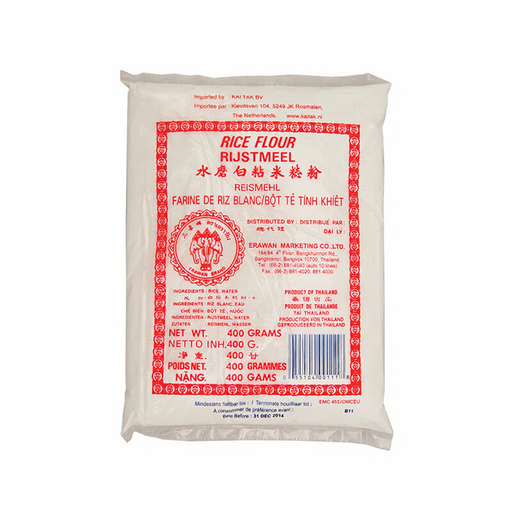
Why this product suits this profile: The 400-g pack is a manageable size for first attempts with rice flour, Asian doughs and sauces. According to the product information, it consists of rice and water.
The clear description as Rice Flour reduces the risk of confusing it with glutinous rice flour. For mochi, choose a product explicitly labelled as glutinous instead.
A neutral staple ingredient for batters, rice-based pastries and thickening. The nutritional information lists 78,5 g of carbohydrates per 100 g.
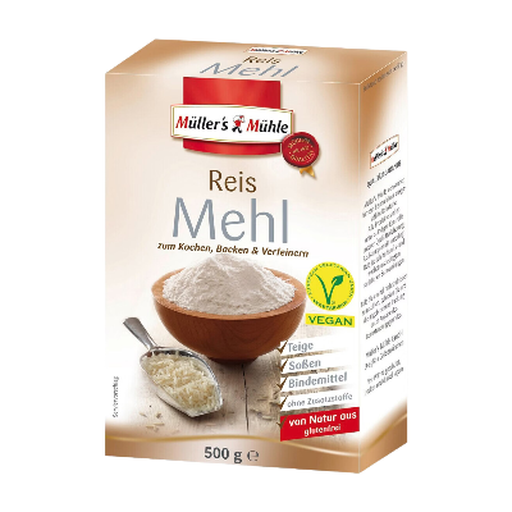
Why this product suits this profile: The stated fine grind and neutral flavour are ideal for baked goods, sauces and liquid batters where a subtle texture is required.
The product information warns of possible traces of wheat. This highlights why allergy sufferers should check not only the main ingredients, but also the information about cross-contamination.
500-g pack, fine consistency and, according to the product information, no added ingredients. Storage: keep dry and follow the instructions on the packaging.
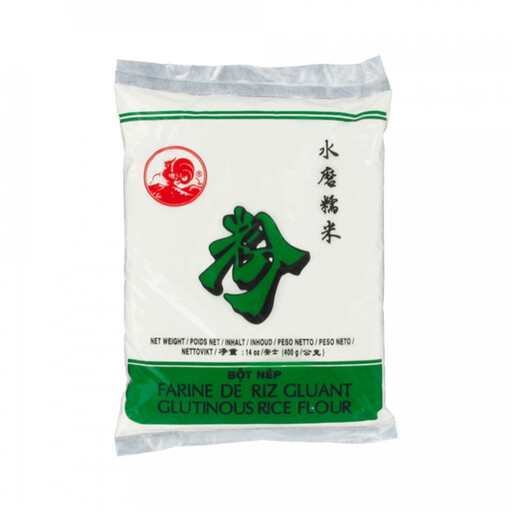
Why this product suits this profile: Anyone specifically looking for rice flour for mochi and dumplings, rice cakes or Asian desserts needs the sticky variety made from glutinous rice.
The product name explicitly states Glutinous Rice Flour. This ensures that the rice variety required for mochi is not confused with ordinary rice flour.
400-g pack, finely milled and, according to the product description, made from 100% glutinous rice flour. Suitable for sweet and savoury recipes.
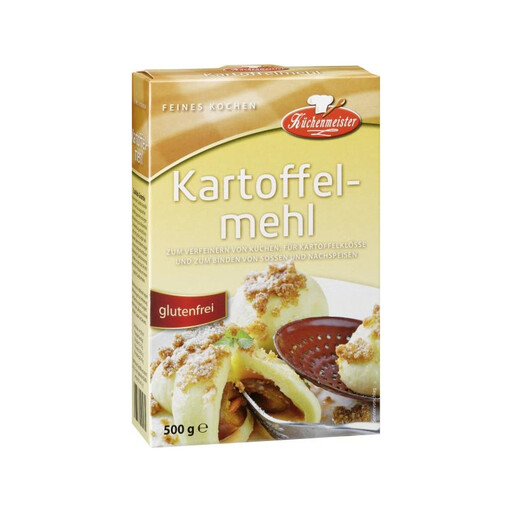
Why this product suits this profile: Potato starch complements rice flour when gluten-free baking requires a lighter texture or cooking requires greater thickening power.
The ingredients list names potato starch as the sole ingredient. This clearly distinguishes it from rice flour and cornflour, allowing it to be measured precisely.
500-g pack, gluten-free according to the product information, and intended for baked goods, desserts, creams, sauces and soups.
We have put together a complete, regularly updated list of products that fully meet these strict selection criteria and the safety regulations applicable in the EU.
Rice flour and starches should be mixed as smoothly as possible before being whisked into liquids. For sauces and soups, the powder can first be blended with cold water and then added to the hot dish. For doughs, the amount of liquid required depends on the grind and the recipe.
For gluten-free baking, a mixture of rice flour and potato starch or cornflour can be a useful option. Coconut flour is not a direct 1:1 substitute: it absorbs considerably more liquid. With maize flour, it is important to distinguish between fine maize flour, maize semolina and pre-cooked maize flour for arepas.
Rice naturally contains no gluten. However, people with coeliac disease should check the labelling and any trace warnings on the packaging, as cross-contamination can occur during processing.
That depends on the recipe. Rice flour works well for sauces, soups, crispy batters and certain desserts. In cakes, bread and yeast doughs, the texture changes because rice flour does not form gluten. Blends with cornflour, potato starch or other gluten-free flours are often more suitable.
When stored in a dry, dark place in a tightly sealed container, rice flour generally remains usable until the stated best-before date. Check the smell, appearance and consistency before use. Moisture, clumps or an unusual odour indicate that the product should no longer be used.