Flatmates who train and need a snack
You’re looking for a no-prep snack between lectures and a workout. What matters to you is how much protein the cakes contain per 100 g and in the portion you actually eat.


If the protein content of the cake itself is your priority, it’s worth comparing lentil and maize-and-pulse cakes: EDEKA lists 25 g of protein per 100 g for its lentil cakes, while REWE lists 18.4 g for Verival Organic Protein Cakes. The classic rice cakes listed by EDEKA and ALDI SÜD contain 8.7 g and 6.7 g per 100 g respectively. If you specifically want rice cakes, you can use them as a base for toppings and factor those toppings into the nutritional value of the portion you eat.
You’re looking for a no-prep snack between lectures and a workout. What matters to you is how much protein the cakes contain per 100 g and in the portion you actually eat.
You want to keep cakes in the shared kitchen or your room, ready to eat plain or top with a few ingredients.
You’re looking for a simple rice cake to keep in the cupboard and add toppings to. If you want your snack to contain more protein, factor in your choice of topping.
A good choice if: The protein content of the cake itself matters more to you than a rice base.
Worth bearing in mind: The options compared here are made mainly from lentils, or from maize and pulses; they aren’t pure rice cakes.
A good choice if: You want rice cakes as an easy-to-top base.
Worth bearing in mind: The protein content of the finished snack also depends on the topping and how much you eat.
| What you’re looking for | What to check when buying | Who it matters to |
|---|---|---|
| Protein content | Compare protein per 100 g and in the portion you plan to eat; check whether the base is rice or pulses. | If I’m buying a snack to eat around a workout mainly for its protein content, the value for the cake itself matters to me. This is the top priority for around 50% of consumers. |
| Quick and easy to eat | Check the pack size and storage instructions; think about whether you’ll eat the cakes plain or with a few toppings. | When moving into a shared flat, I want something I can eat without cooking, even if the kitchen isn’t set up yet. Around 30% of consumers say this is their main priority. |
| A rice base you can add toppings to | Consider the rice cakes and your chosen topping together; take the nutritional information for the portion you eat into account. | For the shared-flat cupboard, I’m looking for a simple rice cake I can top as needed. This is the main priority for around 20% of consumers. |
Among the EDEKA products compared, EDEKA lists 25 g of protein per 100 g for its lentil cakes and 8.7 g for its plain rice cakes. The lentil option is a different product, made with a different base ingredient.
Decide whether rice as an ingredient or the protein content of the cake matters more to you, then check the ingredients list and nutritional information.
A value per 100 g doesn’t automatically tell you how much protein you’ll get from a snack you actually eat. For topped rice cakes, the topping also counts towards the portion.
As well as comparing the value per 100 g, consider how many cakes you plan to eat and, if you’re adding toppings, the nutritional information for the other ingredients.
Ingredients and nutritional values can vary significantly between specific products. ALDI SÜD also notes that its organic rice cakes may vary between suppliers.
Before buying, check the nutritional information, ingredients and allergen advice on the specific pack you’ve chosen.
The German Federal Institute for Risk Assessment notes that rice products such as rice cakes can contain relatively high levels of inorganic arsenic, and recommends varying the types of grain you eat.
Include snacks made with other grains or pulses in your shared-flat stash, rather than always reaching for rice cakes.
Vegan Organic Protein Cakes made with maize and pulses, for comparing with classic rice cakes.
Plain rice cakes and high-protein lentil cakes are two different types of cake.
Lentil cakes are an alternative for anyone who doesn’t need a pure rice base.
GUT BIO Organic Rice Cakes with Salt are an example of a classic rice cake.
Organic Lightly Salted Wholegrain Rice Cakes are an example of wholegrain rice cakes.
Protein Müsli #1 is a muesli product, not a rice or lentil cake.
A recipe idea for plain rice cakes topped with peanut butter and banana.
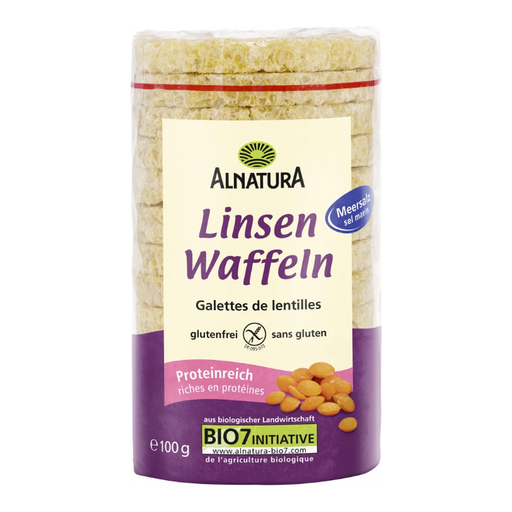
This selection features a lentil cake for anyone looking for a crunchy alternative to classic rice cakes. To compare protein content, check the nutritional information on the specific pack.
 No image available
A lentil cake for a no-prep snack or as a base for toppings if you’re not looking for a rice cake. The pack contains 100 g. Check the allergen information on the specific pack, particularly for soya.
You can’t tell from the product type alone. EDEKA lists 8.7 g of protein per 100 g for its EDEKA Bio Plain Rice Cakes, while ALDI SÜD lists 6.7 g per 100 g for GUT BIO Organic Rice Cakes with Salt. If you’re adding toppings, consider the whole portion you eat.
Yes, rice cakes make a handy base for a topped snack. Lidl’s recipe with rice cakes, peanut butter and banana contains 10 g of protein per serving; that figure doesn’t apply to the rice cakes alone.
No. Check the ingredients and may-contain information for the specific product. Kallo notes that its Organic Lightly Salted Wholegrain Rice Cakes may contain traces of milk, sesame and soya. If you add a topping, remember to check its ingredients and allergens too.
The German Federal Institute for Risk Assessment doesn’t recommend avoiding them altogether. It notes that rice products such as rice cakes can contain relatively high levels of inorganic arsenic, and recommends eating a variety of grain products.
For Verival Vegan Organic Protein Cakes, Verival recommends storing them in a dry place, away from heat and moisture, and keeping the pack tightly closed after opening. Follow the pack instructions for other products.