
Lieferung heute & morgen

Qualitätsgarantie

Willkommens-Angebote freischalten: KOSTENLOSE Lieferung | Bis zu 80 % RABATT | Kostenlose 30-Tage-JoyPlus-Testphase
App herunterladen
The selection of rice noodles available can be overwhelming. Whether you're making an authentic pho, a quick stir-fry, or need a gluten-free alternative, the right noodle shape and width is crucial for the success of your dish. This guide serves as a reference to simplify your choice and help you find the perfect product for your kitchen. We'll outline objective criteria and present a selection of products suitable for various culinary uses.
To find the right Asian noodles for your recipe, there are a few key features to consider. The texture, cooking time, and ability to absorb sauce are directly dependent on these characteristics.
The width of the noodle is arguably the most important distinguishing feature and directly impacts the final result.
Authentic rice noodles are characterized by a minimalist ingredient list. Typically, they consist of only rice flour and water. This simplicity makes them a natural option for a conscious diet.
For people with celiac disease or gluten sensitivity, gluten-free noodles are a necessity. Since rice is naturally gluten-free, most rice noodles are a suitable choice. However, it is advisable to look for an explicit "gluten-free" label on the packaging to rule out cross-contamination during production. Products without artificial preservatives or additives are also preferable.
Based on the criteria mentioned, we have compiled a selection of rice noodle products that are distinguished by their specific properties for different dishes.
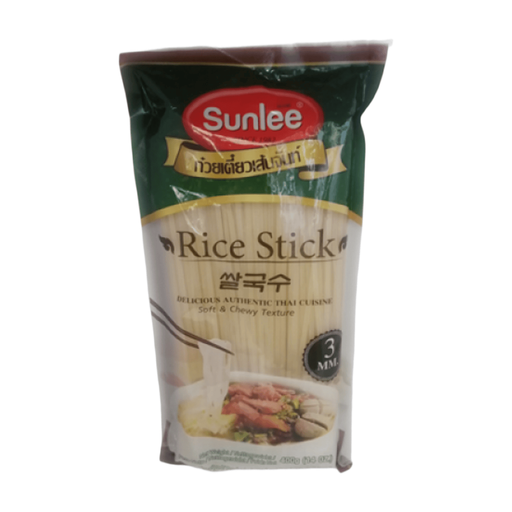
Why It Stands Out: With a standard width of 3 mm, these rice sticks are a versatile all-rounder in Asian cuisine. According to the manufacturer, the recipe consists of 90% rice and 10% water, with no added preservatives.
Advantages:
Who It's For: This product is aimed at home cooks looking for a reliable base noodle for a variety of Asian recipes who value a simple, clean ingredient list.
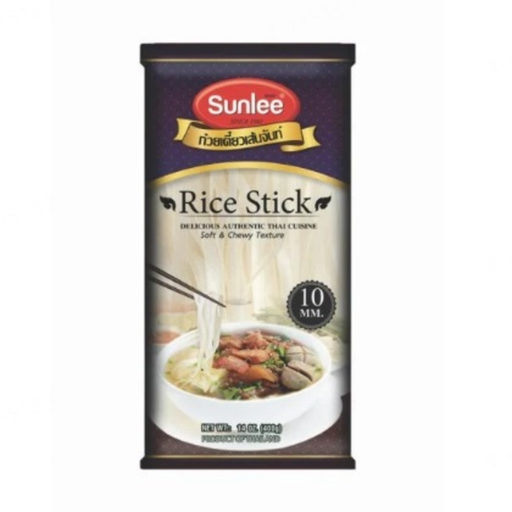
Why It Stands Out: With a width of 10 mm, these noodles fall into the category of flat rice noodles. Their wide, flat shape is designed to optimally absorb rich sauces and broths.
Advantages:
Who It's For: Ideal for lovers of authentic dishes like Pho, where the noodle is a main component, or for stir-fries like Pad See Ew that require a wide noodle. Those specifically looking for rice noodles for Pho will find a suitable option here.
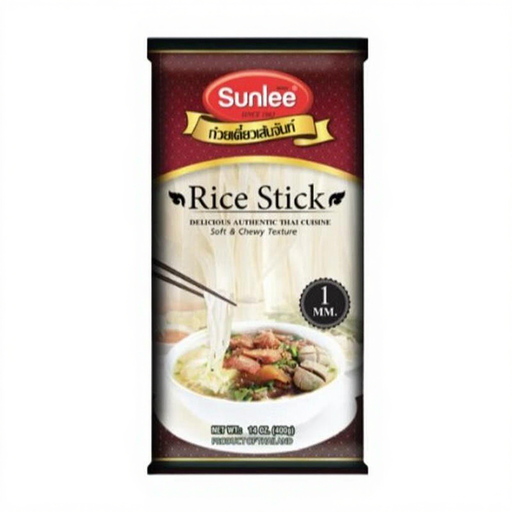
Why It Stands Out: These very fine 1 mm rice noodles are the most delicate version in this selection. Their delicate structure allows for an especially short preparation time.
Advantages:
Who It's For: This product is the right choice for preparing fresh summer rolls, light noodle salads, or as a fine addition to Asian soups.
If you are looking for other varieties or package sizes, there is a wider range of products to discover. Each type offers unique properties for different culinary creations.
Browse our entire selection of 400g rice noodles to find more options.
Most rice noodles consist exclusively of rice flour and water and are therefore naturally gluten-free. However, for individuals with celiac disease, it is recommended to look for an official "gluten-free" seal on the packaging. This ensures that no cross-contamination with gluten-containing grains has occurred during the manufacturing process. The Sunlee rice noodles featured here are certified gluten-free.
For a traditional Vietnamese Pho, flat, wide rice noodles are typically used. A width of 3 mm to 10 mm is ideal. The wider noodles (like the Sunlee 10mm version) absorb the aromatic broth well and offer a satisfying, soft texture that complements the soup. Narrower noodles might get lost in the robust broth.
There are two common methods to prevent sticky rice noodles: