
Lieferung heute & morgen

Qualitätsgarantie

Willkommens-Angebote freischalten: KOSTENLOSE Lieferung | Bis zu 80 % RABATT | Kostenlose 30-Tage-JoyPlus-Testphase
App herunterladen
If you’re looking to buy rice noodles, you’ll find plenty of options in shops: thin rice sticks for soups, wider noodles for stir-fries, Thai rice noodles for Pad Thai, and bulk packs for food businesses and frequent users. However, product descriptions aren’t always consistent. A width of 3 mm can look different depending on the shape and manufacturer, while claims such as “authentic” or “extra firm” offer little guidance without specific preparation instructions.
This buying guide explains which details really matter and how to avoid buying the wrong product.
“Rice sticks” and “Asian rice noodles” are broad terms. The key factors when choosing are width, cut and intended use:
A straight or curved shape can also affect how easy the noodles are to mix. However, shape alone is no indication of quality.
Instructions for dried rice noodles can vary considerably. Some need to soak in warm water for 10 to 20 minutes, while others require 30 to 60 minutes or can be cooked directly. If you ignore the soaking time, the noodles can easily end up too firm or too soft.
For dishes such as Pad Thai, it’s best to soak the noodles only until they soften slightly but still have some bite. Some varieties can be added directly to soups. Always follow the instructions on the specific pack.
Rice and water are naturally gluten-free. However, some products contain added starch, or are made in facilities that handle other allergens. If you need gluten-free rice noodles, check the product’s specific labelling, ingredients list and allergen information.
It’s also worth checking the ingredients when choosing vegan rice noodles. According to their product details, several of the products featured here contain only rice or rice flour and water. This doesn’t mean that all rice noodles do.
Thin to medium rice sticks are handy for pho and clear soups: they absorb the broth without overpowering it. Rice noodles for Pad Thai are often medium-width, for example 3 or 5 mm. For rich, saucy wok dishes, 5 or 10 mm noodles may be a better choice.
Check for:
The nutritional values of dried rice noodles tend to vary less than their cooking properties. Ingredients, width and intended use are therefore often more helpful when choosing than marketing claims.
A 375 or 400 g pack is suitable for most households and the occasional cooking night. A bulk pack of rice noodles containing 34 units of 400 g each is better suited to food businesses, clubs, large families or people who use them regularly.
Store dried noodles in a cool, dry place, away from moisture and strong smells. After opening, seal the pack tightly or transfer the noodles to an airtight container. This helps prevent them from absorbing moisture and softening unevenly when soaked.
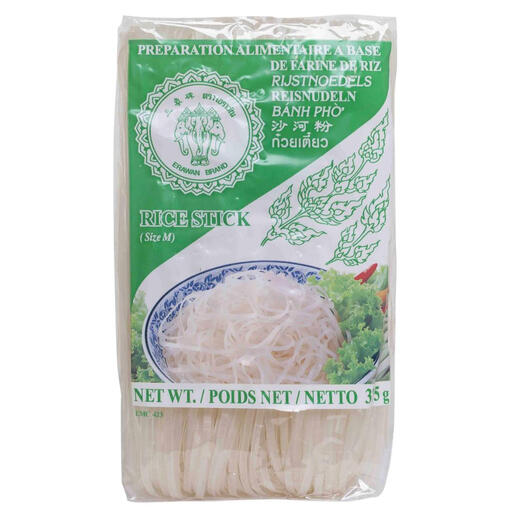
Why this product suits you: Its medium width works well in a range of dishes, and the pack size is easy to use up in a typical household.
The product details specify the ingredients, soaking time and cooking time. That means you don’t have to rely on marketing claims alone when choosing.
3 mm wide, 375 g pack and, according to the product details, made with rice flour and water.
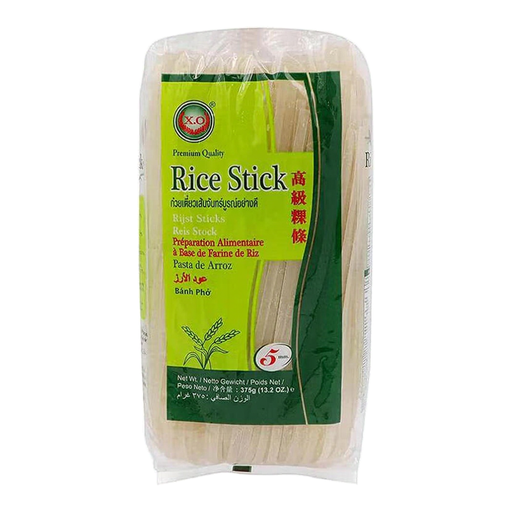
Why this product suits you: Its medium width is ideal for Pad Thai, stir-fries and noodle soups. The product description gives detailed information about the ingredients and preparation.
The instructions recommend soaking the noodles in hot or warm water, reducing the risk of putting them straight into the pan without preparing them first.
5 mm wide, 375 g pack and, according to the product details, made with rice, water and modified starch.
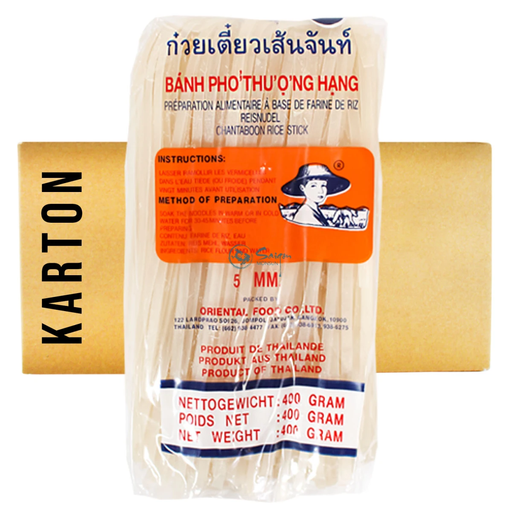
Why this product suits you: With 34 individual packs, this bulk option is aimed at food businesses, high-volume users and households that need rice noodles regularly.
The individual packs help prevent the whole bulk pack from being exposed to moisture over time once opened.
34 units of 400 g each, 5 mm wide and, according to the product details, made with rice.
For spring rolls, you’ll need suitable wrappers as well as noodles. According to the product details, DOUBLE PANDA Rice Paper 22cm For Springroll 400g is made with tapioca flour, water, rice flour and salt. The round wrappers, measuring 22 cm in diameter, are briefly soaked in warm water and can be used for fresh or deep-fried rolls: Shop rice paper for spring rolls.
A sushi mat can make rolling easier when preparing sushi, nori rolls or compact spring rolls. The 24 × 24 cm bamboo mat helps you roll evenly and should be left to dry completely after use: View the Bamboo Sushi Mat.
We’ve put together a complete, regularly updated list of products that meet these strict selection criteria and fully comply with the safety regulations in force in the EU.
Medium-width noodles such as 3 mm or 5 mm are often used for Pad Thai. They can be soaked and then finished in the pan with sauce, vegetables and other ingredients. The exact soaking time depends on the product.
Unopened rice noodles can be stored in a dry place away from light until the best-before date printed on the pack. Once opened, they should be sealed airtight and kept away from moisture. Always check the packaging for the specific date.
According to their ingredients lists, many rice noodles are made with rice or rice flour and water, making them suitable for gluten-free or vegan diets. However, this isn’t true of every product. Always check the ingredients list, allergen information and product labelling before you buy.