If you want the cake itself to add more protein to a holiday snack, it’s worth looking at lentil and other pulse-based cakes. The lentil cakes listed by REWE and EDEKA each contain 25 g of protein per 100 g, while EDEKA’s plain rice cakes contain 8.7 g per 100 g. Classic rice cakes can, on the other hand, make a versatile base for toppings. If you choose them, consider the ingredients in the whole snack and, for children, offer a varied selection.
Which snacks are right for you?
Children and teenagers on active holiday days
After sport, play or a day out, a cake with a stated protein content can be a simple snack option. If you want to compare the amount of protein, look not only at the figure per 100 g but also at the portion actually eaten.
Families with younger children
Rice cakes are easy to serve and handle. If they’re eaten regularly, the Verbraucherzentrale advises varying the grains, particularly for babies and toddlers. You should also check the ingredients and allergen information on the specific pack.
Shoppers looking for plant-based or gluten-free options
Check the labelling and ingredients of the specific product when choosing. Even if a cake is labelled vegan or gluten-free, that alone tells you nothing about its protein content or the possibility of allergen traces.
What should you look for when buying?
First decide whether you want the protein to come from the cake itself or from a topping. Then consider portion size, ingredients and the needs of any children sharing the snack.
| What to consider |
What to check when buying |
Who it matters most to |
| Protein in the product |
Compare protein per 100 g and per planned portion; consider rice cakes, lentil cakes and crackers separately. |
If you’re not planning to add a topping after exercise, the cake or cracker itself needs to provide the protein you’re looking for. Around 36% of consumers would put this first. |
| Options for children |
If serving rice snacks regularly, vary the grains; check the pack for ingredients, salt and allergen information. |
If you regularly prepare snacks for younger children, you may not want to keep choosing the same rice product, and you’ll need to take any individual intolerances into account. Around 29% of consumers would prioritise this. |
| Toppings and portions |
Check whether the nutritional values apply to the cake itself or to the finished recipe, and choose suitable ingredients for the topping. |
A plain cake gives everyone at home the flexibility to put together their snack in a different way. Around 21% of consumers would mainly be looking for this flexibility. |
| Pack size and shopping |
Compare pack sizes and varieties, and check what’s available at your chosen shop. |
If you’re buying snacks for several days of the holidays, you’ll want a suitable pack size and a variety that’s available locally. Around 14% of consumers would prioritise being able to plan their shopping. |
Common selection mistakes
-
Assuming all rice cakes are a higher-protein option
The products compared here differ considerably: EDEKA gives 8.7 g of protein per 100 g for its plain rice cakes and 25 g per 100 g for its Bio High Protein lentil cakes. The lentil cake is not a rice product.
Compare nutritional values on the same basis, and use the amount you’ll actually eat to work out the protein in your snack.
-
Attributing recipe values to the cake itself
A recipe from Lidl Kochen using plain rice cakes, peanut butter and banana gives 10 g of protein per serving. That figure is for the combination of all the ingredients, not for the rice cakes alone.
When looking at recipes, check which ingredients and portion size are included in the nutritional information.
-
Focusing only on protein in flavoured crackers
The reis-fit Risbellis High Protein Tomato & Pepper listed by REWE contains 1.45 g of salt per 100 g; REWE Bio lentil cakes with sea salt contain 0.52 g per 100 g. So it’s worth comparing flavour and seasoning as well as protein content.
For savoury varieties, check the ingredients list and the salt content per 100 g too.
-
Making rice cakes the only snack for young children
The German Federal Institute for Risk Assessment points out that rice products, including rice cakes, can contain inorganic arsenic. The Verbraucherzentrale recommends varying the grains, particularly for babies and toddlers.
If you offer snacks regularly, switch up the grain base and follow the information on the relevant pack.
Brands to help you choose
These examples show a range of cakes and approaches to snacking. Nutritional values apply to the specific product mentioned, not to the brand as a whole.
REWE Bio
Alongside rice and corn cakes, REWE stocks organic lentil cakes with sea salt.
- For its lentil cakes, REWE gives 99.5% red lentils, 25 g of protein and 11 g of fibre per 100 g.
- For what’s available at your local shop, check the details of the specific product.
EDEKA Bio
EDEKA stocks classic organic plain rice cakes and Bio High Protein lentil cakes as two distinct product types.
- EDEKA gives 25 g of protein per 100 g for its lentil cakes and 8.7 g per 100 g for its plain rice cakes.
- EDEKA notes that products may not be available in every shop and that pack information may differ from what’s shown online.
Lidl
Lidl Kochen uses plain rice cakes as the base for a topped snack.
- The recipe with peanut butter and banana gives 10 g of protein per serving for the finished dish.
- The recipe’s nutritional value shouldn’t be treated as the value for the rice cakes alone. Remember to consider peanut allergies when using peanut butter.
ALDI Nord
ALDI Nord stocks organic rice cakes in varieties with sea salt or no added salt.
- The product page gives a pack size of 135 g and describes the varieties as vegan.
- If you want to check the protein content, read the nutritional information on the pack you choose.
Kallo
Kallo’s Organic Unsalted Wholegrain Rice Cakes are an unsalted wholegrain rice cake.
- Kallo gives 8.5 g of protein per 100 g for this variety, or 0.6 g per cake.
- According to Kallo, the product may contain milk, sesame and soya. If you have allergies, the information on the pack you buy is what matters.
Seitenbacher
Seitenbacher offers protein bars and mueslis as alternative snack options for on the go.
- If you’re considering a bar instead of a cake, you can compare its ingredients and nutritional values as a separate product.
- Nutritional information for a protein bar can’t be applied to rice cakes.
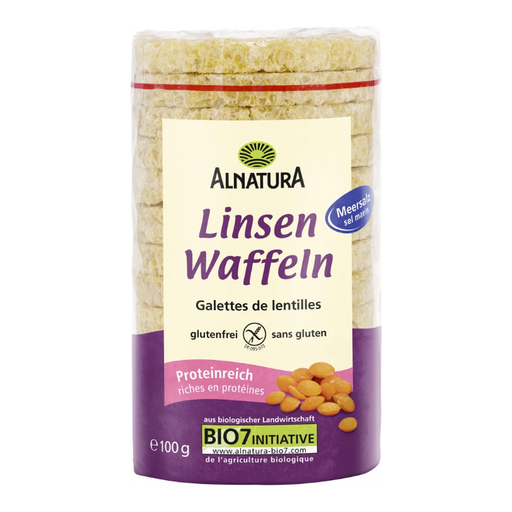
Lentil cakes at Joybuy
This selection features a lentil cake as a possible holiday snack base if you want the protein to come from the cake itself. To compare it with classic rice cakes, check the nutritional information on the specific pack.
 No image available
Alnatura organic lentil cakes, 100 g
A lentil cake for anyone looking to put together a holiday snack without adding a topping.
The pack contains 100 g; that isn’t necessarily the amount in one snack portion.
If you have a soya allergy, it’s particularly important to check the allergen information on the specific pack.
View at Joybuy
Frequently asked questions
Should young children have rice cakes as a snack every day?
Rice cakes shouldn’t be the only grain-based snack regularly offered to young children. The German Federal Institute for Risk Assessment highlights the possibility of inorganic arsenic in rice products; the Verbraucherzentrale recommends varying the grains, particularly for babies and toddlers.
How can you combine a classic rice cake with a source of protein?
Use the rice cake as a base and choose a topping that suits the eating habits and allergies of everyone sharing the snack. Lidl Kochen’s recipe with plain rice cakes, peanut butter and banana gives 10 g of protein per serving for the finished snack, not for the cakes alone.
Is a ‘vegan’ or ‘gluten-free’ label on a cake enough?
No. These labels tell you neither the protein content nor whether there may be allergen traces. For example, the plain rice cakes listed by EDEKA mention possible traces of sesame. If you have allergies or specific dietary requirements, check the labelling on the pack you buy.


