What should you look for during your weekly shop?
First, decide whether you want the cake itself to contribute protein or mainly to act as a base for a topping. Then compare the nutritional information per 100 g and for the portion you usually eat.
Lentil cakes
A good fit if: You want the cake itself to contribute protein; REWE lists 25 g per 100 g for its organic lentil cakes.
The trade-off: The REWE version is made mainly from red lentils, contains sea salt and isn’t a traditional rice cake.
Corn and legume cakes
A good fit if: You’re looking for a vegan cake made with legumes; REWE lists 18.4 g of protein per 100 g for Verival Organic Protein Cakes.
The trade-off: A recipe made with corn, legumes and pea protein differs from a plain rice cake.
Traditional rice cakes
A good fit if: An unsalted base for different toppings matters more than the protein content of the cake itself; EDEKA Organic Plain Rice Cakes are made from rice.
The trade-off: EDEKA lists 8.7 g of protein per 100 g. The topping you choose will determine how much protein the whole snack provides.
| Factor |
What to check when buying |
Who it matters to |
| Protein content |
Compare the protein per 100 g and in the portion you actually eat. A claim such as ‘high protein’ refers to the proportion of the food’s energy value that comes from protein, not simply the number of grams per 100 g. |
If I only eat a few cakes after a workout, I want to know how much protein the snack actually contains. For around 42% of consumers, the protein contribution of the cake comes first. |
| Using it as a base |
Check the ingredients and salt content against the topping you have in mind; an unsalted rice cake and a salted lentil cake serve different purposes. |
If you want to try different toppings over several days, you mainly need a cake that works with them. Around 25% of consumers would prioritise this versatility. |
| Ingredients and allergens |
Read the ingredients list and allergen information on the specific pack; a vegan product label is no substitute for checking these details. |
If I avoid certain ingredients or need to check warnings because of an allergy, the information on the pack takes priority over the protein figure. This would be the most important selection criterion for around 17% of consumers. |
| Planning your weekly shop |
Check the pack size, best-before date and availability at the shop you plan to visit. |
If you’re planning to have the snack over several days, you’ll want to find your preferred version at your local shop and use the pack in time. This would be the top priority for around 16% of consumers. |
Lentil cakes on Joybuy
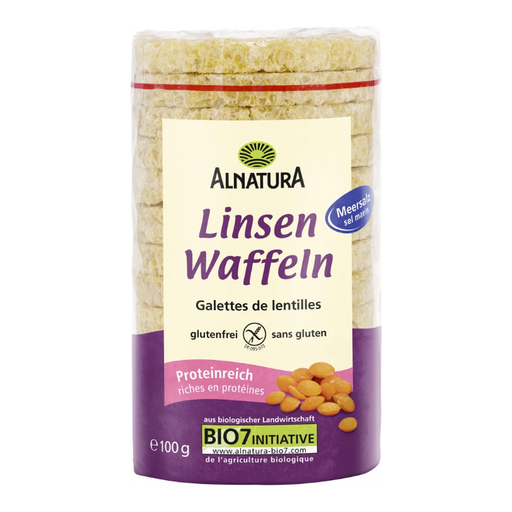
If you’re considering lentil cakes instead of traditional rice cakes, the following 100-g pack is available on Joybuy. For the snack you have in mind, check the protein per portion and the labelling on the pack in particular.
 No image available
Alnatura Organic Lentil Cakes, 100 g
A lentil cake option for shoppers considering a legume-based alternative to traditional rice cakes. Use the information on the pack to compare the protein content for your actual portion; if you have a soya allergy, it’s especially important to check the allergen labelling on the specific pack. If you’re stocking up, also check the best-before date and storage instructions.
View on Joybuy
Frequently asked questions
When is the claim ‘high protein’ allowed?
Under EU Regulation (EC) No 1924/2006, the nutrition claim ‘high protein’ is allowed when at least 20% of a food’s energy value comes from protein. The number of grams per 100 g alone doesn’t answer this; you also need to take the energy value into account.
How much protein does one lentil cake provide?
It depends on the cake and its portion size. REWE states that a 6.93 g portion of its organic lentil cakes contains 1.7 g of protein. For another product, check the information on the specific pack.
Should I avoid rice cakes altogether because of arsenic?
The German Federal Institute for Risk Assessment’s advice doesn’t amount to a blanket ban for adults. It notes that rice products such as rice cakes can contain relatively high levels of inorganic arsenic. If you eat rice cakes often, you could also include snacks that aren’t rice-based in your weekly shop.
What information should I check again in store?
Check availability, pack size, and the ingredients, allergen and nutritional information on the specific pack. EDEKA notes in its product information that some items may not be available in every store and that details on the packaging may differ from those on the website.
How should I store protein cakes after opening?
For Verival Organic Protein Cakes, the product information recommends storing them in a dry place away from heat and moisture, and sealing the opened pack well. For other products, follow their own storage instructions.


