
Lieferung heute & morgen

Qualitätsgarantie

Willkommens-Angebote freischalten: KOSTENLOSE Lieferung | Bis zu 80 % RABATT | Kostenlose 30-Tage-JoyPlus-Testphase
App herunterladen
A ride-on car is a children's vehicle propelled by the child's own leg movements. It is designed to promote gross motor skills, a sense of balance, and coordination. Selecting the right model requires an analysis of its material, construction, and functionality to ensure safety and age-appropriate use. This guide examines the technical criteria relevant to making a purchasing decision for a ride-on vehicle.
The choice of a model should be based on objective parameters. The following criteria are relevant for your evaluation.
The choice of material directly impacts the toy's durability and safety. Common materials include polypropylene (PP) and ABS plastic. Both are known for their high impact resistance and dimensional stability.
A ride-on car for 1-year-olds must meet different ergonomic requirements than a model designed for three-year-olds.
Beyond the basic function of riding, many models offer additional engaging features and practical characteristics.
Based on the technical criteria mentioned, we present three models with different specialisations.
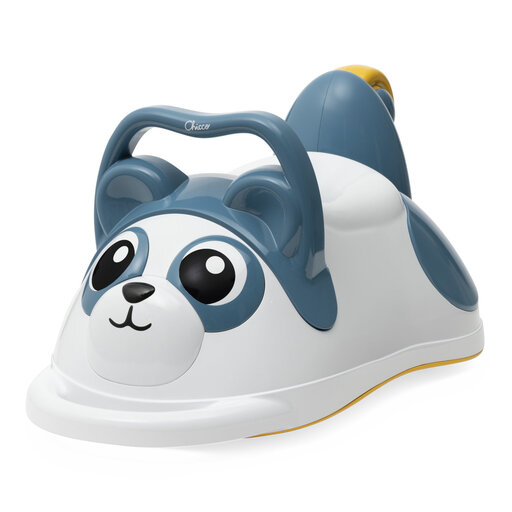
Why we recommend this product The Chicco 3in1 Panda model stands out for its evolutionary design, combining three functions in one product. It transforms from a stable ride-on for children from 12 months to a walker (push-along mode) for children from 18 months. The integrated storage compartment is designed as a Montessori-style shape sorter, which promotes sensory perception and organisational skills. Switching between configurations is possible without complex assembly.
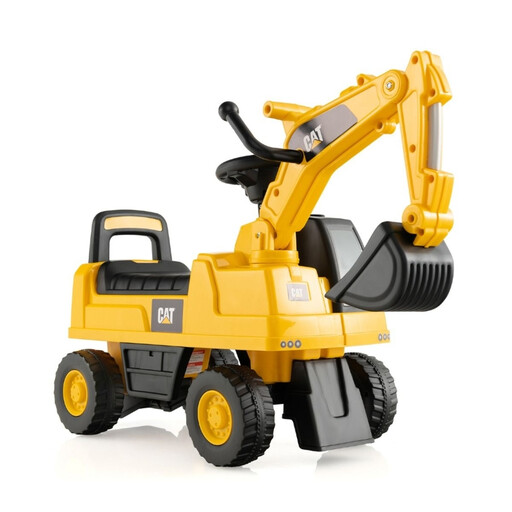
Why we recommend this product This model is a specialised ride-on digger that focuses on realistic role-play. The mechanical digger arm and scoop can be controlled and rotated via a lever, which trains hand-eye coordination. The design includes key safety features such as a backrest, an anti-tip feature, and non-slip wheels for use on flat surfaces. A hidden storage compartment under the seat adds practical utility.

Why we recommend this product The Falk Fireman Ride-On is a classic ride-on fire engine with a clear focus on durability and ease of use. Made in France from ABS plastic, this vehicle features a steering wheel with a horn and a small storage compartment. Its straightforward design makes it a long-lasting children's vehicle for both indoor and outdoor use, stimulating basic motor skills and imagination.
If you are looking for other models or different types of children's vehicles, you can find a wide selection in our Toys & Games category.
1. From what age is a ride-on car suitable? A ride-on car is generally suitable from around 12 months of age, as soon as a child can sit independently and securely. Their legs should be able to reach the ground fully to allow for safe pushing and stopping. Always follow the manufacturer's age recommendation.
2. What are the crucial safety features for a ride-on vehicle? The most important safety features are high stability against tipping (low centre of gravity, wide wheelbase, and an anti-tip feature), the use of non-toxic materials (e.g., BPA-free), rounded edges to prevent injuries, and a sturdy overall construction that can support the maximum load capacity. Use should always be supervised by an adult.
3. What is the difference between a ride-on car and a baby walker? A ride-on car is a sit-on vehicle that is propelled by pushing off with the feet, primarily training balance while sitting and strengthening leg muscles. A baby walker is a walking aid that the child pushes in front of them, holding on to it to practise walking while standing. Some multi-functional models combine both features.