
Lieferung heute & morgen

Qualitätsgarantie

Willkommens-Angebote freischalten: KOSTENLOSE Lieferung | Bis zu 80 % RABATT | Kostenlose 30-Tage-JoyPlus-Testphase
App herunterladen
A ride-on toy is often a child's first vehicle and a major milestone for mobility and fun. The selection is vast, ranging from classic ride-on cars to multifunctional children's vehicles. However, not all models live up to their promises. Before you make a decision, it's important to know the common weaknesses that often only become apparent after the purchase.
Three widespread defects in ride-on toys frequently lead to disappointment and safety concerns:
To find a durable and safe ride-on toy that brings joy to your child and supports their development, you should check three core parameters.
The choice of material is crucial for durability and safety. Look for the following features:
A good children's vehicle adapts to the child's developmental stage, not the other way around.
Some vehicles offer more than just one function and grow with the child. A 2-in-1 model that converts from a rocking animal to a ride-on toy, or a tricycle that becomes a balance bike, offers added value and a longer period of use. A ride-on excavator also promotes hand-eye coordination through the operation of the digger arm and is a popular toy for toddlers who love role-playing.
Instead of making a blanket recommendation, we have identified models that meet specific requirements and avoid the pitfalls mentioned.

Why this model is a great fit: Ideal for toddlers developing their motor skills and sense of balance. The rocking function provides safe fun, and the option to convert it into a chair extends its use beyond the playtime years.
The FSC-certified wood directly addresses concerns about questionable materials. The sturdy construction with armrests and a backrest minimises the risk of tipping, a common problem with simple rocking toys.
The 2-in-1 functionality as a rocking animal and a chair offers practical, long-term value.
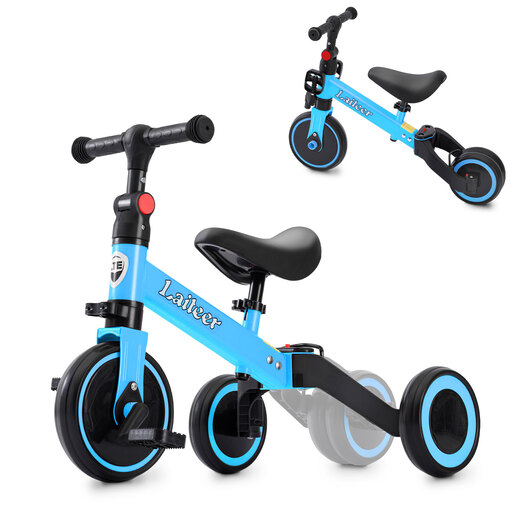
Why this model is a great fit: This vehicle grows with your child. It starts as a stable tricycle and later converts into a balance bike to specifically train the sense of balance for the eventual transition to a bicycle.
The adjustable seat and convertible design bypass the pitfall of poor ergonomics. The vehicle adapts to the child's size and won't be outgrown after a short time.
The combination of a tricycle and a balance bike in one product saves space and money, as you don't need to buy two separate vehicles.
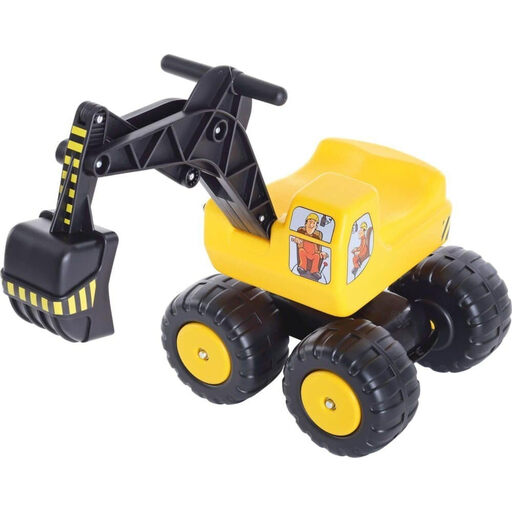
Why this model is a great fit: This ride-on excavator is designed for children who love realistic role-playing. It is extremely robust and promotes coordination and spatial awareness through the operation of the digger arm.
With a stated weight capacity of up to 100 kg, this model impressively refutes the criticism of unstable construction. It is designed for intensive and long-lasting play.
The fully functional excavator arm with two levers provides a realistic play experience that goes far beyond simple riding.
We've compiled a complete, up-to-date list of products that meet these strict selection criteria and safety regulations.
Most manufacturers recommend ride-on toys from the age of about 12 to 18 months, as soon as the child can sit and walk securely. More important than age is the individual developmental stage. The child should be able to get on and off independently and reach the ground with their feet.
For indoor use, quiet-ride wheels made of rubber or a soft plastic are ideal, as they are quiet and gentle on floors. For outdoor use, more robust plastic or rubber wheels are suitable, as they can handle uneven surfaces well.
Look for recognised safety seals, especially the GS mark (Tested Safety). Also, check the vehicle for a stable construction, a low centre of gravity for tip-over safety, and the absence of sharp edges or small parts that could come loose. Solid workmanship is often apparent at first glance.