
Lieferung heute & morgen

Qualitätsgarantie

Willkommens-Angebote freischalten: KOSTENLOSE Lieferung | Bis zu 80 % RABATT | Kostenlose 30-Tage-JoyPlus-Testphase
App herunterladen
A ride-on toy should suit your child’s age and size, as well as where they’ll use it. In practice, unclear age guidance, missing weight limits or an unsuitable type of drive can quickly lead to the wrong purchase. An electric ride-on toy, for example, may work well on tarmac but isn’t necessarily suitable for indoor use. A children’s tricycle, meanwhile, may last longer thanks to adjustable features, but will need enough storage space.
The guidance ‘from 3 years’ is just a starting point. You should also check your child’s height, the seat height, the maximum weight limit and whether they can reach the controls. Your child should be able to reach the handlebars, pedals or footrests comfortably and safely. For electric models, also check that your child can control the speed safely for their age.
Music, LED lights, a USB port or an eye-catching bodywork can add to the fun, but they don’t replace essential safety features. Look for sturdy wheels, responsive steering, a low centre of gravity and a secure seating position. If you’re choosing a ride-on toy with a remote control, make sure it allows an adult to take control reliably.
Not every outdoor ride-on toy is designed for gravel, wet paths or steeper slopes. Small wheels may struggle on uneven surfaces. For indoor use, compact dimensions, easy-to-manoeuvre wheels and a floor-friendly tread are important. Always check claims such as ‘for indoor and outdoor use’ against the specific guidance from the manufacturer.
For a ride-on toy for a child aged 1 or over, low ride-on toys or supervised models with a push handle are usually suitable options. A baby ride-on toy should have a low seat and a stable design. For children aged 3 or over, pedal-powered toys, electric motorbikes or small electric cars may be suitable, provided the seating position and weight limit are right.
Before ordering, check:
A pedal go-kart encourages independent riding, but needs enough space and a suitable surface. A children’s electric car or electric motorbike offers motorised assistance. For these models, battery voltage, charging time, speed settings and controls are important details to check.
With a remote-controlled ride-on toy, parents can supervise the ride or take control if needed. This is particularly useful for younger children. However, the toy should only be used under constant supervision and away from public roads.
Look for clear assembly instructions, securely fitted handlebars, wheels and axles, and screw connections that can be checked regularly. On electric models, make sure the charger, battery casing and connections are undamaged. For tricycles, a safety belt, adjustable push handle and sturdy frame are practical features.
A CE mark is not an independent quality seal. It indicates that the manufacturer has declared the product complies with relevant EU requirements. Also read the safety and care instructions for the product.
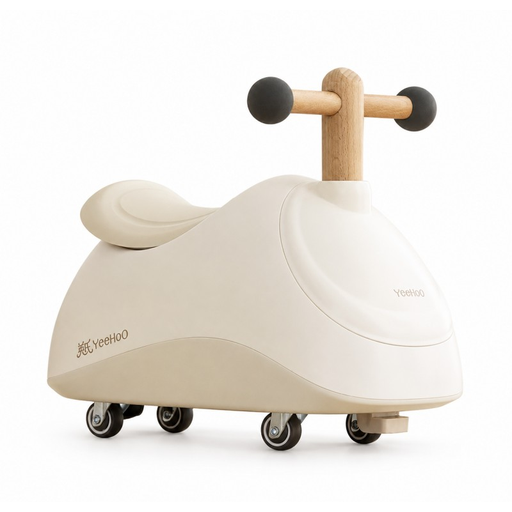
Why it suits this profile: This compact ride-on toy is designed for children aged 10 to 36 months, or around 1 to 3 years, and is intended for indoor use. At around 2 kg, it’s easy to move and store.
The age, height and weight guidance is clearly stated: 75–100 cm tall, with a weight limit of up to 25 kg. Its low design makes it easier for little feet to reach the floor.
Four wheels, omnidirectional castors and an optional rocking function. The product details specify quiet PU castors for indoor use.
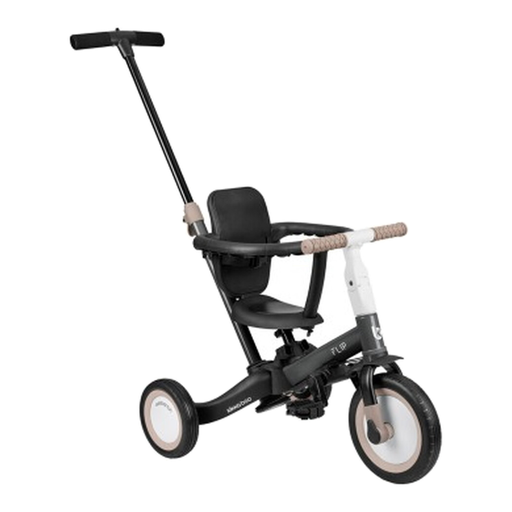
Why it suits this profile: This 5-in-1 tricycle adapts to different stages of development, from around 1 to 5 years old. It can be used with the push handle, as a tricycle, without pedals, or in balance bike or bicycle mode.
The adjustable seat and three-position push handle help reduce the chance of the toy only fitting your child for a short time. You can adapt how it’s used as your child grows.
High-carbon steel frame, adjustable seat, 360-degree swivel seat and 2-point harness, according to the product details.

Why it suits this profile: This go-kart is designed for children aged 3 to 8 and suits families looking for a non-motorised ride-on toy for the garden, patio or suitable paths.
The adjustable seat caters for different heights. The stated weight limit of 30 kg helps you choose based on your child’s weight, not just their age.
Two forward gears, reverse function, metal frame and four wheels. The stated dimensions are 84 × 57 × 55 cm.
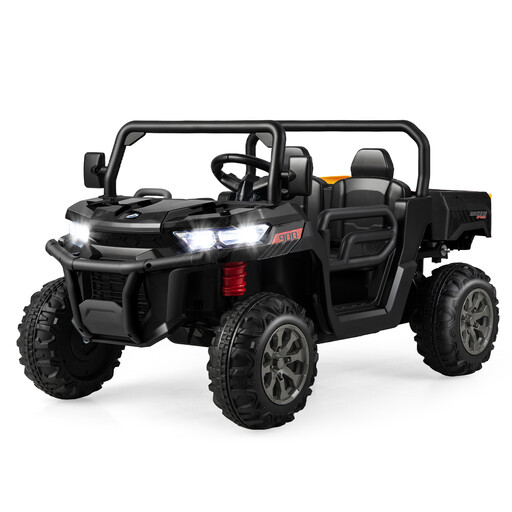
Why it suits this profile: This two-seater electric ride-on is designed for children aged 3 to 8, with a total weight limit of up to 50 kg. The remote control lets an adult take control too.
Details of the seating, speed range of 3–8 km/h and weight limit make it easier to plan. The soft start, safety belt and remote control help address common control issues.
12-volt battery, two motors, two seats, suspension and 2.4 GHz remote control, according to the product description.
We’ve put together a complete, regularly updated list of products that meet these strict selection criteria and fully comply with the safety regulations in force in the EU.
Before each ride, parents should check that the wheels, handlebars, seat, harnesses and fastenings are secure. Chargers and batteries for electric ride-ons should be stored in a dry place. Actual running time depends on factors including the load, surface, temperature and riding style. A battery indicator is useful, but you should still follow the charging time given in the instructions.
Ride-on toys are not intended for use on public roads. Use them in suitable, open areas and keep them away from steps, water, vehicles and busy routes. A helmet and other protective equipment may be appropriate, depending on the ride-on toy and its surroundings.
For children aged around 1, low ride-on toys or supervised tricycles with a push handle are suitable options. Make sure the seat is the right height, your child’s feet can reach the ground and an adult stays with them throughout.
It depends on the battery, motor power, total weight, surface and speed setting. Manufacturer estimates for running time should therefore be treated as a guide. After each use, charge the battery as instructed and don’t leave it stored completely discharged for a long time.
Alongside the purchase price, the main costs are electricity for charging and, where needed, replacement parts or a new battery later on. Running costs remain manageable if you regularly check and properly care for the battery, charger, wheels and moving connections.