
Lieferung heute & morgen

Qualitätsgarantie

Willkommens-Angebote freischalten: KOSTENLOSE Lieferung | Bis zu 80 % RABATT | Kostenlose 30-Tage-JoyPlus-Testphase
App herunterladen
A suitable vehicle for children aged around 2 to 6 should be about more than just its colour. The right seat height, a manageable weight, easy-to-understand controls and a design that suits both your child and the space available are all important. When looking for ride-on toys for children aged 3 and over, parents, grandparents and other family members often come across product claims that leave out important details.
An age recommendation such as ‘from 3 years’ does not automatically mean that every child can use the vehicle safely. On a balance bike, your child should be able to reach the ground with both feet. For an electric vehicle, you’ll also need to consider the seat height, handlebar position, vehicle weight and controls.
Before you buy, check:
Music, LED lights and bold colours can all influence a buying decision. But they’re no substitute for a controllable speed, a stable design or easy-to-understand controls. So, before choosing a children’s electric motorbike or children’s electric quad, first make sure your child can safely coordinate the throttle, brakes and steering.
A battery-powered ride-on toy needs to be charged regularly. Depending on the model, you may also need to factor in charging times, battery storage and the cost of a replacement battery later on. A balance bike avoids these considerations, but you should regularly check its tyres, handlebars, saddle and screw fittings.
A balance bike for children, also known as a children’s pedal-free bike or children’s balance bike, is propelled by pushing along with the feet. Your child can practise balancing, steering and stopping at their own pace. A balance bike for children aged 2 to 6 can be a good choice for families looking for a lightweight vehicle that’s easy to use every day.
An electric model runs on a rechargeable battery or batteries. It offers a different kind of play, but requires consistent adult supervision. Before choosing one, check the product description for details of the voltage, maximum speed, charger, battery type and maximum load.
The age recommendation is only a guide. It’s particularly important to check:
A vehicle that’s too heavy may be difficult for a small child to turn or lift. On a balance bike, you should be able to lower the saddle enough for both feet to reach the ground securely.
Look for easy-to-reach controls, non-slip grips, sturdy wheels and clear assembly instructions. A children’s ride-on toy with stabilisers can provide extra stability, but it changes how the vehicle steers and handles corners. Stabilisers are no substitute for supervision or a suitable, flat riding surface.
With electric models, parents should assess the speed on a suitable surface and under direct supervision. A helmet and closed-toe shoes are sensible, whatever type of vehicle you choose. Toy vehicles are generally unsuitable for use on public roads and paths, slopes or areas with car traffic, unless the specific product is expressly designed for that purpose.
Before first use, check all screw fittings, wheels, axles and moving parts. Also look for the CE marking, manufacturer or importer details, warning notices and age restrictions. The CE marking is the manufacturer’s declaration of conformity, not an independent quality seal.
For products with a battery, regularly check the charger, cable and connector for visible damage. Use the charger only as directed by the manufacturer. Store batteries in a dry place, away from high temperatures and out of reach of young children.

Why this product suits this profile: The pedal-free design is made for an easy introduction to riding. According to the product description, the adjustable seat and puncture-proof tyres are designed for children aged 3 to 6.
The adjustable seat position helps you avoid a standard height that isn’t right for your child. Puncture-proof tyres mean you won’t need to check the tyre pressure regularly.
Pedal-free design, adjustable seat, puncture-proof tyres and stand, according to the product description.

Why this product suits this profile: The 12-inch size, adjustable seat and adjustable handlebars are ideal for families who want to check the measurements and adjustability carefully.
Adjustable contact points help prevent the bike from being outgrown too quickly due to fixed dimensions. The puncture-proof tyres don’t need conventional inflation.
12-inch wheels, adjustable soft seat, adjustable handlebars, puncture-proof tyres and easy assembly, according to the product description.
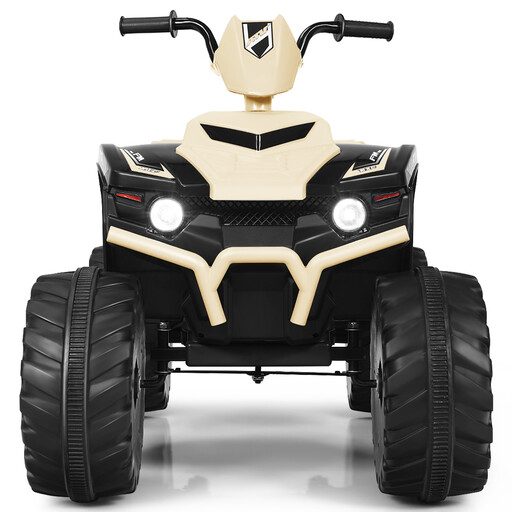
Why this product suits this profile: This electric quad may appeal to families looking for a wider vehicle to use on suitable private outdoor spaces. The stated dimensions are 104 × 67 × 74 cm, and it has a 12-volt battery.
The stated overall dimensions make it easier to plan the space needed for storage and riding before you buy. However, the electric features should only be used under direct supervision.
12-volt battery, seat, music function, LED lights and stated dimensions of 104 × 67 × 74 cm.
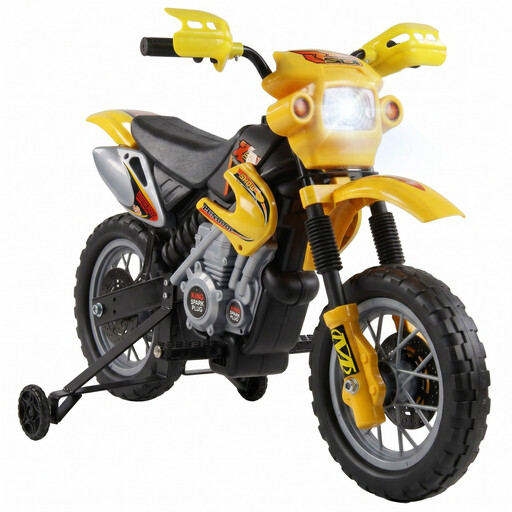
Why this product suits this profile: According to its product name, this children’s electric motorbike is designed for children aged 3 to 6 and has a stated load capacity of 25 kg.
The stated weight limit helps you make a more informed choice. Stabilisers can provide extra sideways stability at low speeds, but they’re no substitute for supervision.
Stabilisers, headlights, music function and stated load capacity of 25 kg.
We’ve put together a complete, regularly updated list of products that meet these strict selection criteria and fully comply with the safety regulations in force in the EU.
It depends on your child’s height, coordination and how they’ll use it. A balance bike is easy to use and doesn’t need a battery. An electric ride-on offers motorised movement, but requires consistent supervision and a suitable private area to ride.
There’s no single answer. Battery life depends on factors including battery capacity, load, surface, temperature and riding style. Check the manufacturer’s information on charging time and running time, and only charge the battery with the supplied charger.
Age guidance alone isn’t enough. Your child should be able to sit or stand securely, control the handlebars and bring the vehicle to a stop. On a balance bike, both feet should reach the ground. With an electric ride-on, parents should first check the controls at low speed, under direct supervision and on a flat, clear surface.