
Lieferung heute & morgen

Qualitätsgarantie

Willkommens-Angebote freischalten: KOSTENLOSE Lieferung | Bis zu 80 % RABATT | Kostenlose 30-Tage-JoyPlus-Testphase
App herunterladen
Choosing the right wine glass can be as crucial as selecting the wine itself. Especially with high-end glasses like those from Riedel, the selection is vast, and the differences are often subtle yet impactful. Many wine lovers invest in expensive glasses without realising their full potential because they fall for common misconceptions. This guide will help you understand the key features and make an informed choice that truly enhances your wine experience.
Before we dive into the details, it's important to be aware of three common mistakes that often lead to an unsuitable choice:
To avoid these mistakes, you should focus on three objective criteria. These will help you correctly evaluate the function and quality of a Riedel wine glass.
The shape of the glass bowl is the most critical criterion. It's not a marketing gimmick but is based on physical principles of how aromas unfold and meet the palate.
Riedel uses high-quality crystal glass for its glasses, characterized by high brilliance and thin walls. However, the manufacturing method has a major impact on feel and precision.
Each Riedel series has its own focus. The Riedel Performance series, for example, is distinguished by a subtle optical effect inside the bowl. According to Riedel, this texture increases the inner surface area of the glass, which is said to lead to more intense aroma development. Other series like Veritas focus on achieving a low weight with machine production.
To make your decision easier, we have matched some Riedel products to different user profiles.
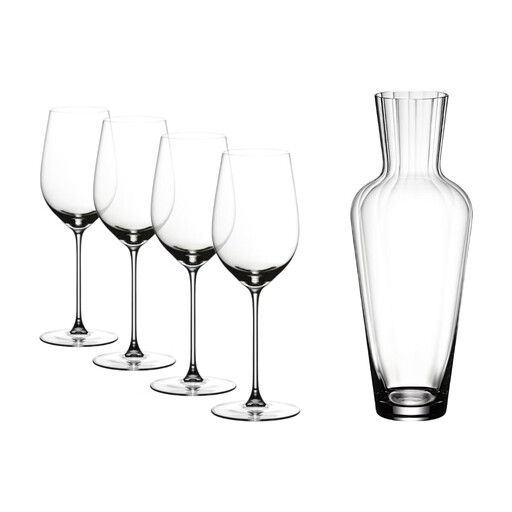
Why This Fits Their Persona: Ideal for wine lovers who appreciate both fruity white wines and lighter red wines and are looking for a high-quality starter set. This wine glass gift set not only includes functional glasses but also a practical decanter.
It refutes the "one-glass-fits-all" fallacy by offering a specifically shaped glass that is nonetheless optimised for multiple varietals (Riesling, Zinfandel), thus enabling smart versatility.
Complete set with 4 glasses and a decanter. Machine-made crystal glass for precision and dishwasher suitability.

Why This Fits Their Persona: Perfect for connoisseurs who primarily enjoy full-bodied, complex red wines like Cabernet Sauvignon or Merlot and want to experience their structure and depth to the fullest. A set that meets professional wine glass standards.
This glass goes beyond mere aesthetics. The functional optical effect of the Riedel Performance series is specifically designed to enhance the bouquet and is not just a design element.
Large volume (834 ml) for optimal aeration. The optical effect is designed to intensify aroma development. Dishwasher-safe set of 4.

Why This Fits Their Persona: For special occasions and for enthusiasts who appreciate craftsmanship and exceptional design. This glass is a statement piece, combining function with unique aesthetics.
It sidesteps the "aesthetics-only" pitfall by proving that outstanding design and supreme functionality can go hand in hand. The varietal-specific bowl is combined with a handcrafted stem.
A unique, mouth-blown wine glass with a black crystal base. The bowl is optimised for great Bordeaux wines (950 ml volume).
We have compiled a complete, up-to-date list of products that fully meet these strict selection criteria and quality standards.
1. Are Riedel wine glasses dishwasher-safe? Yes, according to the manufacturer, most machine-made Riedel glasses (like the Performance, Veritas, and Vinum series) are dishwasher-safe. To maintain their brilliance and avoid scratches, it is recommended to use a gentle cycle and ensure there is enough space between them and other items. For handmade glasses (e.g., Fatto A Mano), gentle hand washing is recommended to protect the delicate craftsmanship, even if they are often declared "dishwasher-safe."
2. What is the difference between the Riedel Veritas and Performance series? Both series are machine-made and represent high quality. The main difference lies in the design of the bowl. The Riedel Performance series (introduced in 2018) was the first to feature an optical effect inside the bowl, which increases the inner surface area and is intended to intensify aroma development. The Veritas series (introduced in 2014) is distinguished by its particularly low weight and fineness, which approaches the feel of a mouth-blown glass while retaining the precision of machine manufacturing.
3. Why is the shape of a wine glass really so important? The shape influences three essential aspects of wine enjoyment: