When filming a card-making tutorial at a small table, decide on your preferred camera angle first. Then choose between a tabletop tripod and a suitable clamp. A tabletop tripod takes up space, while a clamp needs a suitable table edge and an arm that can reach far enough. If reflections are a problem, diffused light positioned to the side may work better. Check the overhead view with your own setup.
Which setup is right for you?
For crafters with limited table space
If you want to film your card and both hands from above, check whether a tabletop tripod will fit beside your work area or whether a clamp will attach securely to the table edge. Reach and camera angle matter too.
For crafters using coloured paper
If you’re showing colour combinations and fine details, test the camera image with your own paper and the lighting in your room. A Kelvin or CRI rating alone won’t tell you how the colours will look in the finished video.
For crafters using shiny materials
With foil or glossy card, the angle between the light, the surface and the camera can create visible reflections. A test clip will help you see whether any important details are obscured.
What should you look for when buying?
| Buying priority |
What to check before buying |
Who is it important to? |
| Clear workspace and overhead view |
Measure your work area and frame; check the footprint or clamping area, as well as the arm’s reach. |
If I want my card, tools and both hands in shot at the same time, I want to work out how much space the mount will take up beforehand. Around 33% of consumers prioritise a clear workspace and overhead view. |
| Paper colours and fine details |
Record a test clip with your own paper, camera and room lighting; adjust the white balance if needed. |
If I want folds and colour combinations to show up clearly in the video, I check the image under my own filming conditions. Around 27% of consumers focus primarily on paper colours and details. |
| Reflections on shiny materials |
Film foil or glossy card in your planned setup; if reflections are distracting, change the angle of the light or consider diffused side lighting. |
If shiny areas could obscure important details, I want to test the light and camera with the material. Around 20% of consumers prioritise making shiny materials clearly visible. |
| Stable, uninterrupted filming |
Check the mounting method and what’s included, confirm the power supply you’ll need, and review a test clip at different brightness settings for banding. |
If I want the light to stay securely in place during filming and the image to remain usable, I check the mounting, power supply and camera image together. Around 20% of consumers prioritise stable, uninterrupted filming. |
Common planning mistakes
-
Assuming a selfie kit will give you a reliable overhead view without testing it first
A phone holder or tall tripod doesn’t necessarily mean your card and both hands will be clearly visible from the angle you want.
Test the framing, mounting and hand clearance with the actual craft materials in your planned setup.
-
Choosing a clamp just to free up table space
Whether you can position the light effectively also depends on the table edge, stability and the arm’s reach.
Check that the clamp suits the shape and thickness of the edge, and make sure the arm can reach your planned lighting position.
-
Assuming even ring light means a reflection-free video
With shiny materials, the angle of the light and camera position can cause reflections that obscure details.
Film the material you’ll be using and change the light angle if reflections are distracting. If needed, consider diffused light positioned separately.
-
Treating manufacturer specifications as a guarantee of how your video will look
Room lighting and white balance affect how colours appear. Flickering light sources can also cause banding, depending on the camera.
Check the paper colours and image in a test clip using the camera settings you plan to use.
Brands to consider
Hama
Hama describes the SpotLight Smart 80 II as a tabletop set with a smartphone holder, while the SpotLight Steady 120 III is available with a larger tripod.
- For the Smart 80 II, Hama lists dimming, several light colours and a tilting head.
- The tabletop tripod takes up space. The height of the Steady 120 III alone doesn’t guarantee a suitable overhead view at a small table.
NEEWER
NEEWER describes the R18 as a compact light with a table clamp and adjustable arm.
- NEEWER’s specifications for the R18 include 3,000–6,500 K and CRI 95.
- Check that the clamp fits your table edge and that you can position the camera for your overhead view. The R18 specifications don’t automatically apply to other models.
Rollei
Rollei describes the LUMIS Comfort Bi-Color as a smartphone ring light set with a tripod and adjustable light colour.
- Rollei lists three colour modes, ten brightness levels and a tripod that extends up to 1.6 m.
- The floor tripod needs space beside the table. Before buying, check that you can also position the camera at the right angle.
Walimex pro
The Medow range includes larger ring lights, while the Multi Streaming Arm is sold separately.
- Walimex pro describes table clamps and separately positionable arms for the Multi Streaming Arm.
- The arm isn’t automatically included with every ring light. Check the space needed and mounting options separately for larger lights.
Godox
The manufacturer describes the LR150 as a larger ring light for video recording, with adjustable brightness and light colour.
- The Godox manual lists 3,000–6,000 K, a mains adapter and a smartphone holder for the LR150.
- Check that the specific power adapter version and the tripod you need are suitable for your setup.
Joybuy products for filming
This selection of Joybuy products includes ring lights for smartphones, as well as options with a tripod or clip mount. For each one, check whether you can position the camera for your planned overhead view.
 No image available
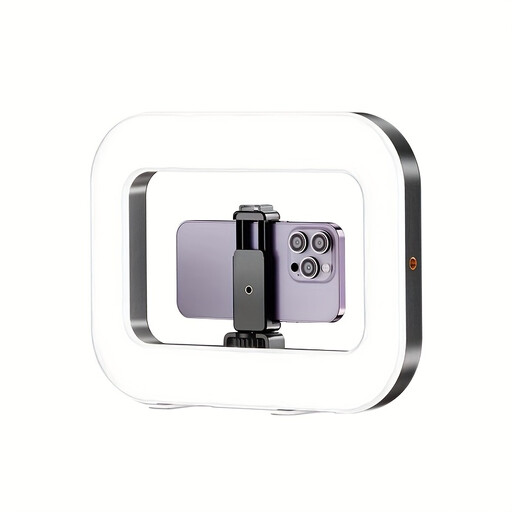
Yoever smartphone ring light with stabiliser
Threaded sockets on the underside and sides provide mounting points for a compatible holder. Check the reach and camera angle for your overhead view.
Built-in battery; 1/4-inch threads on the underside and sides. Light colour and brightness are adjustable, and the light supports both landscape and portrait orientations.
View at Joybuy
 No image available
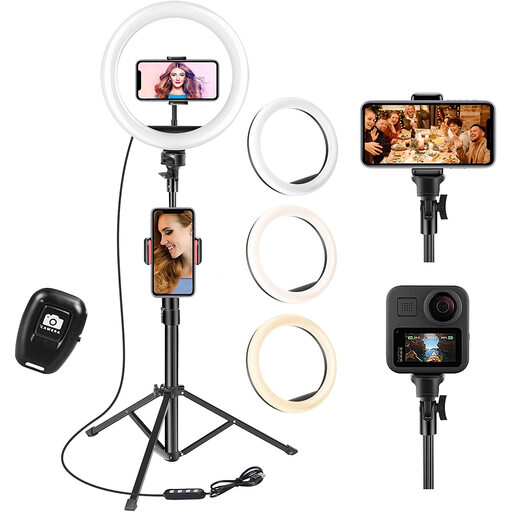
10-inch ring light with tripod and remote control
This set combines a ring light, tripod and holder for a smartphone or camera. Check whether the tripod will fit beside your small table.
The tripod adjusts from 44 cm to 156 cm. It has three listed colour temperatures and ten brightness levels.
View at Joybuy
 No image available
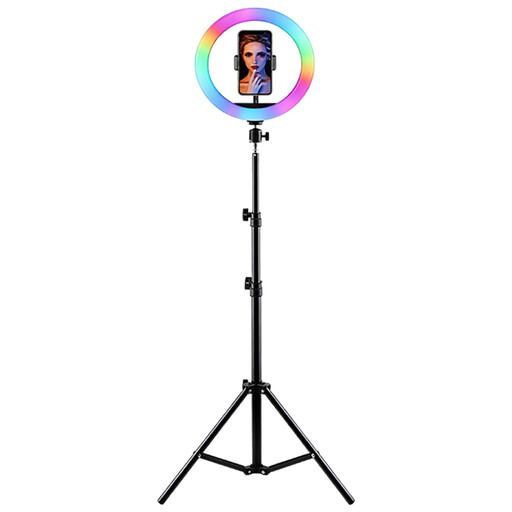
LED ring light with RGB colour, tripod and smartphone holder
The central smartphone holder and tilting ring light offer ways to adjust your setup. Check the framing with your card and hands in place.
Height-adjustable tripod with folding legs. Brightness and colour temperature are adjustable.
View at Joybuy
 No image available
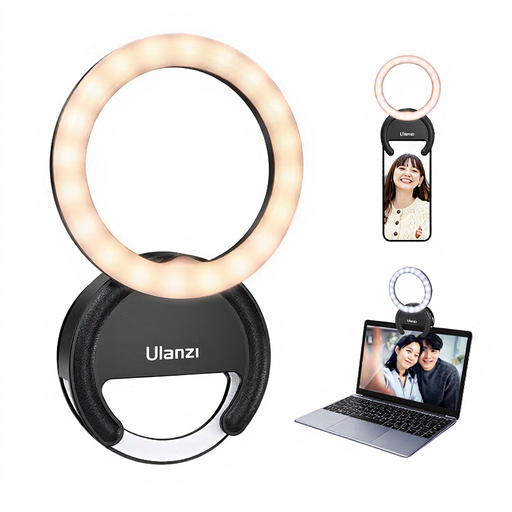
ULANZI ring light for smartphones, 4"
The clip mount is designed for smartphones, laptops or tablets. Check whether the device’s position gives you the view of your craft table you want.
Four-inch ring light with three colour temperatures from 3000K–7000K and five brightness levels.
View at Joybuy
Frequently asked questions
Will a smartphone holder in a ring light give me an overhead view?
Not necessarily. Use your actual card and hands to check whether the holder, tilt and distance capture the steps you’re demonstrating. A tabletop or floor tripod won’t automatically determine the camera position.
How can I check the colours before filming a tutorial?
Film the paper you’ll be using under your planned room lighting, then review the camera image. Adjust the light colour and white balance if needed; a Kelvin or CRI rating alone won’t tell you how the finished video will look.
What can I do if bright bands appear in my video?
Record a test clip with your actual camera at different brightness settings. Canon describes banding as a possible effect of flickering LED or other light sources when using electronic image readout. This doesn’t mean that any particular ring light will necessarily cause it.
What labelling does a ring light need in Germany?
That depends on which EU rules apply to the specific product. As Your Europe, the European Union’s official website, explains, CE marking is required only when the relevant EU rules require it. Where it is required, it is a manufacturer’s marking, not an independent quality mark. Check whether the rules apply to the specific product and whether it complies.


