Explaining the game board
If you’re mainly filming the whole board, make sure the spaces around the edges remain visible too. Also take care to avoid reflections on shiny cards.


A ring light can work as supplementary lighting by a window if you’re mainly filming yourself or a smaller section of the board and can position the light appropriately. For a large board or reflective cards, the light’s position and angle, along with a test clip, matter more than its ring shape; a side-positioned LED panel light may be more flexible. Canon Europe describes using an offset fill light as a way to reduce shadows, while Nikon highlights the risk of reflections when filming shiny subjects.
If you’re mainly filming the whole board, make sure the spaces around the edges remain visible too. Also take care to avoid reflections on shiny cards.
If you’re filming during the day, you’ll want to be able to adjust the brightness and colours in the image as the daylight changes.
For a tabletop set-up, the mount, footprint and what’s actually included in the box all matter – especially if the camera and light need to sit above the game.
A good fit if:you’re filming both the board and the person explaining the game, and can place the light off the board.
Consider:A floor stand takes up space; light shining directly from the camera’s direction can cause glare on shiny cards.
A good fit if:you’re filming mainly yourself or a small section of the game on a crowded table, and can attach the light close to the subject.
Consider:Check whether the specific version includes a stand, and whether the light and power supply will work for your set-up.
A good fit if:the board is the main focus and you want to change the angle of the light if cards or laminated pieces are reflective.
Consider:This type of light also needs a suitable mount; a test clip is the best way to see if it works for your table.
| What you need | What to check before buying | Who is this important to? |
|---|---|---|
| Lighting the whole board | Check whether you can direct the light across the entire frame and keep the spaces furthest away visible. | If I need to explain the spaces around the edges too, seeing the whole board matters more than having a brightly lit face. Around 29% of consumers put coverage of the game board first. |
| Adjusting to changing light from the window | Look for adjustable brightness and colour temperature; check the colours in the image and white balance in a test clip. | If I’m filming during the day, I want to adjust the additional light to suit changing brightness by the window. Around 24% of consumers prioritise matching the light to daylight. |
| Avoiding reflections | Test how shiny cards look in the frame and change the light or camera angle. | If text on shiny cards needs to remain legible, I first check whether moving the light can keep the reflection out of the frame. Around 18% of consumers pay particular attention to glare. |
| Setting up an overhead shot | Check the device size, connections, stand height and available angles against your actual set-up. | If the camera and light need to sit directly above the board, I want to know whether the mount can really support my set-up. Around 17% of consumers focus on overhead mounting. |
| Power supply and what’s included | Check the specific version on offer, the included parts and the battery life at the brightness you need. | If I’m recording longer explainer videos, the power supply and included accessories need to suit my shoot. Around 12% of consumers prioritise these considerations. |
A set-up around the camera won’t automatically ensure that every space in the frame is clearly visible.
If possible, record a test clip showing the whole area you plan to film, and check the edges too.
If the light falls at an awkward angle, you may need a light or mount that can be positioned differently.
Glare can obscure text and symbols on cards, even when the overall image is bright enough.
Check a shiny card in a test clip and try changing the light’s position or angle first.
Connections and included parts vary between models and versions on offer.
Check that the mount, camera angle, power supply and stated contents all work with your set-up.
You may need a separate camera tripod or suitable clamp for a stable overhead camera.
The RL-18 set may suit you if you’re looking for an adjustable ring light with a floor stand and phone holder for a regular tabletop set-up.
The LUMIS Comfort Bi-Color is designed for filming on a phone, with a tilting light and a stand included in the set.
The LR150 is an option if you want to adjust brightness and colour temperature to suit the light from your window, and plan the set-up separately.
The U200 is a portable ring light option if you move your set-up between filming locations.
This selection includes ring light sets for tabletop and height-adjustable set-ups, as well as a compact LED light as an alternative that can be positioned to the side.
 No image available
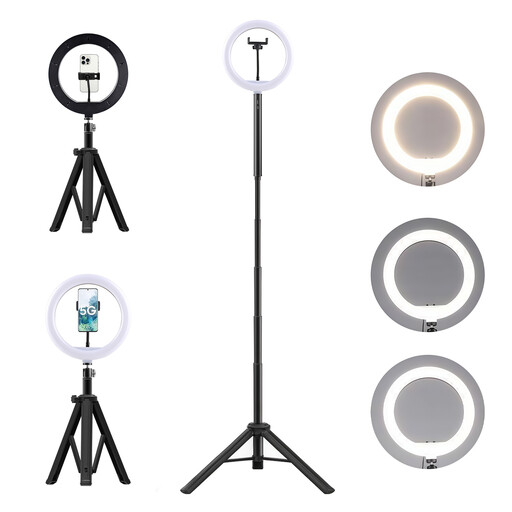
This set may be useful for a set-up where you need to change the camera angle and position.
The product description lists a 10-inch ring, an extendable stand reaching up to 178 cm, ten brightness levels, three colour temperatures and a 360° head. The built-in power bank has a capacity of 10,000 mAh, according to the description.
The product description says not to dismantle or crush the battery, or expose it to high temperatures, naked flames or water.
 No image available
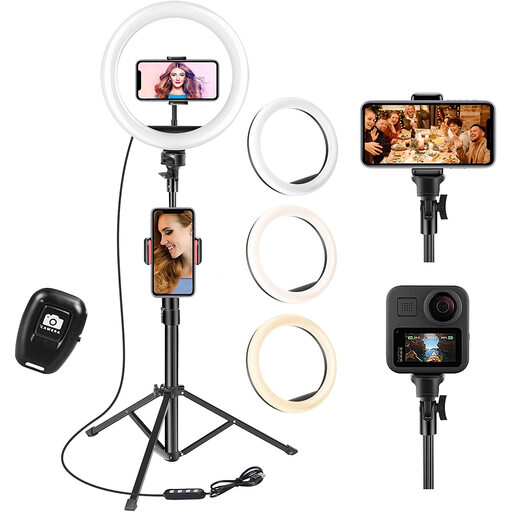
The stand may be handy for a regular tabletop set-up, as long as its height and position suit the area you want to film.
The product description lists a stand height of 44 to 156 cm, three colour temperatures and ten brightness levels.
 No image available
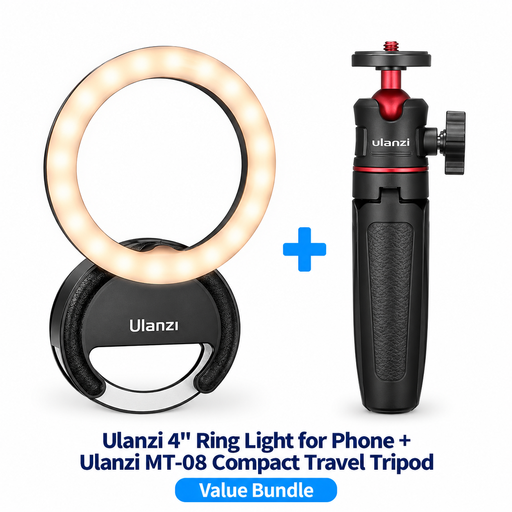
This compact set-up may suit a small area of the table; check that the light’s position and size are suitable for your whole board.
The product description lists three colour temperatures, five brightness levels, an adjustable ball head and a 1/4-inch screw mount.
 No image available
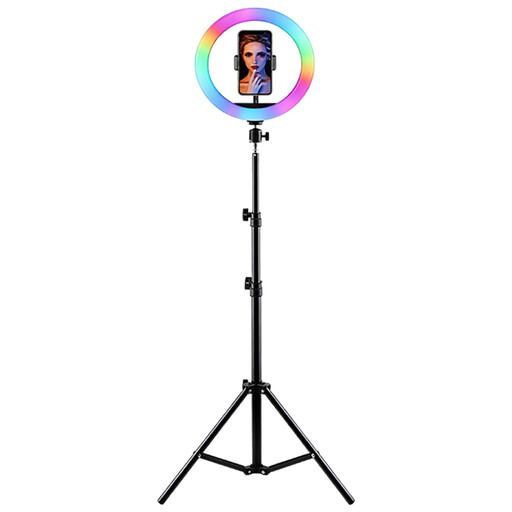
This set may be worth considering if you’re looking for a ring light with a stand and phone holder for filming videos.
The product title lists adjustable brightness and colour temperature; the product description specifies a tilting light.
The product description recommends placing it on a stable surface and keeping it away from moisture.
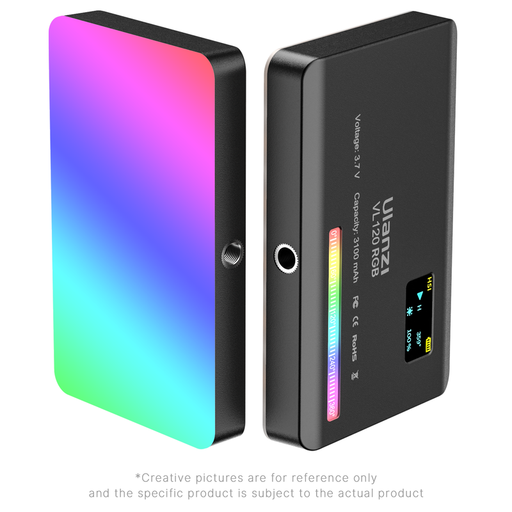 No image available
As an LED light rather than a ring light, it may be a good side-positioned alternative if you want to change the angle of the light to avoid reflections on shiny cards.
The product description lists 120 LEDs, a colour temperature range of 2,500–9,000 K and a cold shoe mount for a camera or tripod. At maximum brightness, the stated battery life is up to 2.5 hours.
Start by recording a test clip of the whole board, then position the additional light so that the darker side is visible too. If the cards are reflective, move the light or change its angle. Then check the white balance, as natural light changes with the conditions.
You can’t tell just from the fact that a phone holder is included. Check the device size it supports, the available angle and how stable it is with your device for the specific set; you may need a separate mount for the camera.
Follow the instructions for the specific model. For example, the Godox LR150 manual says to use it in dry conditions and have repairs carried out by an authorised service provider; these instructions don’t automatically apply to other ring lights.
When you buy online from a trader, you generally have 14 days from receiving the goods to cancel the purchase; exceptions and rules on return costs apply. Faulty goods are also covered by a statutory minimum two-year guarantee against the seller. The European Union explains these rules on Your Europe.
Whether CE marking is required depends on whether harmonised EU rules apply to the specific product. According to information from the European Union on Your Europe, CE marking is not an individual approval issued by a public authority. Check the marking and product information for the particular version.