For those who put everything away after filming
If you share a bedroom and film seated videos, you’ll want to be able to put away the light, tripod, cables and accessories after each shoot.


For seated talking-head videos, a compact ring light with a small mount is a better fit if you need to put it away after filming. A larger tripod kit is easier to position flexibly in a dedicated spot, but takes up more floor space. If you often film in different locations, a portable, battery-powered rig may be more practical, as long as the kit you choose includes the mounts you need. Test the lighting and any reflections with a short clip from your usual seat, rather than comparing ring diameter or manufacturer specifications alone.
If you share a bedroom and film seated videos, you’ll want to be able to put away the light, tripod, cables and accessories after each shoot.
If you regularly film in the same spot and want consistent lighting for your face and camera, you can plan for a permanent set-up and place to keep your kit.
If you move around the room or film on the go, pay particular attention to the power supply, mounting options and what’s included in the kit you choose.
A good fit if: you mainly film close-up videos on your smartphone while seated and want to put the kit away after filming.
Things to consider: Check the lighting, USB power supply and footprint at your actual filming spot.
A good fit if: your camera and seat are in a fixed position and you have enough clear floor space.
Things to consider: Tripod legs, cables and storage all take up space, especially in a shared room.
A good fit if: you film in different locations or can’t leave a floor tripod set up.
Things to consider: Check whether it’s battery-powered and what’s included; standalone lights and kits with extra accessories may be different versions.
A good fit if: circular reflections in your glasses are distracting or you want more flexibility over the light’s position.
Things to consider: A softbox may need more space and take longer to set up. Test the lighting from your usual seat.
In a shared bedroom, start by checking how much space you have to set up and store your kit. Then consider consistent lighting for your face, a suitable power supply and any potential issues in your footage.
| What matters | What to look for when buying | Who will find this most important? |
|---|---|---|
| Set-up and storage space | Measure your filming and storage areas; check the tripod legs, set-up height and cable routing. | If I have to clear the kit away from our shared bedroom after every shoot, compact dimensions and easy dismantling are essential. Around 36% of consumers put space and storage at the top of their list. |
| Consistent lighting for your face | Compare the dimming and colour temperature settings, and test the light from your usual seat with the room’s existing lighting. | If I film in the same spot at different times of day, I want to be able to adjust the lighting on my face to suit the room. Around 29% of consumers prioritise consistent lighting for their face. |
| Power supply and moving between locations | Check the power adapter, USB or battery operation, and exactly what’s included with the version you choose. | If I move to a different filming spot or don’t have a socket nearby, a suitable portable power supply matters to me. Around 21% of consumers prioritise a portable set-up. |
| Reflections and banding | Test the light’s angle and distance with your glasses and camera; if you see banding, check the camera settings available to you. | If the ring light reflects in my glasses or banding appears in my clip, I need to check how these issues look in my shot. Around 14% of consumers are most concerned about reflections or banding. |
In a shared room, the footprint, mounting options and what’s included also determine how easy the light is to set up and put away day to day.
Before you buy, check the full kit description and measure your filming and storage areas.
NEEWER lists a lux value for the RL-18 measured at 0.5 m. Without the same measurement distance and conditions, figures for different models don’t give you a reliable way to rank how well they’ll light your face in your room.
Use the specifications to narrow down your options, then assess the lighting and background with a clip filmed in your actual shot set-up.
Ulanzi notes that ring-shaped reflections may appear on glasses. Depending on the camera and its settings, flickering light sources can also cause banding in your footage.
Record a short test clip with your glasses and camera. Adjust the light’s angle if needed; if you see banding, check the shutter speed settings available on your camera.
The details below apply to the specific product lines mentioned, not to each brand’s entire range.
The LUMIS Comfort Bi-Color combines a ring light with a smartphone holder and tripod, for filming from a regular or changing seat.
The RL-18 is a larger ring light kit with a tripod, designed for a permanent filming set-up.
The LED Ring Light 380 Bi-Color Set is aimed at anyone looking for a larger, freestanding light with different power options.
The U200 Ring Light Video Rig 2245 is a portable option for creators who want to move their light and camera or smartphone together.
Here you’ll find compact smartphone ring lights and small or portable set-ups for seated video shoots or filming in different locations. Before you choose, check that the mount, tripod and power supply suit your planned set-up.
 No product image available
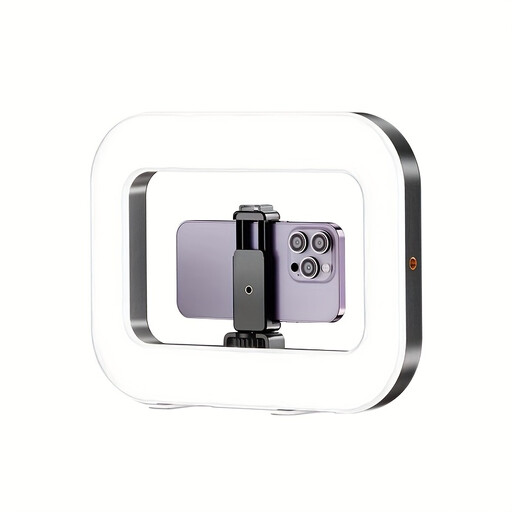
With its built-in battery and mounting options, this ring light is worth considering for a portable smartphone set-up.
The description lists three colour temperature settings, adjustable brightness and 1/4-inch threads on the bottom and sides.
 No product image available
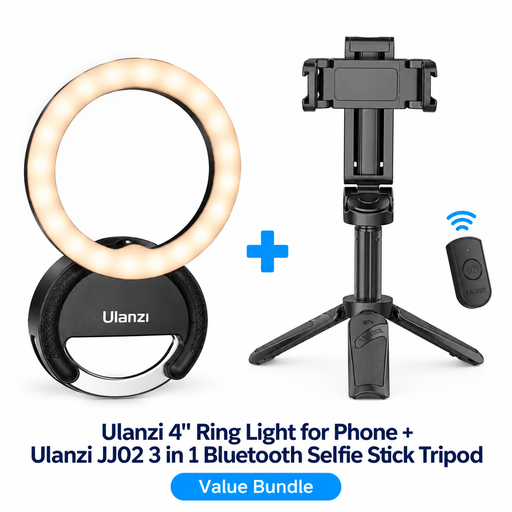
The ring light and JJ02 bundle suits a compact smartphone set-up that you can put away after filming.
The set includes a 3-in-1 selfie stick, handgrip and mini tripod. The ring light has three colour temperature and five brightness settings, according to the description, while the JJ02 has a Bluetooth remote and two cold shoe mounts.
 No product image available
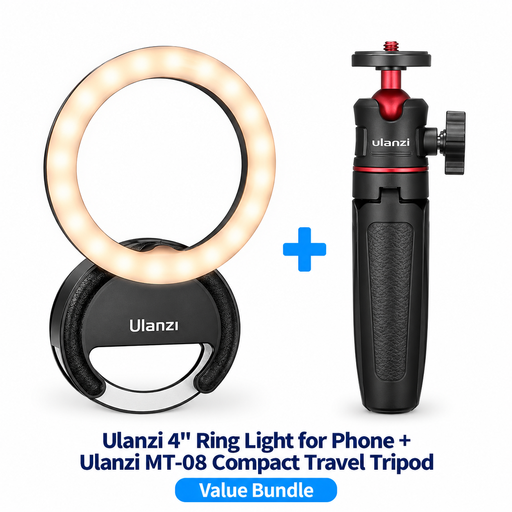
The small tripod makes this set an option for seated close-ups at a table or a portable set-up.
The description lists three colour temperature and five brightness settings, plus an adjustable ball head on the mini tripod.
 No product image available
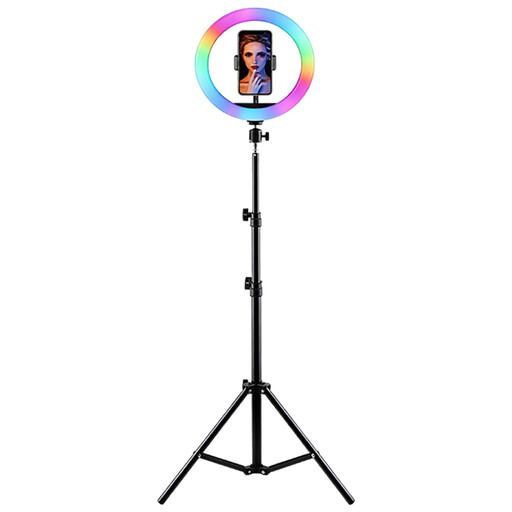
The central smartphone holder and height-adjustable tripod are designed for video shoots where you want to position the light by your seat.
The description lists adjustable brightness and colour temperature, RGB colours, a tilting light and foldable tripod legs.
 No product image available
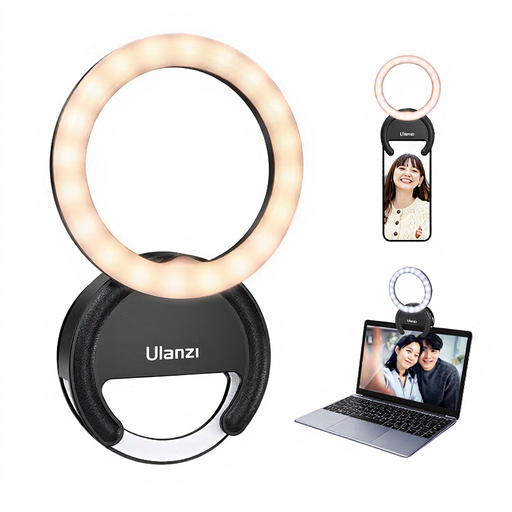
This compact light is described as suitable for filming with a smartphone, laptop or tablet, and can be attached to these devices.
The product title lists three colour temperatures from 3000K to 7000K and five brightness levels. Note the safety advice in the listing: don’t look directly at the LEDs at maximum brightness, keep the light away from water and high humidity, and don’t leave it switched on unattended for long periods.
First, position your camera and seat, then point the light at your face and record a short test clip. Adjust the brightness and angle to suit the room’s existing light; a light source behind you won’t, by itself, light your face.
Try a different angle or position the light slightly to one side. If the reflection is still visible in the shot you need, a side-mounted panel light or softbox may be an alternative for that shoot.
Check the contents list against what you need for your camera or smartphone, mount, tripod and power supply. Ulanzi lists the standalone U200 separately from kits with extra accessories; Walimex pro explicitly lists a tripod and battery for its 380 set.
For market surveillance of electrical lighting products, the German Federal Network Agency lists checks including CE marking, product and manufacturer identification, German-language instructions and warnings, and a declaration of conformity. Check the details for the specific listing; a brand name or product image alone doesn’t prove compliance.
If a product is faulty, your statutory rights generally apply against the seller; a voluntary guarantee is separate. Online orders also usually come with a 14-day right to cancel, starting from the day you receive the goods. The consumer advice centre explains these rights; check the specific retailer’s returns information too.