Teams making lots of coffees
If several people use the machine, agree on how it will be refilled and cleaned, and who will be responsible. NIVONA describes the NICR 1040 as an office model, rated for up to 50 cups a day.


For occasional coffees, an original capsule machine with a programmable water volume is a simple place to start. However, Nespresso sets the Essenza Mini to 40 ml for espresso by default, while recommending 25 ml for its Ristretto capsule. For a busier office, a bean-to-cup machine designed for office use may be a good fit, provided the specific model can be set to dispense the short volume you want. A portafilter machine offers more control, but requires everyone to follow a shared preparation and cleaning routine.
If several people use the machine, agree on how it will be refilled and cleaned, and who will be responsible. NIVONA describes the NICR 1040 as an office model, rated for up to 50 cups a day.
A programmable capsule machine can make individual coffees simpler, provided the team agrees on the amount of water to use. According to the manufacturer, the Nespresso Essenza Mini container holds 5–6 used capsules.
If you want to control the grind and when the shot stops, you should also allow time for preparation and cleaning after every coffee. Sage says the Bambino has adjustable volumes for one or two servings; its product page positions the machine for home use.
First, decide how short you want the shot to be and how many people will use the machine. Then compare the daily costs and effort involved in consumables and care.
A good fit if: a small number of people want to make individual coffees easily and agree on the water volume to use.
Consider: Nespresso sets the Essenza Mini to 40 ml for espresso by default. Capsules are an ongoing cost, and the container holds 5–6 of them.
A good fit if: lots of people need coffee each day and responsibility for shared maintenance has been agreed.
Consider: NIVONA rates the NICR 1040 for up to 50 cups a day. Check separately whether the specific model can make the Ristretto volume you want.
A good fit if: freshly ground beans and an explicitly short shot volume are important.
Consider: NIVONA specifies 20–240 ml for the CUBE 4' and explicitly lists Ristretto; the Click Cup needs emptying after each coffee.
A good fit if: trained users want to control the grind size, amount of coffee and when the shot stops.
Consider: Preparation and cleaning take time. Sage positions the Bambino for home use and does not specify a daily office capacity.
| Priority | What to check when buying | Who it matters most to |
|---|---|---|
| Short shot volume | Check the drinks programme or adjustable water volume for the exact model; capsule recipes and machine settings are not the same thing. | For a Ristretto, I want to be able to set a short shot volume rather than rely on the drink label. Around 36% of consumers prioritise getting a short serving. |
| Ease of use and throughput | Compare your expected daily coffees with the manufacturer’s figures for the model; check the controls and access to the containers where the machine will be used. | When several colleagues need coffee every day, I don’t want to keep refilling the water or capsules. Around 29% of consumers are primarily concerned with serving a team efficiently. |
| Ongoing cost per serving | Use the same number of coffees and the same time period for each option; account separately for capsules, beans and maintenance. | If we’re sharing the cost of the machine, I want to compare what it takes to make the same number of servings. Around 21% of consumers prioritise ongoing cost per serving. |
| Shared maintenance | Agree on who empties and cleans the containers; check the cleaning and descaling steps for the exact model. | If nobody in the office is assigned to deal with coffee grounds and descaling, I need a routine people will actually follow. Around 14% of consumers are primarily concerned with maintenance. |
Nespresso recommends 25 ml for its Original Ristretto capsule; the Essenza Mini is set to dispense 40 ml for espresso by default.
Set the water volume before everyone starts using the machine, and make a note of the setting for the team.
The JURA W8 data sheet gives a recommended maximum of 50 cups a day, but does not specify a minimum Ristretto volume.
Check capacity and short shot volume separately for the exact model.
You’ll also need a shared routine for grinding, using the machine and cleaning it after every coffee.
Before buying, agree on who will use and clean the machine. You may also need a grinder for freshly ground coffee, and should allow time for cleaning in your plans.
The original capsule system is designed for individual short servings. You can programme the coffee volume on the Essenza Mini C Pure White.
The manufacturer says the NICR 1040 is designed for office use; the CUBE 4' can make short coffees, but its Click Cup needs to be emptied manually.
The Bambino BES450 is a compact portafilter option for teams who want to prepare coffee themselves.
The W8 is a professional bean-to-cup machine designed for office use and higher daily volumes.
The Dedica Style EC685.M EX:4 is a slim manual espresso machine for teams who want to use a portafilter.
This selection includes capsule, portafilter and bean-to-cup machines with programmable or adjustable volumes that may suit short shots. Check the specific setting and shared maintenance routine for each model.
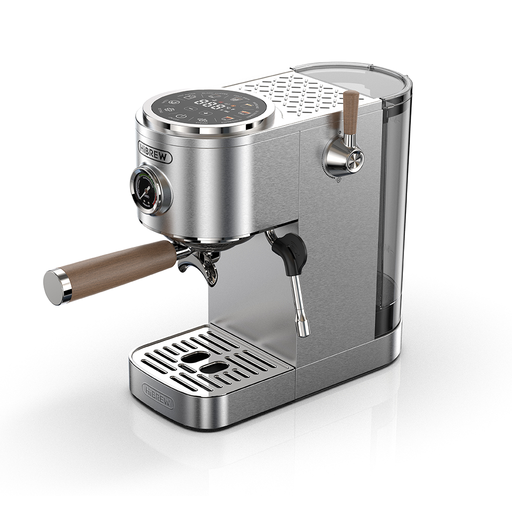 No image available
The adjustable shot volume is useful if your team wants to set the amount themselves.
Listed features include a 58 mm portafilter, dual-boiler system and touch LCD controls; the shot volume is adjustable.
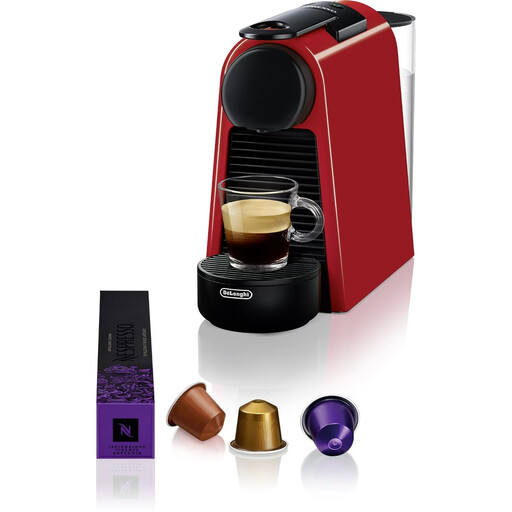 No image available
Programmable cup sizes can help your team agree on a serving volume.
Two cup sizes are programmable; the water tank holds 0,6 l and the capsule container holds up to six used capsules.
 No image available
The stated shot volume of 25–60 ml may suit teams who want to set a short shot manually.
A shot volume of 25–60 ml is specified, and the amount of coffee is adjustable. The removable water tank holds 1,1 l.
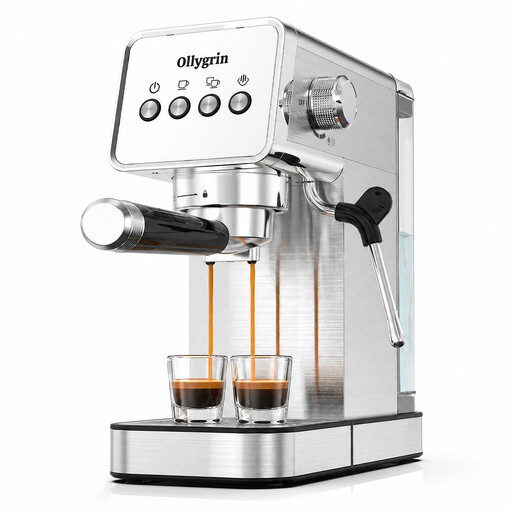 No image available
This portafilter machine may suit teams who want to prepare coffee themselves.
Features include a 20-bar pump and steam wand; the 1,2 l water tank and drip tray are removable.
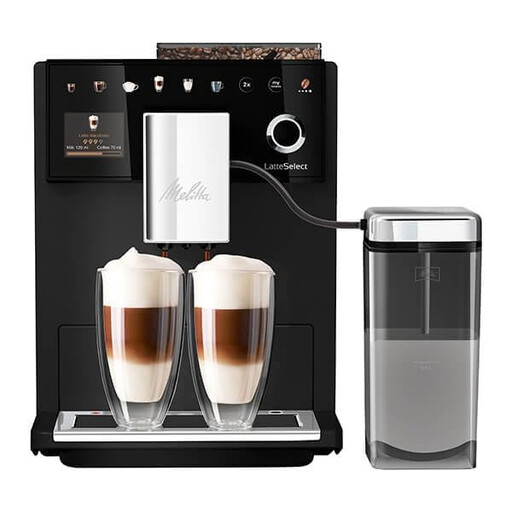 No image available
Saved recipes may be useful for a team where several people prefer different settings.
Espresso is one of the listed drinks; the machine supports up to six user profiles with saved recipes. Automatic cleaning and descaling functions and a removable brewing unit are also described.
Not necessarily: the Nespresso Essenza Mini C Pure White dispenses 40 ml when you press its espresso button, but you can programme the coffee volume. Nespresso recommends 25 ml for its Original Ristretto capsule; the recipe and machine setting are separate specifications.
Agree on responsibilities before sharing the machine. JURA lists integrated cleaning and descaling programmes for the W8; the Click Cup on the NIVONA CUBE 4' needs emptying after each coffee. Programmes still need someone to run them.
Compare the same planned number of coffees over the same period for each machine. Account separately for capsules or beans and maintenance products, so the different consumable and care costs are clear.
Check with your employer that it is permitted at work, and agree who is responsible for inspections. The German Social Accident Insurance (Deutsche Gesetzliche Unfallversicherung) notes that personal coffee machines approved for workplace use must be inspected regularly. Section 14 of the German Ordinance on Industrial Safety and Health requires periodic inspections of work equipment exposed to damaging influences that could pose a risk; this does not mean there is one inspection interval for every coffee machine.