For the thinnest possible slices of roast beef, first check whether the specific model comes with a suitable smooth blade. However, manufacturer claims about slicing soft meat do not constitute a roast beef test. If you also want to slice bread and other prepared ingredients, compare the blade options, food carriage, access for cleaning and safety features. If storage space is limited, consider both the folded dimensions and how much room the slicer needs when in use.
Who is a food slicer suitable for?
Fans of finely sliced meat
You’re preparing roast beef and want to slice it as thinly and evenly as possible for serving. The blade type, food carriage and access for cleaning are important factors to consider. Claims about ham should not be taken as evidence of a roast beef test.
Versatile food preppers
You want to slice bread and other prepared ingredients as well as roast beef. So compare the available blade options, the food carriage and how blade changes work on the specific model.
Cooks short on worktop space
You only need the machine occasionally and want to put it away afterwards. As well as its storage dimensions, check how much worktop space it needs when in use.
What should you look for when buying?
First check that the blade and food carriage are suitable for the roast beef slices you want. Then consider other slicing tasks, cleaning and the space available.
| Priority |
What to look for |
Who is it important to? |
| Thin slices of roast beef |
Check whether the exact model includes a suitable smooth blade, and whether the blade mount and carriage are suited to the food you want to slice. |
If I want to slice roast beef as thinly as possible, it matters whether the blade and food carriage are designed for the job; around 36% of consumers prioritise finely sliced meat. |
| Other ingredients |
Compare the blades supplied with the specific model and the uses recommended by the manufacturer. |
I want to slice bread and other prepared ingredients as well as roast beef, so I compare the available blade options; around 29% of consumers prioritise versatility. |
| Cleaning and safety |
Look for removable parts, a food holder and finger guard, and check the model’s cleaning and safety instructions. |
After slicing, I want easy access to the parts that have touched the meat and to be able to handle the blade safely; around 21% of consumers prioritise cleaning and safety. |
| Worktop and storage space |
Check the dimensions when in use and when folded, as well as the space needed for the carriage to move. |
With limited storage space, I need a machine I can put away without overlooking how much room it needs when slicing; around 14% of consumers prioritise space requirements. |
Manufacturers ritter and GRAEF describe smooth blades for thin slices of soft meat, such as ham. This does not provide verified information about slice thickness for roast beef. Manufacturers specifically describe serrated blades as suitable for bread. The stated adjustment range alone does not tell you how thinly a particular cut of meat can actually be sliced.
Common buying mistakes
-
Assuming the G52 and G52 TWIN are the same model
According to GRAEF, the additional smooth blade is specifically included with the G52 TWIN. A similar model name does not mean the package contents are the same.
Check the full model name and package contents before buying.
-
Assuming the power rating or adjustment range guarantees good roast beef slices
A power rating or adjustable thickness range in millimetres does not measure how thinly the machine actually slices roast beef.
Check the blade type and carriage separately from the technical adjustment settings, and look for verified information about the food you want to slice.
-
Comparing only the folded dimensions
When slicing, the machine also needs space to stand securely and for the carriage to move. The folded dimensions say nothing about how well it slices roast beef.
Compare the dimensions when in use and when stored, and measure the space available for using the machine.
Brands to consider
GRAEF
Worth considering if you’re weighing up a universal blade against extra accessories for finely sliced meat.
- GRAEF describes its smooth blades as suitable for thin slices, such as ham. According to the manufacturer, the G52 TWIN comes with an additional smooth blade.
- These manufacturer claims do not prove that the slicer has been tested on roast beef, nor that every G52 model includes the extra blade.
ritter
The E 18 and markant 01 differ in features including the food carriage and design.
- The manufacturer describes the E 18 as having a left-guided carriage. For the markant 01, ritter gives a width of 10.5 cm when folded and 26.0 cm when set up.
- Both models are listed with a serrated blade. This is not proof that they can produce particularly thin slices of roast beef.
SEVERIN
The AS 3915 is worth considering if you want to compare blade options, thickness settings and safety features together.
- The SEVERIN specification sheet lists removable stainless steel blades, including a ham blade, stepless adjustment from 0 to 15 mm, a finger guard and a food holder.
- These are specifications, not an independently measured performance claim for roast beef.
DOMO
The MS171 is an option to compare if you’re mainly looking at the basic features of a universal food slicer.
- DOMO lists a lightly serrated blade with a 17 cm diameter, a safety switch, a carriage and a finger guard.
- These specifications do not prove that it can produce particularly thin slices of roast beef.
Berkel
The Home Line 200 Plus was mentioned in an editorial comparison in connection with slicing ham.
- The F.A.Z. Kaufkompass singled out the model for ham in its comparison dated 24 June 2026.
- This assessment is not a roast beef test and does not confirm a specific version or its availability.
Joybuy products
These product options include foldable food slicers and models for slicing meat and other prepared ingredients. If you want particularly thin slices of roast beef, check whether the exact model comes with a suitable smooth blade.
 No image available
Foldable electric food slicer (0–15 mm)
The product information lists roast beef as a food it can slice, and gives an adjustable cutting thickness of 0–15 mm.
A foldable design, stainless steel blade and food holder are also listed. For particularly thin slices, check whether the specific model includes a suitable smooth blade.
View at Joybuy
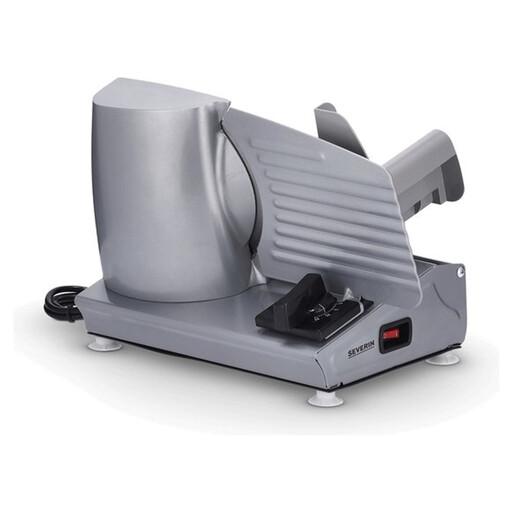
 No image available
SEVERIN AS 3917
The product information describes this food slicer as suitable for bread and cold cuts. If you want to slice roast beef very thinly, check in advance whether the specific model comes with a suitable smooth blade.
Features listed include adjustable cutting thickness from 0–23 mm, a removable blade and support table, a metal housing and 130 W.
View at Joybuy
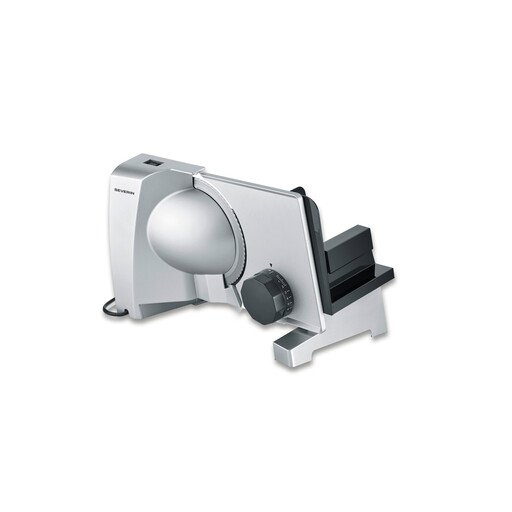
 No image available
SEVERIN AS 3915
The product information lists roast meat and a smooth blade for thin slices of meat. An additional serrated blade is also mentioned; check the contents of the specific model.
Features listed include two removable stainless steel blades, stepless adjustment from 0–15 mm, a finger guard, a food holder and a tilting carriage.
View at Joybuy
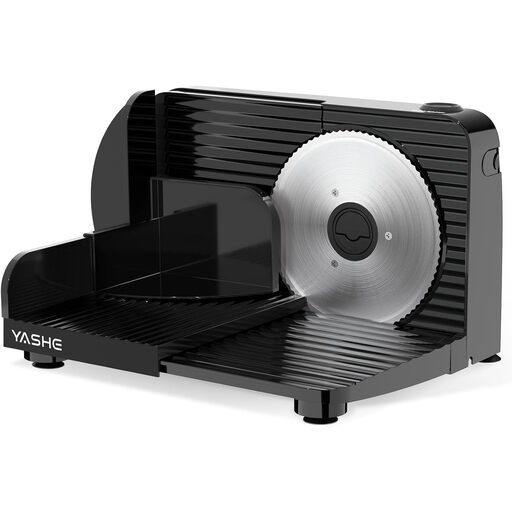 No image available
YASHE SL-5801D23B3
This foldable model is described as suitable for meat and other foods. GRAEF identifies smooth blades as the right type for particularly thin slices of soft meat; this model is described as having a serrated blade.
Features listed include a 17 cm blade, adjustable cutting thickness from 0–15 mm, removable parts, a safety switch and a food stopper.
View at Joybuy
Frequently asked questions
Should prepared roast beef be kept chilled until it is sliced?
Yes. According to the Federal Institute for Risk Assessment, perishable foods should be kept as cold as possible until they are eaten or prepared. A food slicer does not replace refrigeration; how long you can store the roast beef depends on how it was prepared and stored.
How do I clean a food slicer safely?
Follow the instructions for the specific model and unplug it before taking it apart or cleaning it. The safety instructions for the ritter E 18 explicitly require this. Information about removable blades or a tilting carriage describes access for cleaning; it does not mean you can leave the machine plugged in.
Is the CE mark a voluntary quality mark?
No. For products covered by harmonised EU rules that require CE marking, the mark is the manufacturer’s declaration of conformity. The European Union explains that CE marking is only required for products covered by the relevant rules; it is not an independent safety test.
Are a guarantee and statutory consumer rights the same thing?
No. According to the Verbraucherzentrale, statutory claims for faulty goods are generally made against the seller; a guarantee is an additional voluntary service, subject to its own terms. Since 31 July 2026, the Verbraucherzentrale has described repair rights for many household appliances, but this does not establish a blanket right to manufacturer repairs for every food slicer.


