If your main priority is slicing roast beef thinly, check whether the slicer comes with a smooth blade or is explicitly compatible with one; a serrated blade may be more versatile if you regularly slice bread too. Factor in worktop space, a container to catch the slices and cleaning time as part of your shared cooking routine. Guidance on blade performance is based on manufacturers’ claims, not a comparative hands-on roast beef test. Safe refrigeration and keeping food preparation separate remain important, whichever slicer you use.
Which food slicer is right for you?
Fans of finely sliced meat
If you want especially thin slices of roast beef, check the blade type and whether a smooth slicing blade is included or listed as an accessory for that specific model. Ritter and Graef describe smooth blades as suitable for slicing soft cold meats very thinly.
Cooking routine coordinators
If you share your worktop and preparation tasks with others, factor in the space needed for slicing, the operating instructions and time for cleaning afterwards. The German Federal Institute for Risk Assessment (BfR) recommends using separate kitchen utensils for raw and cooked foods, and for foods that will be eaten without further heating.
Everyday users
If you regularly plan to slice bread or other cold meats as well as roast beef, blade versatility matters. According to Ritter, a smooth slicing blade is not suitable for bread, so compare the blade type, what’s included and whether you might need an accessory.
What should you look for when buying?
First decide whether thinly sliced roast beef or all-round versatility is your priority. Then factor the appliance, worktop space and cleaning into your shared kitchen routine.
| What matters |
What to check before buying |
Who is it important to? |
| Thin slices of roast beef |
Whether a smooth blade is included or explicitly compatible; the available slice thickness settings. |
If I want to slice soft roast beef as thinly as possible, I pay particular attention to choosing the right blade. Around 28 % of consumers put finely sliced cold meats first. |
| A well-planned cooking routine |
Operating time stated in the instructions; space for the carriage to move and a container to catch the slices. |
If you’re coordinating several tasks and sharing a worktop, you’ll need to allow enough time for slicing. Around 22 % of consumers prioritise this. |
| Hygienic cleaning |
How food-contact parts should be cleaned according to the instructions; whether raw and cooked foods can be prepared separately. |
If I’m preparing roast beef and other foods, I factor in cleaning and keeping food preparation separate. Around 22 % of consumers focus primarily on hygiene and cleaning. |
| Space and storage |
Dimensions during use and, where applicable, when folded; room for the carriage and a stable base. |
In a shared kitchen, I want to know whether there’s room to use the appliance and whether it can be put away afterwards. Around 17 % of consumers put worktop space and storage first. |
| Versatility |
Whether it comes with a serrated blade, a smooth blade or both; accessory compatibility with the specific model. |
If I also want to slice bread as well as roast beef, I compare the blades for both jobs and check how much effort it takes to change them. Around 11 % of consumers prioritise multi-purpose use. |
Common buying and usage mistakes
-
“Suitable for cold meats” doesn’t automatically mean “comes with a smooth blade”
The Graef Classic C20 is described as having a serrated blade; a compatible smooth Classic blade is listed separately as an accessory. What’s included therefore depends on the model.
Compare the full model name, what’s actually included and the stated blade compatibility.
-
Continuous operation doesn’t mean unlimited running time
Although the Ritter icaro 7 has momentary and continuous operation settings, Ritter specifies a short-time operating period of 5 minutes. A continuous-operation switch alone doesn’t mean you can slice indefinitely.
Check the operating information in the instructions for your chosen model and plan the amount you need to slice accordingly.
-
Plan the slicing, but don’t forget refrigeration and separate food preparation
Choosing the right appliance setting doesn’t replace hygienic food-handling practices or proper storage of prepared food. The BfR highlights the importance of using separate kitchen utensils and keeping food safely chilled.
Plan a suitable space for slicing, cleaning and chilling the food as part of your overall cooking routine.
Key brands at a glance
Graef
The range includes appliances with two blades, as well as models with a serrated blade and smooth-blade accessories listed for certain Classic appliances.
- According to Graef, the G52 TWIN is also available with a smooth blade.
- The Classic C20 is described as having a serrated blade; check whether a smooth Classic blade is compatible with the specific model. Manufacturer claims are not an independent comparison for slicing roast beef.
Ritter
The domestic food slicer range includes a foldable model and appliances supplied as standard with a serrated blade.
- For the icaro 7, Ritter lists a width of 24,0 cm, or 10,0 cm when folded, a removable blade and a removable carriage.
- Ritter specifies a short-time operating period of 5 minutes for both the icaro 7 and E 16; check the operating information for the specific model.
Severin
The AS 3915 metal food slicer offers adjustable slice thickness and features to keep the appliance stable and guide food as you slice.
- Severin lists a slice thickness of 0–15 mm, a finger guard, a food holder and non-slip feet for this model.
- Check what’s included with the specific appliance if a smooth blade for roast beef or ham is important to you.
Unold
The Metall Plus 78826 is a cantilever-style food slicer, with a ham blade listed separately as an accessory.
- Unold lists a removable serrated blade, a slice thickness of 0 to approximately 23 mm, and momentary and continuous operation switches.
- The ham blade is listed separately as an accessory for the 78826; check exactly what’s included before buying.
Bomann
The MA 451 CB is a metal food slicer with an angled support table and a universal serrated blade.
- Bomann lists a blade diameter of 190 mm, a slice thickness of 0–15 mm, a food holder and a tilting support table.
- Manufacturer claims about slicing quality are not an independent comparison for roast beef.
Joybuy products for roast beef and everyday cooking
The following Joybuy products are electric food slicers for roast beef and other foods. Depending on the model, key features include a foldable design, blade specifications or adjustable slice thickness.
 No image available
Electric food slicer, foldable, 0–15 mm
The product details mention roast beef and adjustable slice thickness; the foldable design may be useful for storage.
Slice thickness: 0–15 mm. According to the product information, do not use on frozen food or bones.
Joybuy
 No image available
ritter serano⁷ Professional
If thinly sliced roast beef is your priority, check the blade supplied with the specific product listing before buying.
The product name specifies a metal construction, angled design, DC motor and electronic speed control.
Joybuy
 No image available
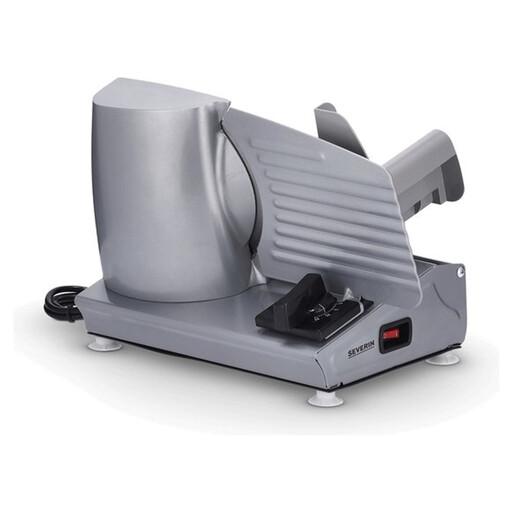
Severin AS 3915, 180 W, with ham blade
The product name specifies a ham blade; check whether its blade type is right for the way you want to slice roast beef.
Power rating: 180 W. The product name also specifies stainless steel blades.
Joybuy
 No image available
YASHE SL-5801D23B3, 180 W
The foldable design may make storage easier; if you want to slice soft cold meats very thinly, check that the blade type suits your needs.
Slice thickness: 0–15 mm. The product name specifies a 17 cm stainless steel blade.
Joybuy
 No image available
Ritter Sono¹
A removable carriage may make cleaning after slicing easier; allow time for this as part of your cooking routine.
The product name specifies a glass base plate and a removable carriage.
Joybuy
Frequently asked questions
Should I slice roast beef with a smooth blade or a serrated blade?
Ritter and Graef describe smooth blades as particularly suitable for slicing soft cold meats very thinly. If you regularly want to use the same blade to slice bread, check for a serrated blade or an appliance with both explicitly compatible blades; Ritter advises against using a smooth slicing blade for bread. These are manufacturers’ claims, not the result of a hands-on roast beef test.
Can a food slicer run for as long as I like as part of a shared cooking routine?
No. A continuous-operation switch doesn’t automatically mean the appliance can run indefinitely. Ritter specifies a short-time operating period of 5 minutes for both the icaro 7 and E 16. Check the instructions for your specific model, and allow time for slicing and cleaning afterwards.
How should I prepare roast beef and store it after slicing?
For perishable foods, the German Federal Institute for Risk Assessment recommends a fridge temperature of 2 °C to no higher than 7 °C. If you plan to keep hot food for longer, it recommends cooling it quickly to below 7 °C. The BfR also advises using separate kitchen utensils for raw and cooked foods. This food-safety guidance concerns how food is handled, not any special approval of the food slicer.
What rights and markings should I look out for when buying in Germany?
If an appliance is faulty, statutory rights relating to defects are separate from a voluntary manufacturer’s warranty. Section 438 of the German Civil Code (BGB) generally sets a two-year limitation period for movable goods, starting from delivery. The European Union describes CE marking as the manufacturer’s responsibility to meet relevant requirements and apply the marking; it is not a test certificate issued in general by a central EU body.


