
Lieferung heute & morgen

Qualitätsgarantie

Willkommens-Angebote freischalten: KOSTENLOSE Lieferung | Bis zu 80 % RABATT | Kostenlose 30-Tage-JoyPlus-Testphase
App herunterladen
A roasted seaweed snack might seem straightforward at first glance: thin seaweed sheets, a little oil, salt and seasoning. But when it comes to buying, there are clear differences in ingredients, portion size, spiciness, allergens and intended use. If you only look for words like "crispy", "light" or "authentic", you could easily miss important details on the packaging.
Roasted seaweed sheets weigh only a few grams per pack. However, because of the oil and seasoning, the nutritional values per 100 g can still be relatively high. For example, Taokaenoi Crispy Seaweed Original states 633 kcal and 53 g of fat per 100 g. For a realistic assessment, you should therefore look at both the values per 100 g and the actual pack size.
The term "Original" usually describes a flavour, but it isn't a consistent quality standard. Always check the ingredients list: some products contain only seaweed, oil and salt, while others add sugar, sesame, soy sauce, wheat or flavour enhancers. The salt content can also vary significantly. The Sempio Crispy Seaweed Snack Hot Chili states 9.5 g of salt per 100 g.
Seaweed absorbs moisture quickly. Single-serving portions or resealable packaging are therefore practical if you're not going to eat the whole pack at once. Once opened, a nori snack should ideally be eaten straight away or stored in an airtight container. A damp snack isn't necessarily spoiled, but it will lose its characteristic texture.
For a purist Korean seaweed, look for products with a short ingredients list. Flavoured varieties often contain sesame oil, sesame, soy or wheat. The Kimnori Seasoned Seaweed Teriyaki lists soy, wheat and sesame as allergens. The Delief Wasabi Seasoned Laver contains sesame.
If you have known allergies, only the current packaging label counts. Warnings such as "May contain traces of crustaceans and molluscs" should also be taken into account. This applies to several Taokaenoi products, for example.
Small 3 x 4 g packs make portioning easy and stay fresh after opening. Larger 28 g to 50 g packs are better suited for families, stocking up or multiple uses. For sushi, you need unseasoned, sufficiently large sheets. The product O'Food Roasted Seaweed for Sushi 20 g is designed for this purpose and can also be used as a snack, according to the product information.
Also, pay attention to the difference between a ready-to-eat seaweed snack and dried seaweed as an ingredient. Chung Jung One Dried Seaweed Sliced 20 g is cut and versatile for soups, salads or your own seasoning. It is not the same as a pre-seasoned nori snack.
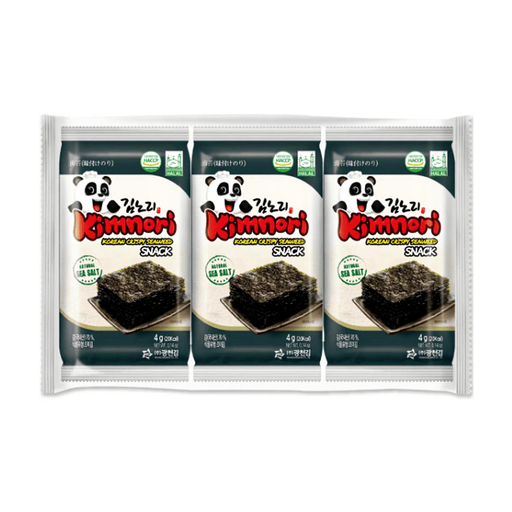
Why this product fits the profile: Three individual 4 g portions offer a straightforward introduction to Korean seaweed with classic seasoning.
The individual portions reduce the risk of a larger pack absorbing moisture after opening.
3 x 4 g, original seasoning and declared sesame as an allergen.

Why this product fits the profile: The original variety is aimed at buyers who prefer a clearly recognisable seaweed base without complex flavour directions.
The ingredients list shows seaweed at 85%; allergy information regarding possible crustaceans and molluscs should be noted.
32 g pack, original flavour and specific nutritional values per 100 g.
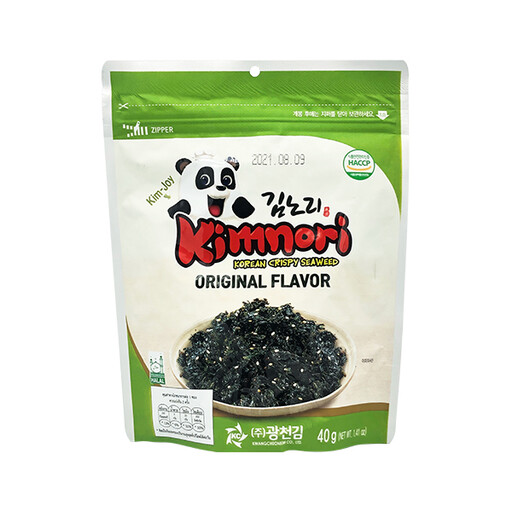
Why this product fits the profile: Gimjaban seaweed flakes can be sprinkled over rice, noodles, soups and salads, so they aren't limited to being a pure snack.
The 40 g pack is designed for multiple uses; airtight sealing protects against moisture.
75% seaweed, sesame oil and roasted sesame seeds; suitable as a topping and side dish.
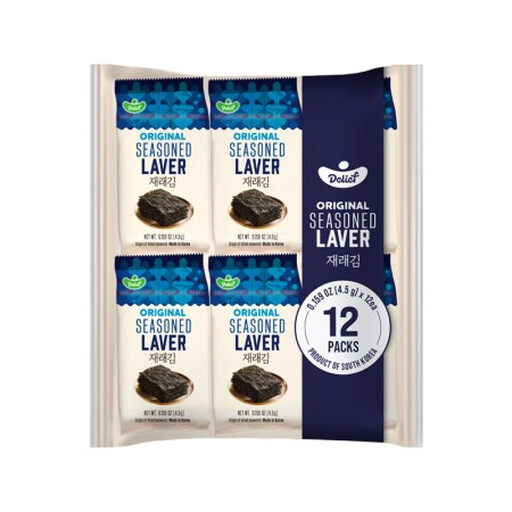
Why this product fits the profile: Twelve individually wrapped portions are ideal for families, lunchboxes and anyone specifically looking for a Halal seaweed snack.
The declared Halal certification and individual portions make selection and storage easier.
12 x 4.5 g, resealable packaging and suitable as a snack or rice accompaniment.
We've put together a complete, regularly updated list of products that fully meet these strict selection criteria and the safety regulations in force in the EU.
A crispy seaweed snack can be eaten straight from the pack. For meals, there are plenty of other uses:
For products containing sesame, soy, wheat, milk, almonds or crustaceans, always check the ingredients list before each use. Also, the nutritional information usually refers to 100 g, not the whole pack.
That depends on age, taste and ingredients. For children, mild original varieties in small individual portions are often easier to manage. Spicy products, wasabi and high-salt varieties should only be offered according to individual tolerance. For allergies, the labelling on the packaging is what matters.
Store the unopened pack in a dry, cool place away from direct sunlight. Once opened, the contents should be eaten immediately or stored in an airtight container. Individual portions reduce contact with air and moisture.
Seaweed for sushi is usually unseasoned and intended for rolling rice and fillings. A seasoned seaweed snack, on the other hand, often contains oil, salt, sugar, sesame or flavour blends. It is ready to eat straight away, but depending on the seasoning, it may be less versatile for sushi.