
Lieferung heute & morgen

Qualitätsgarantie

Willkommens-Angebote freischalten: KOSTENLOSE Lieferung | Bis zu 80 % RABATT | Kostenlose 30-Tage-JoyPlus-Testphase
App herunterladen
Roasted seaweed snacks are available in the UK as Korean, Japanese or Thai-style snacks. They're perfect for lunchboxes, the office, or as a crispy topping on rice, noodles and salads. The range extends from thin nori sheets through seasoned seaweed crisps to gimjaban – finely chopped, seasoned seaweed flakes.
However, the product names aren't always clear. "Roasted", "light" or "with sauce" tells you little about the ingredients, salt content or actual use. If you buy purely on taste or the picture on the packet, you can easily miss important differences.
Many Korean and Japanese seaweed snacks are sold in portion packs of 3 to 5 grams. This is handy for on-the-go eating, but it can push the unit price up significantly. Before you buy, it's worth checking the net weight, number of portions and price per 100g.
A 32-gram pack, for example, is fine for occasional snacking. For rice dishes or regular sprinkling, 40g, 50g or 100g packs are often more practical.
Seaweed sheets are very light. But oil, sugar and seasoning blends can change the nutritional values per 100 grams considerably. So always compare energy, fat, sugar and salt on the same basis.
The figures should always refer to the product as sold. A roasted snack made from dried seaweed can have a completely different composition once oil and seasoning are added, compared with unseasoned, dried seaweed.
Seaweed absorbs moisture from the air. Once opened, thin sheets or flakes quickly lose their crispy texture. A resealable pack or several individually wrapped portions can be very practical if you open the pack frequently.
Also make sure you store it in a dry, cool place, away from direct sunlight, and follow the instructions on the packaging. If the packaging is damaged, the product should not be eaten.
For a classic Korean seaweed snack, roasted laver or nori sheets are often used. The terms "laver", "nori" and "seaweed" may all appear in product descriptions. A crispy seaweed snack in whole sheets is ideal for eating straight from the pack or as a side dish with rice.
Gimjaban, on the other hand, consists of finely chopped, seasoned seaweed flakes. It can be sprinkled over rice, noodles, soups and salads. Rolls, sandwich crisps or breaded varieties have a different texture and aren't directly comparable to thin, roasted nori sheets.
If you prefer a mild flavour, you'll find classic varieties with salt, sesame or vegetable oil. For bolder tastes, there are seaweed snacks with wasabi, chilli, kimchi, sriracha, barbecue or tom yum seasoning.
Always check the ingredients list and allergen labelling before you buy. Commonly declared allergens include sesame, soya, wheat, mustard and crustaceans. Tom yum or prawn-flavoured varieties may contain prawn powder. Even a product without obviously concerning ingredients may carry warnings about possible traces.
Don't just compare the calorie count – look at the whole nutritional profile. Here are a few examples from the range:
These values can't be directly compared across the board because of different recipes, moisture levels and preparation methods. Always refer to the current labelling on the individual pack.
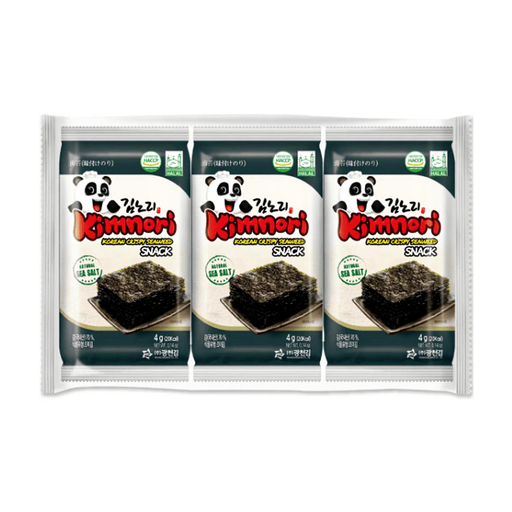
Why this product fits the profile: Three individually wrapped portions of 4 grams each are ideal for trying them out, for lunchboxes or as a small snack at the office.
The portioned packaging limits how often the main pack is opened, helping to reduce moisture absorption after opening.
Original seasoning, ready to eat, and labelled with sesame as an allergen according to the product information.
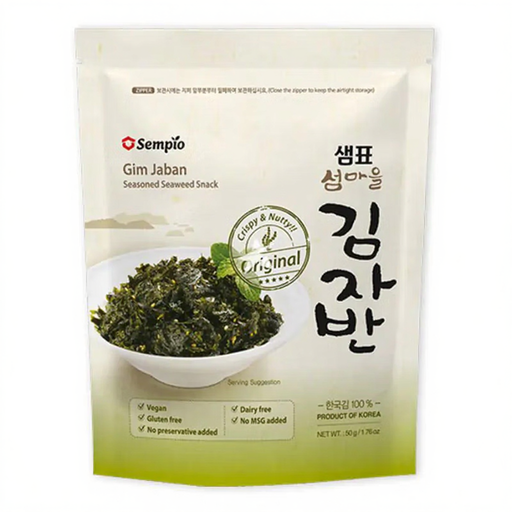
Why this product fits the profile: Whole Korean laver sheets with corn, sesame and olive oil offer a clearly recognisable, classic seasoning profile.
The ingredients list names the oils used, roasted sesame seeds and the allergen sesame, rather than just giving a generic flavour description.
50-gram pack, crispy sheet form, and suitable as a snack or side dish with rice.
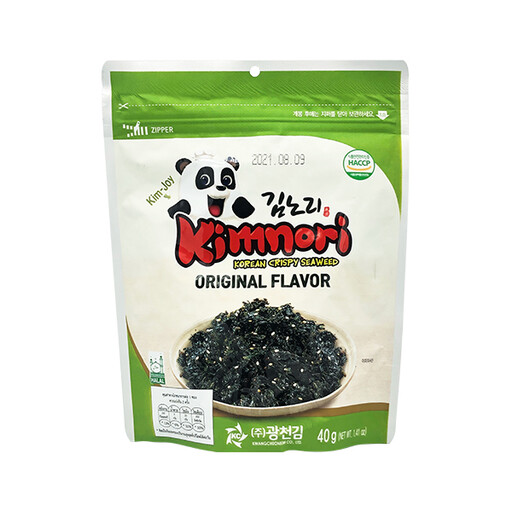
Why this product fits the profile: The fine gimjaban flakes are designed for rice, noodles, soups and salads, and can be sprinkled straight over finished dishes.
The 40-gram quantity isn't just for single portions – it supports regular use as a topping.
75% seaweed according to the product information, seasoned with rapeseed oil, sesame oil, sesame seeds and sea salt; contains sesame.
We've put together a full, regularly updated list of products that meet these strict selection criteria and comply fully with EU safety regulations.
For a spicier kick, options include Sempio Crispy Seaweed Snack Hot Chili, Kimnori Seasoned Seaweed Spicy or bibigo Crispy Seaweed Snack Wasabi. With wasabi and chilli products, pay particular attention to salt, seasoning mix and declared allergens.
If you prefer Thai flavours, you'll find varieties with sriracha or tom yum goong. The latter may contain prawn powder and are therefore unsuitable for anyone with a relevant allergy. A Japanese seaweed snack with sauce, on the other hand, can offer sweet-spicy notes and a more heavily seasoned surface.
For a snack with a different texture, there are seaweed rolls, sandwich crisps or marinated kelp strips. Because of their shape and recipe, these products aren't directly comparable to thin nori sheets. So the key question is whether you're looking for something to nibble, to garnish, or to serve as a side dish with a meal.
Keep them in a dry, cool place away from direct sunlight. Once opened, the pack should be sealed as tightly as possible and used up promptly. For flakes and sheets, an airtight container helps keep them crispy for longer.
Yes, as long as the packaging seals tightly and the snack stays dry. Single portions such as 3 × 4 grams or several small sachets are practical if you don't want to eat the whole pack at once. For children, also check the ingredients list and allergen information.
Many seasoned seaweeds are suitable for this. Whole sheets can be crumbled; gimjaban is already in flake form. The pieces work well with rice, noodles, soups, salads and rice balls. Just bear in mind that the seasoning will add extra salt or oil to your meal.