
Lieferung heute & morgen

Qualitätsgarantie

Willkommens-Angebote freischalten: KOSTENLOSE Lieferung | Bis zu 80 % RABATT | Kostenlose 30-Tage-JoyPlus-Testphase
App herunterladen
A good roaster is the cornerstone of many kitchens, indispensable for succulent roasts, aromatic braised dishes, and hearty casseroles. However, the selection is vast and the marketing claims are varied. This often leads to purchases that later prove to be impractical or unsuitable. As your Joybuy Product Recommendation Officer, I'll help you identify the crucial features and sidestep marketing traps, so you can find cookware that truly meets your needs.
Before we delve into the important features, let's look at three common problems that can lead to frustration in the kitchen.
To avoid a bad purchase, you should check three key aspects before making a decision: material, shape, and compatibility.
The material significantly influences heat retention, weight, and maintenance.
The shape should be based on your typical cooking habits.
Two technical details are essential to check:
Here are some models tailored to different needs and cooking habits.
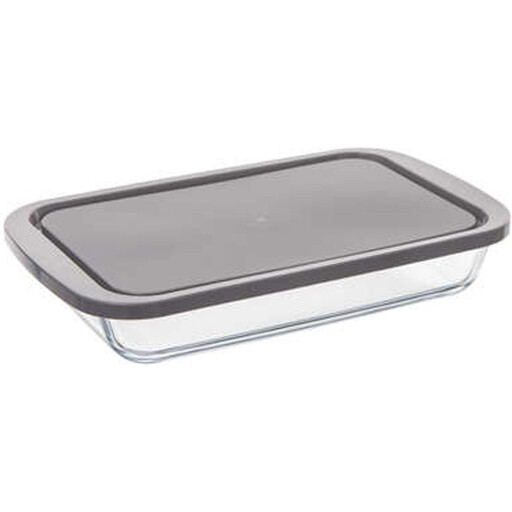
Why it's a good match: Ideal for those who primarily make casseroles in the oven and want a practical solution for storing leftovers. A cost-effective and versatile option for getting started.
The borosilicate glass dish is explicitly designed for the oven. The included polypropylene lid is clearly declared as a storage aid and not intended for baking, which avoids the "unsuitable lid" mistake.
Transparent material for visual monitoring of the cooking progress. Dishwasher and microwave safe (without lid) for easy handling.
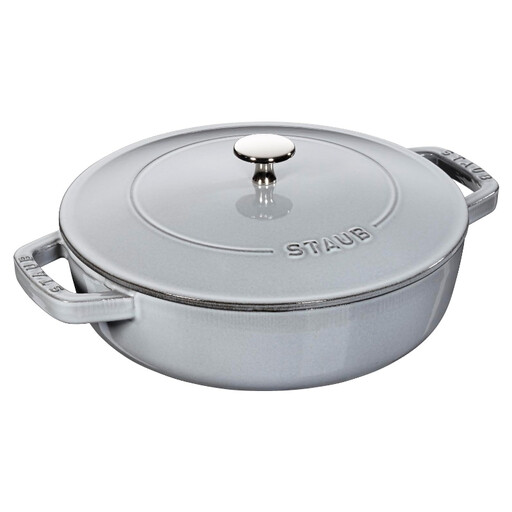
Why it's a good match: For culinary enthusiasts looking for a long-lasting investment. Perfect for slow braising on the hob and in the oven, as well as for stylishly serving at the table.
This enameled cast iron roaster is suitable for all hob types, including induction. The robust enamel coating is durable, and the lid, with its special self-basting spikes, is designed for optimal braising results.
Excellent heat retention for energy-efficient cooking. The "Chistera" drop-structure inside the lid ensures continuous basting of the food.
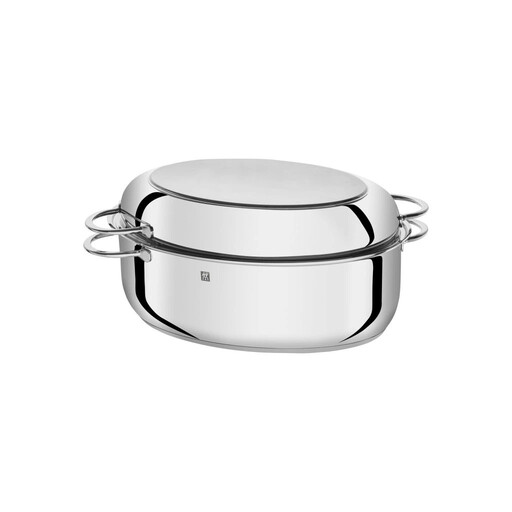
Why it's a good match: Perfect for large families or cooking for guests. The large volume and multi-functional lid offer maximum flexibility for big roasts or entire one-pot meals.
The SIGMA Classic sandwich base ensures optimal heat distribution and is suitable for all hob types, including induction. The stainless steel lid is also fully oven-safe and can even be used as a separate serving or gratin dish.
Very large capacity of 8.5 litres. The lid can be used as a second, shallow pan or serving platter, increasing its versatility.
We have compiled a complete, up-to-date list of products that fully meet these strict selection criteria and German safety regulations.
1. Can you clean a cast iron roaster in the dishwasher? Although many manufacturers of enameled cast iron state that their products are dishwasher-safe, hand washing is recommended. Harsh detergents and high temperatures in the dishwasher can dull the enamel surface over time and potentially shorten the cookware's lifespan.
2. What is the difference between a roaster and a Dutch oven? In English usage, the terms are often used for different items, but can overlap. A Dutch Oven typically refers to a heavy, deep cast iron pot with a tight-fitting lid, which matches the definition of a classic German Gusseisen Br?ter or French Cocotte. The term "roaster" or "roasting pan" can be broader, often referring to a larger, more rectangular pan (with or without a lid) and can also include models made of stainless steel or other materials.
3. How can I tell if my roaster is suitable for induction? The most reliable method is to look for the induction symbol (a stylised coil or spiral) on the packaging or directly on the base of the roaster. Alternatively, you can hold a magnet to the base. If the magnet sticks firmly, the base is ferromagnetic and therefore suitable for use on an induction hob.